
The Unseen Urban Inflection: Cross-border Data Sovereignty as a Structural Factor in Megacity Governance and Capital Flows
Emerging intersections of urbanization, smart city development, and digital infrastructure sovereignty reveal a weak signal with long-term potential to reshape megacity governance, capital allocation, and regulatory frameworks globally. Beyond typical urbanization growth narratives, nascent tensions over cross-border data control embedded within rapid smart city expansion could trigger systemic shifts in infrastructure industrial structure and investment patterns over the next two decades.
This insight identifies how the strategic imperative for digital sovereignty layered on top of Asia Pacific and Gulf megacity urbanization—driven by AI integration, government-led sustainability, and infrastructure modernization—constitutes an under-recognized structural inflection. This could disrupt established governance models by intertwining physical urban assets with digital jurisdictional contestation, thereby influencing where and how capital is deployed and how policymakers regulate emerging urban-industrial ecosystems.
Signal Identification
This is a weak signal currently overshadowed by headline trends of rapid urbanization and smart city growth. It qualifies as such because while rapid urban expansion and technology integration are well-documented, the explicit strategic friction around data sovereignty embedded in these urban projects remains diffuse and underexplored in foresight circles. Given that city-scale data infrastructures underpin future governance and services, early governance and industrial responses to data localization demands could indicate emerging institutional shifts.
Expected time horizon: 10–20 years. Plausibility band: Medium to High, contingent upon geopolitics and technology diffusion in Asia Pacific and Gulf megacity clusters. Key sectors exposed include urban infrastructure, facility management, software engineering, AI applications, regulatory policy, and capital markets linked to real estate and digital infrastructure.
What Is Changing
Rapid urbanization in Asia Pacific and Gulf regions, coupled with government-driven smart city initiatives, is driving unprecedented demand for integrated digital infrastructure and AI-enabled urban management platforms (Persistence Market Research 15/04/2024; Yahoo Finance 12/04/2024). For instance, in the UAE, projects like Dubai’s smart city and Net Zero 2050 federal pushes will require software engineering capabilities and digital systems deeply embedded into physical infrastructure (Stir.ae 05/03/2024; MarkNtel Advisors 02/02/2024).
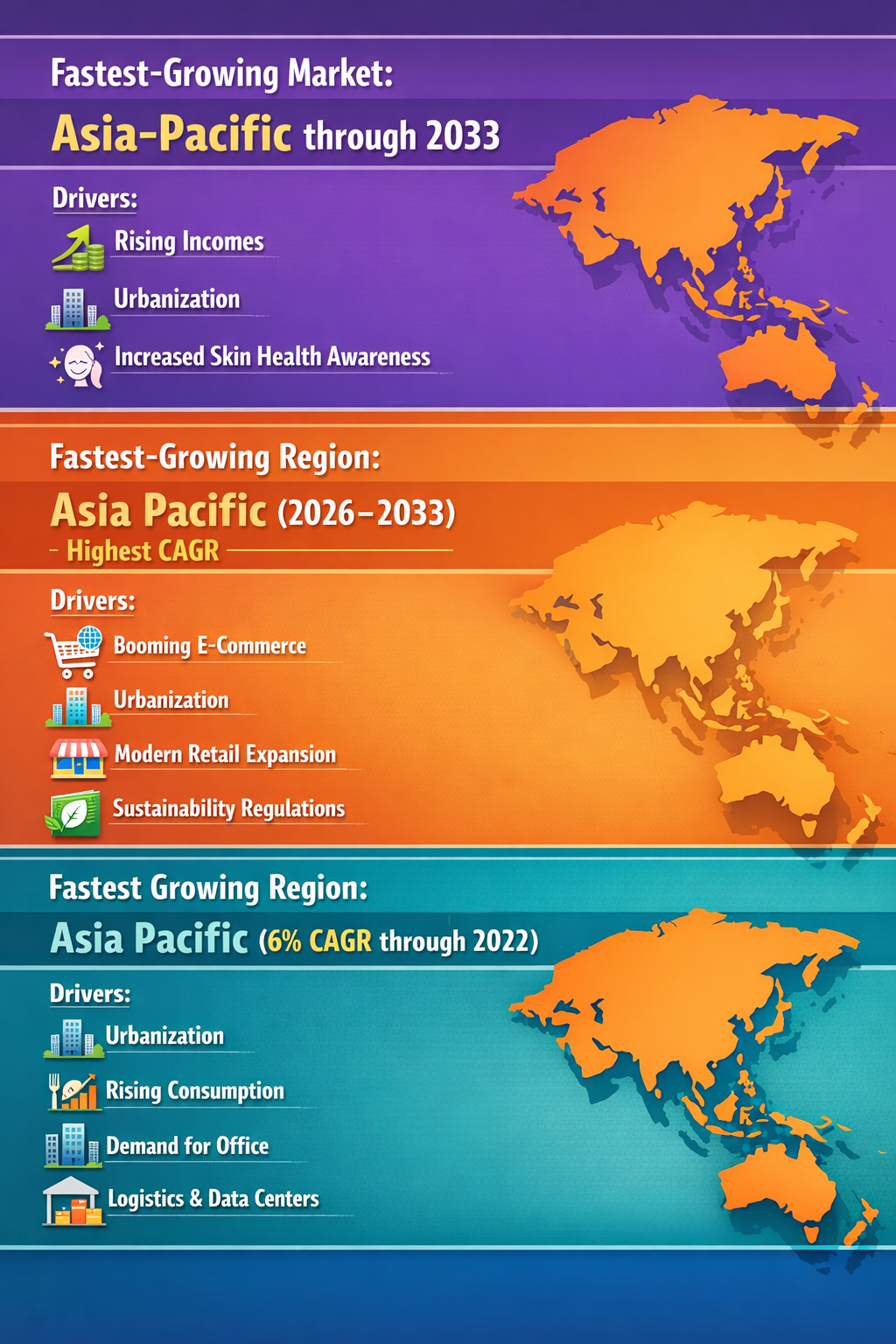
Simultaneously, Asia Pacific’s urbanizing economies continue to attract capital into multifunctional real estate including data centers, logistics hubs, and modern retail spaces, which serve as nodes within broader digital networks (Persistence Market Research 21/01/2024). This intertwining of physical and digital urban assets creates interdependencies subject to sovereign control embedded in software, data flows, and AI-managed operations.
However, the growth of “smart districts” like Kazakhstan’s K-Smart City pilot leverages South Korean smart city tech but raises issues around cross-border technology governance and data control (Astana Times 10/07/2024). This spatial diffusion of software platforms, data architectures, and AI governance exposes vulnerabilities and jurisdictional issues not often addressed in urbanization discourse.
The structural theme emerging is the unrecognized strategic tension between transnational data governance and localized urban sovereignty embedded in rapid urban digitalization and smart city projects. Unlike prior eras where urban growth was driven mainly by physical infrastructure and capital flows, the future megacity ecosystem will be contested along layers of digital territoriality that influence investment decisions, operational control, and regulatory approaches.
Disruption Pathway
Initially, smart city programs will escalate investments in integrated digital infrastructure and AI systems, creating dependence on software engineering talent and cloud-local hybrid data systems (Yahoo Finance 12/04/2024; Stir.ae 05/03/2024). This concentrated digital footprint will invite scrutiny over where data resides, how it flows, and under what legal jurisdiction it operates—issues heightened by national security and privacy considerations.
As governments refine and implement “Net Zero” goals and sustainability regulations (including data-related energy consumption), tensions may rise over control of underlying digital infrastructure impacting urban environmental outcomes (Persistence Market Research 21/01/2024; MarkNtel Advisors 02/02/2024).
The reconfiguration of urban governance frameworks to incorporate digital sovereignty concerns may impose constraints on transnational technology providers and investors, shifting capital deployment toward localized or aligned jurisdictions. This may stress existing global technology supply chains and partnerships, forcing adaptation toward hybrid data architectures that localize sensitive functions while maintaining interoperable services.
Feedback loops could emerge if localized digital regulatory frameworks cause fragmentation of technology standards or raise compliance costs, prompting multinational enterprises to reconsider the viability of large-scale, cross-border smart city projects. Regulatory arbitrage behaviors may emerge, along with city-to-city competition in setting attractive digital governance environments to draw capital and talent.
Over time, these dynamics could shift dominant urban industrial models from predominantly physical infrastructure-led to digitally sovereign ecosystems where capital allocation prioritizes control over data governance and AI operational autonomy. Traditional real estate and facility management firms may need to integrate data governance services and compliance capabilities, influencing industrial structure and labor markets.
Why This Matters
Senior decision-makers in capital allocation must reckon that future value in urban infrastructure increasingly depends not only on physical assets but also on embedded software sovereignty. Investments ignoring digital governance nuances risk lock-in to obsolete interoperability standards or regulatory non-compliance.
Regulators face implications for constructing frameworks that reconcile cross-border data flows with urban sovereignty, privacy, and sustainability goals. Failing to anticipate these changes may result in fragmented urban digital landscapes that slow innovation and increase systemic risks.
Industrial strategy must evolve to integrate data sovereignty into facility management, real estate, and infrastructure services. Providers unable to embed compliance and AI governance risk displacement by nimble entrants or state-supported alternatives aligned with sovereign frameworks.
Supply chains for urban construction and smart city digital services could become bifurcated by jurisdictional data frameworks, affecting technology procurement and partnership models. Liability regimes may expand to cover data breach consequences tied to urban service delivery.
Implications
This development may structurally reorient capital flows toward jurisdictions with clear, robust digital sovereignty policies integrated into urban governance. Governments might likely adopt regulatory frameworks mandating local data residency in smart city infrastructure, encouraging investment in trusted digital ecosystems.
Market participants could face increased compliance complexity, prompting consolidation or specialization in integrated urban-digital governance services. This scenario is unlikely to be a transient compliance issue but a durable redefinition of urban-industrial ecosystems.
However, this signal is not a mere extension of existing smart city hype or incremental infrastructure investment trends; rather, it marks a paradigm-level blending of physical and digital territorial governance with systemic economic effects.
Competing interpretations might argue this data sovereignty tension is manageable through existing international standards or that technical solutions like encryption will obviate regulatory fragmentation. Yet rising geopolitical frictions suggest the signal could scale beyond technical fixes into fundamental shifts.
Early Indicators to Monitor
- Regulatory drafts or legislation focusing on urban data localization and related infrastructure governance.
- Surge in venture capital or corporate investment into local data center and edge computing infrastructure embedded in megacity projects.
- Formation of industrial standards or interoperability consortia with a focus on sovereign cloud and AI governance for urban assets.
- Public-private partnerships explicitly linking urban sustainability or facility management contracts with data sovereignty compliance.
- Emergence of specialized certifications or talent pipelines for urban digital sovereignty and regulatory compliance skills.
Disconfirming Signals
- Rapid harmonization of international data governance regimes mitigating localized restrictions on urban digital infrastructure.
- Technological breakthroughs that obviate the need for data localization, e.g., advanced secure multi-party computation broadly adopted in cities.
- Decline in geopolitical tensions or increased global cooperation reducing nationalistic digital sovereignty imperatives.
- Market preference shifts toward centralized cloud services incompatible with localized data governance models.
Strategic Questions
- How should capital investors reconfigure portfolios to anticipate jurisdictional risks linked to urban digital sovereignty?
- What frameworks can regulators adopt to balance urban data sovereignty with the interoperability needs of transnational smart city ecosystems?
Keywords
Urbanization; Megacities; Smart City; Data Sovereignty; Digital Governance; AI Infrastructure; Capital Allocation; Urban Infrastructure; Industrial Strategy; Regulatory Policy
Bibliography
- Rapid urbanization and sustained government subsidies solidify the Asia Pacific's dominant position through 2032. Persistence Market Research. Published 15/04/2024.
- Fastest Growing Region: Asia Pacific is the fastest-growing region at a 6% CAGR through 2032, driven by rapid urbanization, rising consumption, and strong office, logistics, and data center demand across expanding economies. Persistence Market Research. Published 15/04/2024.
- Expansion of Smart City Projects: The UAE's commitment to developing smart cities presents a significant opportunity for AI integration in construction. Yahoo Finance. Published 12/04/2024.
- The UAE's smart city ambitions - across Dubai, Abu Dhabi, and RAK - will require significant software engineering capacity for years to come. Stir.ae. Published 05/03/2024.
- UAE government initiatives such as Net Zero 2050, smart city development, and federal infrastructure modernization are reshaping urban operations. MarkNtel Advisors. Published 02/02/2024.
- The K-Smart City project will create a 330-hectare pilot district based on South Korean smart city technologies. Astana Times. Published 10/07/2024.