
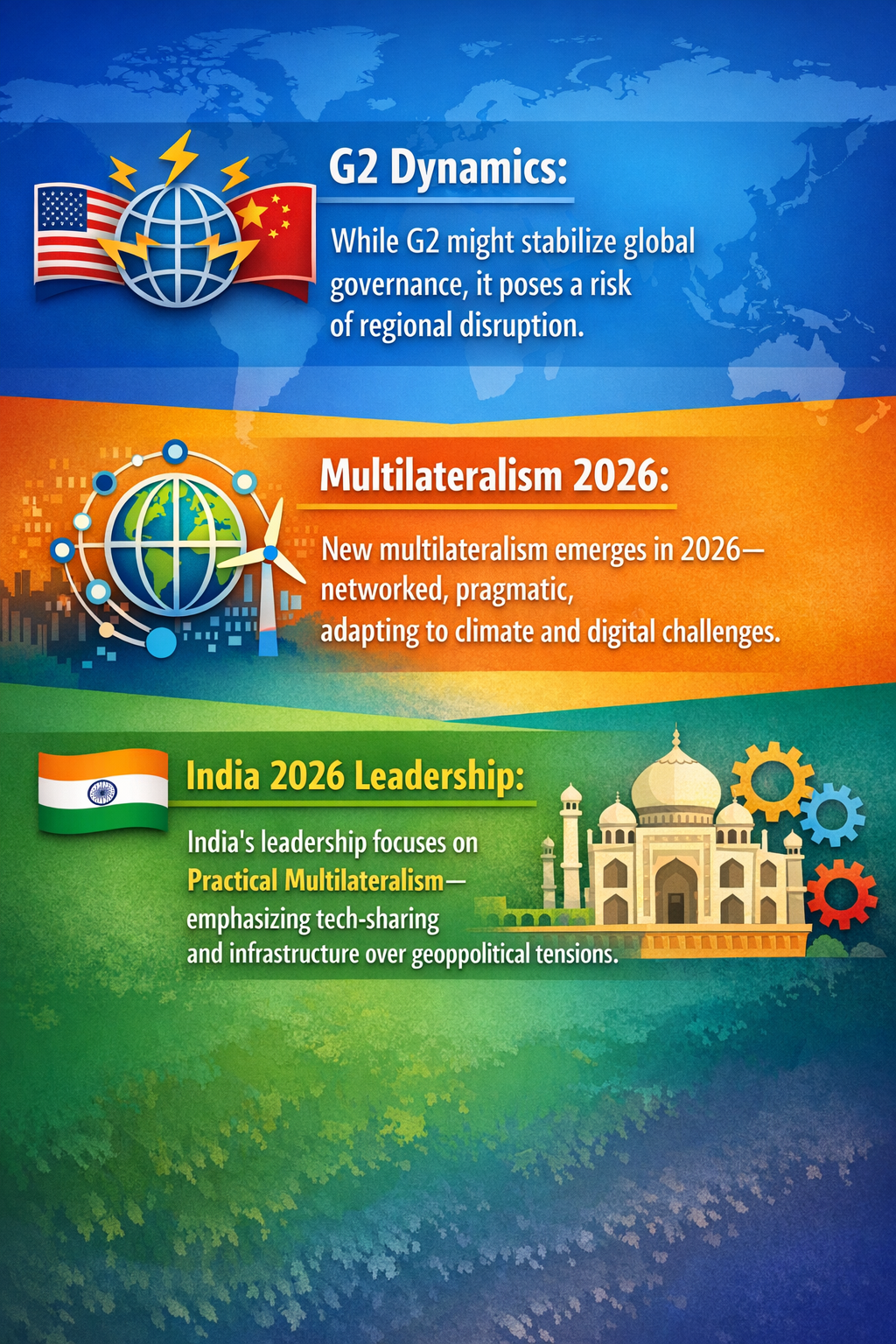
Decentralized Norm-Setting: The Emerging Wildcard Undermining Global Institutional Governance
As traditional multilateral institutions falter in maintaining authoritative norm-setting, decentralized and diversified governance frameworks are quietly gaining traction. This underappreciated shift threatens to fundamentally reconfigure global capital flows, regulatory landscapes, and institutional alignments over the next two decades.
The international system faces not only calls for Security Council reform but a more profound challenge: the systematic erosion of the United Nations’ exclusive authority over development financing and norm-setting. While much discourse focuses on reform deadlock or Arctic geopolitical competition, a non-obvious undercurrent is the fracturing of norm authority itself, fragmenting governance across emergent regional, corporate, and issue-specific coalitions. This weak signal points toward a larger systemic inflection in how institutional legitimacy and regulatory frameworks evolve, with outsized implications for sovereign states, multinational corporations, and global capital deployment decisions.
Signal Identification
This development qualifies as a weak signal due to its subtle and gradual erosion of centralized norm-setting authority that has yet to dominate mainstream foresight narratives. It signals an inflection within institutional governance marked by a shift from monolithic to polycentric norm production, observable within a 10–20 year horizon. The plausibility of this scenario is medium to high due to visible early-stage disintermediation trends, emerging alternative governance platforms, and accelerating geopolitical fragmentation. Sectors exposed include global finance, sovereign debt markets, resource extraction industries, as well as entities involved in sustainability standards and development cooperation. The signal sits at the nexus of geopolitical, financial, and environmental governance domains.
What Is Changing
Multiple sources converge on an emergent structural theme: the fragmentation and decentralization of global governance authority, particularly around development financing and norm-setting functions traditionally centralized in multilateral institutions like the United Nations (Bretton Woods Project 15/04/2026). This represents a critical under-recognized inflection beyond the routine calls for Security Council reform or Arctic political competition (Frontiers in Political Science 10/05/2026). Rather than only institutional stalemate, the deeper phenomenon is the loss of normative monopoly, as power diffuses to emergent actors in regional blocs, financial coalitions, and private regulatory regimes.
The Bretton Woods analysis highlights a "systematic erosion of the UN’s authority" in development financing linked to competing agendas and competing norm entrepreneurs. These actors—ranging from regional development banks to informal coalitions of states and industries—are increasingly setting standards outside established UN-led frameworks. This challenges classical multilateralism’s legitimacy as the primary locus of international norm-setting and burden-sharing decisions.
Simultaneously, the Arctic’s evolution as a governance frontier exemplifies a multipolar governance approach where climate change, resource rushes, and strategic competition overlap, engendering new regional governance architectures that coexist—and compete—with global institutional mandates (Frontiers in Political Science 10/05/2026). This illustrates decentralization of regulatory authority and normative contestation in emergent geopolitical theatres.
Combined, these dynamics reveal a substantive structural change: the normative authority underpinning global governance is diffusing into a fragmented ecosystem of actors, reducing centralized coordination capacity and enabling competing, overlapping rule systems. This stands in contrast to conventional expectations that global norms would consolidate via Security Council or UN reform. Instead, governance is spatially and substantively expanding into polycentric forms.
Disruption Pathway
This weak signal could plausibly evolve into a structural shift through intensifying geopolitical and economic fragmentation that accelerates norm diffusion and decentralization. The immediate condition accelerating this trend would be increased political gridlock in core multilateral bodies preventing effective reform or agenda-setting, thereby incentivizing alternative actors to fill the normative vacuum.
As emerging regional coalitions and multistakeholder platforms gain influence, stress arises within existing models of sovereign equality and centralized norm enforcement. Traditional governance architectures relying on hierarchical norm compliance face systemic strain. This disrupts cohesive capital allocation by increasing regulatory uncertainty and multiplicity of standards critical for transnational investments and debt instruments.
Structural adaptations may include the proliferation of layered governance regimes—where informal financial coalitions, private regulatory bodies, and regionally anchored institutions establish competing normative frameworks. These hybrid models could hybridize regulatory functions previously monopolized by institutions like the UN, creating overlapping jurisdictions and potential legal conflicts.
Feedback loops reinforce this pattern: as alternative norm-setters gain legitimacy, capital and political support increasingly flow to decentralized governance actors, further undermining centralized institutions. This dynamic could fracture the regulatory certainty underpinning multilateral debt markets and sustainable finance, prompting multinational enterprises to recalibrate strategic positioning toward multi-hub compliance strategies.
Over the medium term, this may result in a paradigmatic governance shift where "global" norms become nested within localized or sector-specific regimes, fragmenting international law and complicating efforts for global sustainability or development coordination. Dominant industry and regulatory models may shift to embrace modular, interoperable standards rather than universal frameworks.
Why This Matters
Strategic decision-makers must recognize that capital allocation decisions, particularly in development finance, infrastructure, and sustainability-linked investing, could be dramatically reshaped by emergent governance fragmentation. Investments premised on uniform regulatory standards may face increased jurisdictional risk and fragmented compliance landscapes, affecting project viability and creditworthiness.
Regulators will encounter challenges reconciling competing normative frameworks, potentially necessitating new hybrid oversight mechanisms or multilevel cooperation approaches to prevent governance gaps or contradictory mandates. Sovereign risk assessments will need to integrate decentralized norm proliferation risks, especially in emerging markets reliant on development financing outside traditional multilateral structures.
Competitive positioning for multinational corporations could be subject to intensifying complexity in supply chain governance and standard adherence, incentivizing investments in adaptive compliance infrastructures or selective engagement with alternative governance coalitions. Liability exposures may shift as regulatory clarity erodes, elevating the importance of scenario planning that factors in normative uncertainty.
Implications
This decentralized norm-setting dynamic might result in structurally fragmented global governance regimes rather than transient or reversible changes. Capital allocation could increasingly flow toward flexible or regionally aligned projects rather than those dependent on central multilateral endorsement. Regulatory frameworks may evolve into layered systems combining hard law with decentralized soft law instruments.
This development is unlikely to represent mere institutional stagnation or reform deadlock; rather, it signals a systemic reconfiguration of the locus of institutional authority. However, competing interpretations exist: some may argue this polycentric model brings resilience and pragmatism in a multipolar world, while others worry about this fracturing impeding coherent global responses to shared challenges.
It also should not be conflated with ephemeral political disputes or simplistic multipolarity trends without normative fragmentation. The critical distinction lies in the erosion of authoritative norm control and the rise of competing governance coalitions with divergent agendas.
Early Indicators to Monitor
- Increased issuance of development financing outside UN or Bretton Woods frameworks by regional or private coalitions
- Proliferation of alternative sustainability or development standards endorsed by non-state actors or regional blocs
- Regulatory drafts proposing layered or modular governance models in financial or environmental regulation
- Shifts in sovereign credit assessments reflecting normative fragmentation risks
- Capital reallocation trends favoring decentralized or multi-hub compliance jurisdictions
Disconfirming Signals
- Successful comprehensive Security Council reform or UN-led norm consolidation restoring centralized authority
- Global agreement on unified development financing standards under a credible multilateral mandate
- Widespread rejection or juridical invalidation of alternative normative regimes by majority international actors
- Reintegration of Arctic governance under a coordinated and centralized multilateral framework
Strategic Questions
- How can capital deployment strategies be adapted to navigate and leverage a fragmented normative landscape?
- What regulatory innovations are necessary to ensure coherence and legitimacy in multi-layered governance regimes?
Keywords
Decentralized governance; Norm-setting; Multilateralism; Development financing; Governance fragmentation; Regulatory frameworks; Geopolitical fragmentation; Arctic governance; Sustainable finance
Bibliography
- As calls from multiple actors for Security Council reform grow louder and fragmentation threatens multilateralism, a deeper structural problem remains unaddressed: the systematic erosion of the UN's authority over development financing, including, crucially, in norm-setting. Bretton Woods Project. Published 15/04/2026.
- The Arctic has become one of the increasingly dynamic regions in contemporary international relations, shaped by the intersection of climate change, resource opportunities, and shifting patterns of global governance. Frontiers in Political Science. Published 10/05/2026.
- Selected official UN documentation on Security Council reform debates and development cooperation frameworks. UN Digital Library. Published 12/03/2026.
- OECD report on the rise of multipolar development financing and normative ecosystems beyond traditional multilateral institutions. OECD Development Centre. Published 20/02/2026.
- World Economic Forum analysis on governance fragmentation and implications for sustainable finance standards. World Economic Forum. Published 30/03/2026.