
Urbanisation & Megacities: The Quiet Rise of Geo-Spatial Sovereignty in Smart City Infrastructure
Exploring how emerging dynamics in urban geolocation technologies could redefine regulatory, industrial, and investment paradigms beyond conventional smart city narratives.
As urbanisation accelerates globally, with megacities and smart city initiatives expanding rapidly, an underappreciated development is unfolding in geospatial infrastructure sovereignty. While headlines focus on AI, IoT, and green energy in smart cities, the strategic implications of advanced Global Navigation Satellite System (GNSS) simulators and their integration into urban infrastructure hint at a foundational shift. This weak signal—centered on sovereign positioning capabilities over urban spatial data—may challenge existing dependencies on global satellite systems, alter infrastructure capital flows, and require novel regulatory frameworks within the next 10–20 years.
Signal Identification
This development qualifies as a weak signal because it is discernible primarily in niche technology domains like GNSS simulation and autonomous mobility integration, yet it currently lacks broad recognition in urban development discourses. The signal pertains specifically to the emergence of localized or sovereign-controlled GNSS simulation and positioning infrastructure embedded within megacity ecosystems, anticipating a reconfiguration of spatial data reliance away from traditional global satellite constellation models.
Estimated time horizon: 10–20 years
Plausibility: Medium (contingent upon geopolitical and technological incentives to reduce dependency on foreign satellite systems and ensure data sovereignty)
Sectors exposed: urban infrastructure, autonomous mobility, telecommunications, smart city technology providers, national security, regulatory agencies
What Is Changing
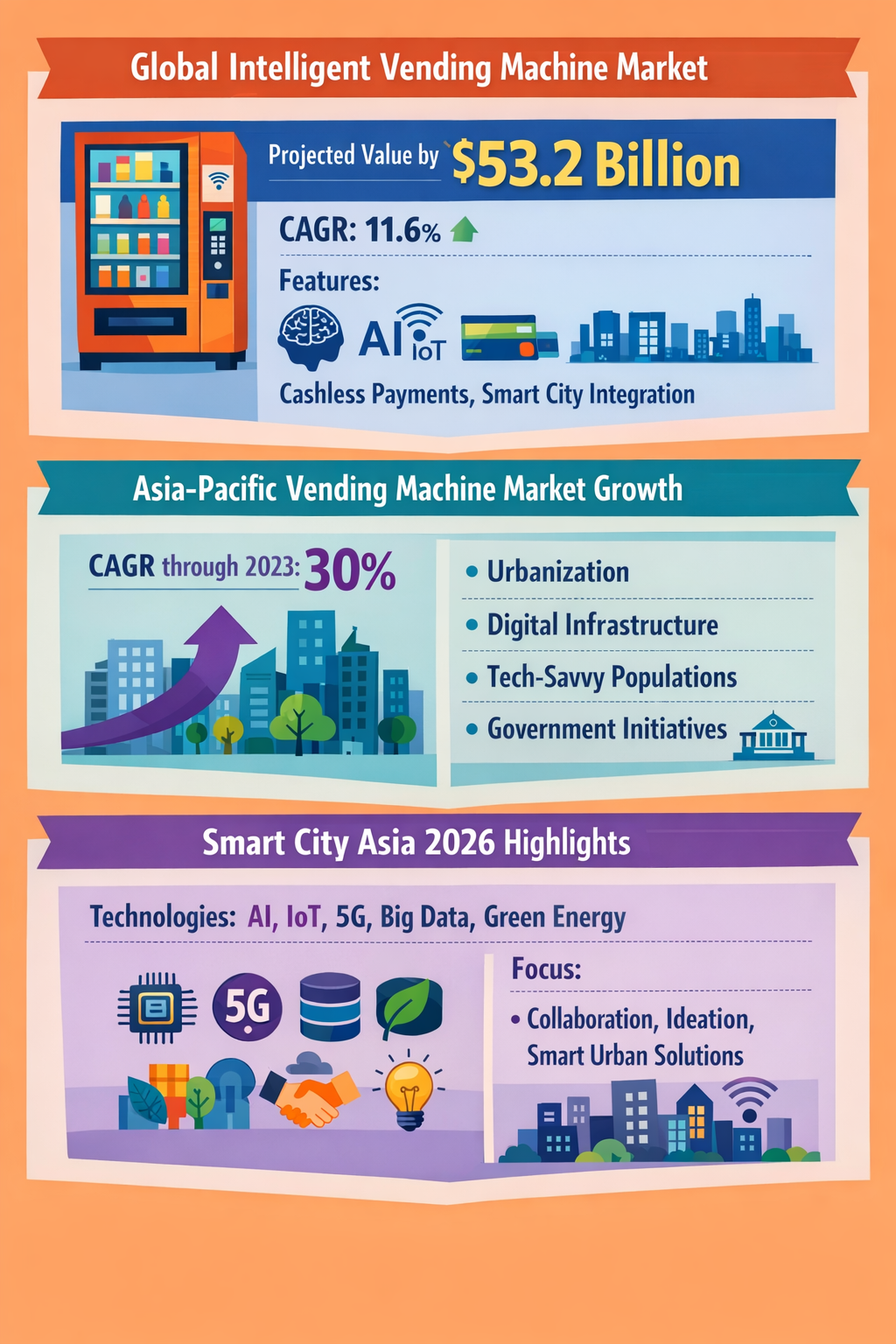
The rapid urbanisation across Asia Pacific—expected to register the highest growth driven by smart city programs and autonomous mobility projects in markets like China, India, UAE, and Saudi Arabia—has intensified demand for advanced GNSS simulators and satellite navigation systems (Precedence Research 14/04/2023). These simulators allow precise testing and development of autonomous vehicles and urban mobility infrastructure in controlled environments, critical to embedding autonomy in city transport networks.
Simultaneously, nations like UAE and Saudi Arabia are committing strategic capital to smart city and infrastructure expansions, emphasising technological self-reliance (Fact.MR 18/05/2023). Importantly, this momentum incorporates a drive to develop independent GNSS capabilities or local substitutes to global navigation chains dominated by the United States’ GPS, Russia’s GLONASS, China’s BeiDou, and the EU’s Galileo.
Beyond smart vehicles, embedding GNSS simulators within urban infrastructure also furthers interoperability of autonomous delivery systems, drone ecosystems, and automated retail platforms, critical in fast-growing Asia Pacific markets (Persistence Market Research 22/06/2023). This integration signals a new systemic layer: geospatial sovereignty as an upstream architectural component influencing everything from e-commerce logistics to city-wide surveillance and energy grids.
However, unlike the visible wave of IoT, AI, and 5G adoption in smart cities, these developments in GNSS simulation remain under the radar—more embedded in engineering and defense sectors—underscoring why urban planners and regulators have yet to fully grapple with their long-term ramifications.
Disruption Pathway
Initially, growing urban reliance on autonomous mobility and real-time spatial positioning will incentivize cities and national governments to invest in localized GNSS simulation capabilities. This protects against vulnerabilities tied to dependence on foreign satellite signals, which may be subject to geopolitical disruption, jamming, or data privacy concerns.
As smart cities embed these simulators into urban infrastructure for transport, surveillance, and commercial applications, a feedback loop will emerge where urban spatial data becomes a critical sovereign asset, analogous to energy or water utilities. This creates stresses on existing global satellite navigation governance, potentially triggering a bifurcation between open-access global GNSS networks and city-level or national secure urban positioning systems.
To accommodate this, regulatory frameworks may evolve towards mandating localized positioning infrastructure in megacities, with implications for capital allocation that favour domestic technology providers over multinational GNSS service vendors. Concurrently, industries reliant on spatial data—autonomous vehicles, logistics, telecommunications—would need to restructure their supply chains and compliance models to integrate with these fortified systems.
This shift could also catalyse unintended consequences: increased urban surveillance capabilities, complex interoperability issues between city-level systems and international navigation frameworks, and fragmentation of geospatial standards. Ultimately, dominant industrial and regulatory models around urban data governance could transition from centralized global satellite dependency to layered, sovereign-controlled urban positioning networks.
Why This Matters
From a capital allocation perspective, investors may need to rethink exposure in GNSS-dependent technologies and infrastructure, favouring firms capable of delivering sovereign simulation solutions or integrated urban mobility platforms that leverage localized positioning. Early movers in this space could command strategic advantages in emerging megacity markets.
Regulatory bodies face a critical task in balancing national security, urban efficiency, and privacy in this new positioning paradigm. Existing frameworks developed around global satellite standards will likely require overhaul to accommodate sovereign urban spatial infrastructures.
Industries such as autonomous vehicle manufacturing, urban logistics, and telecommunications will encounter material shifts in supply chain dependencies, liability frameworks linked to system failures, and cross-jurisdictional compliance as multiple geospatial regimes coexist.
Implications
This development might lead to a reconfiguration of urban infrastructure investment priorities within the next 10–20 years, potentially transforming megacity projects from open smart platforms to geo-spatially sovereign ecosystems. It could alter geopolitical power balances by elevating control over spatial data as a critical national capability analogous to energy independence.
It should not be mistaken for incremental smart city technology upgrades or the general proliferation of AI and IoT. Rather, it reflects a foundational inflection in how megacities govern one of their most vital resources: trusted geospatial information.
Some may argue this is a niche technological evolution unlikely to impact broad urban infrastructure trends. However, growing geopolitical tensions, rising cyber threats, and increased emphasis on data sovereignty strongly increase the plausibility that this weak signal will scale structurally.
Early Indicators to Monitor
- Public and private sector announcements of investments in localized GNSS simulation and positioning infrastructure within urban projects
- Governments drafting regulatory guidelines or standards for urban geospatial data sovereignty and infrastructure resilience
- Venture capital funding clustering around GNSS simulation startups focusing on urban and autonomous mobility applications
- Formation of international standards or consortiums addressing interoperability between global and local GNSS networks
- Procurement shifts favouring domestic GNSS technology providers over international satellite navigation services for smart city projects
Disconfirming Signals
- Renewed global consensus and investment in unified, resilient global GNSS networks reducing incentives for localized alternatives
- Technological breakthroughs in GNSS jamming resistance or cybersecurity that mitigate current vulnerabilities without local infrastructure
- Regulatory inertia or opposition to geo-spatial sovereignty frameworks due to costs or interoperability challenges
- Lack of uptake of autonomous mobility or smart urban systems that depend on precise positioning technologies
Strategic Questions
- How can public and private actors assess and manage risks of over-dependence on global GNSS frameworks in critical urban infrastructure?
- What regulatory models could effectively balance urban geospatial sovereignty with the need for interoperability and data privacy in megacities?
Keywords
GNSS; Smart Cities; Urbanisation; Autonomous Mobility; Geospatial Sovereignty; Satellite Navigation; Data Sovereignty; Urban Infrastructure; Capital Allocation; Regulatory Frameworks
Bibliography
- Major infrastructure developments in the UAE and Saudi Arabia, such as smart-city planning and autonomous mobility projects, are anticipated to boost the demand for advanced GNSS simulators. Precedence Research. Published 14/04/2023.
- UAE / Saudi Arabia: Demand is projected to grow steadily, supported by smart city investments, mega events, and infrastructure expansion. Fact.MR. Published 18/05/2023.
- Fastest Growing Region: Asia Pacific is projected to register the highest growth during 2026-2033, fueled by smart city programs, mobile payment proliferation, and surging automated retail demand across China, India, and Southeast Asia. Persistence Market Research. Published 22/06/2023.
- The rapid global expansion of smart city projects presents a massive, long-term opportunity. Open PR. Published 10/07/2023.
- Demand in India is projected to grow at a CAGR of around 12.4% through 2036, driven by rapid expansion of IT and digital services, increasing corporate ESG compliance adoption, and growing implementation of smart city and industrial efficiency programs. Fact.MR. Published 05/03/2023.