
Cryptographically Enabled Organized Crime: The Underrecognized Inflection Point Reshaping Global Illicit Economies
Emerging integration of advanced cryptographic tools within transnational organized crime could fundamentally disrupt regulatory strategies, capital allocation, and enforcement paradigms over the next two decades.
While much attention remains on traditional illicit markets such as drug trafficking and illegal mining, a subtler yet profound evolution is underway: organized crime groups are increasingly adopting state-of-the-art cryptographic technologies—leveraging decentralized finance, encrypted communications, and privacy-focused blockchain infrastructures—to obfuscate operations, evade detection, and scale illicit financial flows with unprecedented stealth and resilience. This weak signal portends a structural shift that could outpace conventional law enforcement and regulatory frameworks.
This paper identifies cryptographic adoption by organized crime as an emerging inflection indicator within a 10–20 year horizon with high plausibility, affecting public security, financial services, regulatory regimes, and digital infrastructure sectors. It challenges established assumptions on traceability in criminal finance and demands new strategic approaches to governance and capital deployment.
Signal Identification
This development qualifies as an emerging inflection indicator rather than a mere incremental trend, as it represents a foundational technological shift in how organized crime transacts, communicates, and embeds itself within legitimate economies. The increasing use of encryption, decentralized finance (DeFi), mixing services, and zero-knowledge proofs enables novel operational models that reduce traditional vulnerabilities such as physical trafficking risks and direct money laundering trails.
The plausibility band is high given documented growth in cryptographic asset usage in illicit contexts, ongoing innovation in privacy-preserving technologies, and limited current regulatory capacity to effectively respond (UNRIC 12/06/2026). The time horizon is 10–20 years, allowing for maturation and mainstreaming of related technologies among crime syndicates. This signal cuts across sectors including cybersecurity, financial technology, law enforcement, and transnational governance frameworks.
What Is Changing
Multiple strands converge to reveal an underappreciated shift: traditional organized crime, long reliant on physical control of illicit goods and cash-based laundering, is evolving toward a cryptographically enabled ecosystem. The global demand for critical minerals and gold in illicit extraction (UNRIC 12/06/2026) creates high-value targets incentivizing money flows that prefer stealth and rapid cross-border mobility achievable through privacy-focused blockchain technologies.
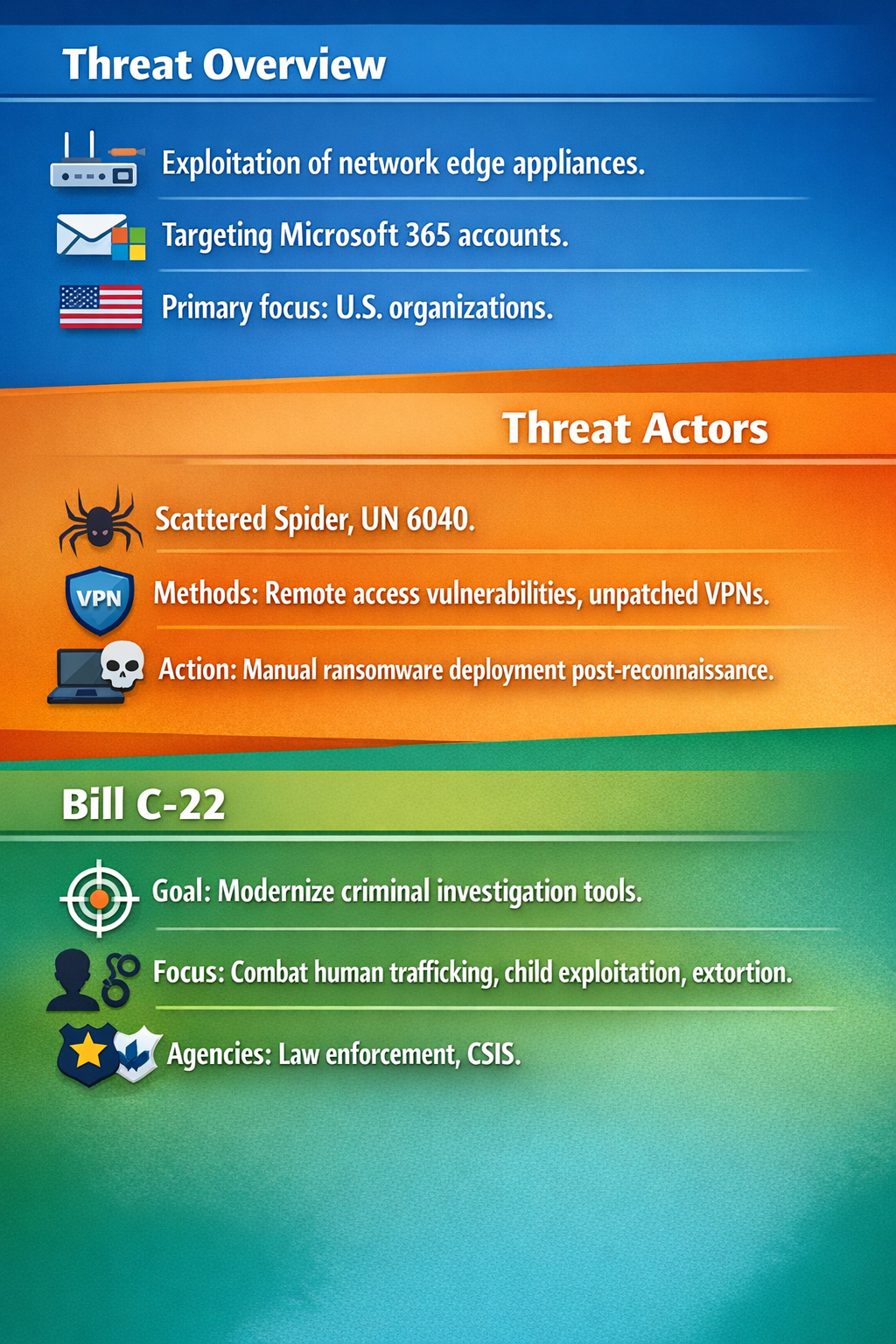
Simultaneously, cyber threat actors exploiting network edge appliances and compromising Microsoft 365 accounts (Cyfirma 12/06/2026) illustrate a growing sophistication in digital infiltration that parallels deeper digital financial operations facilitating crime financing and operational security.
Beyond monetary flows, cryptographically protected communications impede law enforcement’s ability to intercept coordination of violence and trafficking across multiple jurisdictions. This creates volatility in ecosystems like Latin America and the Caribbean, where traditional hardline approaches may fail (ACLED 11/06/2026).
The traditional ‘follow the money’ method in regulatory frameworks faces increasing obsolescence as illicit finance moves into encrypted, decentralized channels impervious to legacy monitoring. This systemic characteristic is not broadly recognized in current policy discourse, which continues emphasizing asset seizure and physical interdiction (US White House 09/06/2026).
Moreover, emerging transnational repression activities leveraging digital surveillance and diaspora targeting in Canada demonstrate how encrypted communications affect political and social control within organized crime and malign state actors (HRW Canada 10/06/2026).
Disruption Pathway
As cryptographic tools mature and become commoditized, organized crime will achieve a paradigm shift in operational security and financial mobility. Early accelerants include the increasing institutional adoption of blockchain technologies, the growing sophistication and availability of decentralized anonymous services, and gaps in transnational law enforcement cooperation on cyber-enabled financial crimes.
These conditions stress existing detection and interdiction systems, which rely heavily on identifiable transactional intermediaries and physical evidence. Money laundering will increasingly occur in decentralized finance platforms that currently lack robust regulatory mechanisms or standardized compliance requirements, forcing a re-examination of regulatory frameworks at national and international levels.
Consequently, law enforcement agencies may adopt hybrid technological strategies incorporating quantum-resistant cryptanalysis, AI-driven forensic blockchain tracing, and expanded intelligence sharing networks. However, the lag between technological innovation in criminal methods and regulatory adaptation may allow organized crime to entrench deeper within legitimate markets, reshaping industrial structures across financial services, digital infrastructure, and commodities sectors.
Unintended feedback loops may emerge where heavy-handed regulatory responses accelerate criminal innovation, for example, prompting crime groups to migrate into more opaque cryptographic technologies or decentralized autonomous organizations (DAOs) to disguise ownership and control.
If dominant governance models rooted in territorial jurisdiction and centralized control are disrupted, this may catalyse new transnational coordination frameworks or public-private partnerships emphasizing proactive technological monitoring over reactive enforcement.
Why This Matters
For capital allocators, this signal foreshadows increased risk exposure in sectors such as financial services, cloud infrastructure providers, and supply chains linked to critical minerals and gold. Investments predicated on existing compliance regimes may face sudden asset attrition or liability blowback as illicit flows exploit cryptographic opacity.
Regulatory bodies must anticipate and incorporate cryptographic risk vectors into frameworks overseeing anti-money laundering (AML) and counter-terrorism financing (CTF) policies. Failure to adapt may result in systemic governance gaps undermining national security and economic stability.
Strategic positioning in law enforcement and intelligence communities will require scaling cyber forensic capabilities and realigning cooperation modalities emphasizing technology-enabled collective action, not just bilateral intelligence sharing focusing on geographic adjacencies.
The supply chain effects include the probable rise of ‘crypto-enabled’ corruption and smuggling networks embedded within critical mineral extraction zones, challenging current extractive industry governance and sustainability commitments.
Implications
This cryptographically enhanced organized crime model could likely transform the competitive dynamics of illicit and licit markets alike, blurring traditional lines and forcing regulatory fragmentation or consolidation depending on jurisdictional agility.
The scale and complexity of encrypted financial flows might render conventional AML mechanisms obsolete, compelling regulators to adopt real-time data scrutiny and machine learning-driven anomalous pattern detection, which may itself provoke privacy and civil rights debates.
This is not a transient noise related to episodic cyber events or physical trafficking spikes, but a fundamental structural change that leverages irreversible technological trends in cryptography and decentralization.
Competing interpretations may argue that regulatory innovation or improved law enforcement cyber capabilities will contain these risks, but the asymmetric advantages held by technologically adept organized crime groups suggest a more cautious outlook.
Early Indicators to Monitor
- Rising clustering of venture funding in privacy-enhancing cryptographic startups and decentralized finance platforms
- Emergence of regulatory consultations or draft frameworks addressing DeFi and cryptographic money laundering risks
- Increased reports of seizures linked to crypto-mixed transaction laundering and obfuscated asset flows
- New standards or protocols developed for forensic blockchain analytics with law enforcement collaboration
- Capital reallocation patterns from traditional financial intermediaries to blockchain-native infrastructure providers
Disconfirming Signals
- Major international regulatory coalitions successfully implementing stringent AML/CTF controls fully encompassing decentralized cryptographic finance
- Significant breakthroughs in decrypting or tracing quantum-resistant cryptographic assets used by criminal entities
- Widespread operational failure or abandonment of cryptographic tools by criminal groups due to usability, cost, or detection risks
- Definitive shift of organized crime focus back to entirely physical, low-tech trafficking models incompatible with cryptographically enhanced systems
Strategic Questions
- How can regulatory frameworks evolve to proactively address the risks posed by decentralized cryptographic finance while balancing innovation and privacy?
- What capabilities and partnerships are required to enable law enforcement and intelligence agencies to effectively trace, disrupt, and deter cryptographically enabled organized crime at scale?
Keywords
Cryptography; Organized Crime; Decentralized Finance; Anti-Money Laundering; Digital Forensics; Transnational Governance; Cryptocurrency Regulation
Bibliography
- As global demand for gold and critical minerals continues to grow, illegal extraction and trafficking are increasingly linked to organized crime, illicit financial flows, corruption, environmental harm, and broader governance vulnerabilities. UNRIC. Published 12/06/2026.
- Latest Developments Observed The threat actor is observed exploiting network edge appliances to gain access to enterprise environments and compromise Microsoft 365 accounts, primarily targeting organizations in the United States. Cyfirma. Published 12/06/2026.
- Growing volatility in the organized crime ecosystem will likely fuel an increase in violence throughout the rest of Trump's term, potentially undermining any short-term improvements achieved through hardline approaches. ACLED. Published 11/06/2026.
- Drug trafficking organizations and associated criminal groups pose a persistent and dangerous threat to communities across the United States. US White House. Published 09/06/2026.
- Transnational repression continues to pose a threat to diaspora groups and civil society organizations in Canada. Human Rights Watch Canada. Published 10/06/2026.