BLUF (Bottom Line Up Front)
Belastingdienst’s transformation must strategically embed advanced digital finance capabilities—leveraging embedded finance, open banking, and AI-driven services—within a resilient governance and sustainable infrastructure framework to proactively maintain relevance, operational excellence, and citizen trust amid accelerating fintech ecosystems and regulatory complexity.
Key Drivers, Trends & Signals
- Embedded Finance Expansion: Financial services are becoming integral to digital platforms, shifting value toward those controlling customer interactions and data, requiring strategic roles to avoid commoditization (RSM Global).
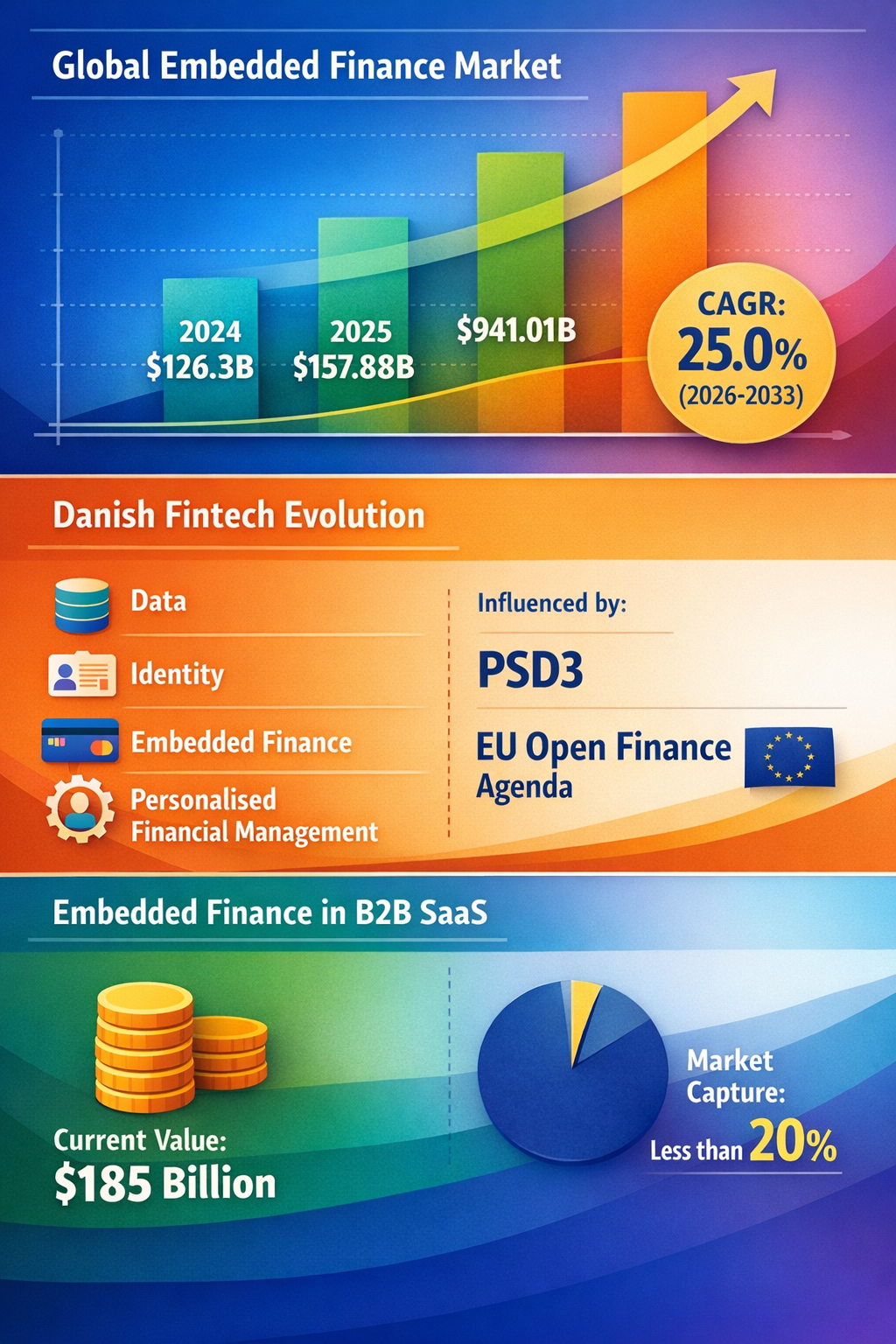
- Open Banking & Regulatory Evolution: PSD2 and imminent PSD3 frameworks increasingly enable secure data sharing, fostering innovation in personal finance management and embedded services, demanding robust compliance and governance (The Fintech Times).
- AI and Data Analytics: Adoption of AI in fraud detection, risk assessment, and compliance streamlines operations and enhances resilience (The Fintech Times).
- Regional Integration and Infrastructure Modernization: Nordic fintech integration and pan-European payment infrastructure initiatives demonstrate the value of interoperability and cross-border collaboration (The Fintech Times).
- Growing SME Financing Needs: SMEs’ importance to the economy highlights embedded lending and payments as growth areas requiring tailored fintech solutions (The Fintech Times).
- Talent Competition & Funding Constraints: High demand for skilled tech talent and selective funding environments present operational risks.
Priority Concerns
Most Immediate
- Ensuring compliance with evolving EU fintech regulations (MiCA, DORA, PSD3) while integrating embedded finance securely.
- Addressing dependency risks from third-party platforms controlling customer data and interface.
- Accelerating digital skills development amid intensified competition for tech talent.
Most Damaging
- Reputational damage due to cybersecurity breaches or operational failures in complex embedded finance ecosystems.
- Loss of strategic influence to private-sector fintech platforms leading to commoditization of core tax services.
- Failure to sustainably finance and support SME sectors with innovative, accessible services causing economic drag.
Scenario Implications
Most Likely
Gradual evolution toward integrated digital tax services enhanced by AI, embedded finance, and compliant open banking, with ongoing regulatory tightening and regional collaboration.
Best Case
Belastingdienst emerges as a trusted digital frontrunner by fully owning customer interfaces in key segments, leveraging AI-driven personalization and green fintech innovations while fostering strong public-private partnerships and regional interoperability.
Worst Case
Fragmented systems and regulatory misalignment lead to platform dependence, data governance failures, and declining citizen trust amid cybersecurity incidents, undermining tax collection efficiency and service legitimacy.
Stakeholder Perspectives
- Citizens: Winners gain seamless, transparent tax services integrated with daily digital financial activities; losers face digital exclusion or privacy concerns.
- SMEs: Winners benefit from embedded lending and tailored financial tools; losers experience financial access constraints and operational complexity.
- Regulators: Winners achieve balanced innovation with risk oversight; losers may face erosion of control over financial and tax ecosystems.
- Investors & Technology Partners: Winners participate in stable, scalable digital infrastructure projects; losers risk reputational or financial exposure from weak governance.
Transformation Roadmap
Short-term (1–3 years)
- Technology: Deploy AI tools for fraud detection, risk assessment, and compliance automation; begin pilot embedded finance services tailored to SMEs.
- Governance: Establish cross-functional regulatory compliance teams focused on PSD3/DORA alignment; define clear data governance policies emphasizing customer ownership rights.
- Infrastructure: Modernize payment and data exchange infrastructure to support interoperability with Dutch and EU platforms.
- People: Launch targeted digital skills programs; recruit fintech and AI specialists.
- Partnerships: Formalize strategic alliances with fintech firms and Nordic/EU payment networks.
- Sustainability: Incorporate ESG criteria into technology procurement and fintech partnerships.
Mid-term (3–7 years)
- Technology: Scale embedded finance solutions with unified APIs for real-time data connectivity; integrate AI-driven personalized citizen tax services.
- Governance: Institutionalize advance risk management frameworks covering outsourcing and third-party risk; embed consumer duty principles in all service models.
- Infrastructure: Extend cross-border interoperable payment settlement capabilities; implement resilient cloud-based infrastructure.
- People: Mature workforce with blended skills in finance, technology, and regulation.
- Partnerships: Expand collaboration with EU and Nordic fintech ecosystems; co-develop green fintech initiatives.
- Sustainability: Operationalize sustainability reporting and climate-aligned investment facilitation tools for SMEs.
Long-term (7–15 years)
- Technology: Fully AI-enabled, seamless embedded finance tax framework integrated into citizens’ and businesses’ daily financial digital ecosystems.
- Governance: Adaptive, anticipatory regulatory model driven by continuous data insights and AI-assisted oversight.
- Infrastructure: Robust pan-European orchestration layer driving comprehensive financial and tax data flows with real-time reconciliation and settlement.
- People: Fully digital literacy embedded organization culture, with continuous upskilling and innovation capacity.
- Partnerships: Leadership in international fintech coalitions shaping future digital public finance paradigms.
- Sustainability: Integrated green finance frameworks actively contributing to national carbon neutrality goals.
KPIs & Metrics
- Adoption rate of embedded finance services by citizens and SMEs.
- Regulatory compliance success rates and audit findings.
- System resilience and cybersecurity incident frequency and severity.
- Customer satisfaction and trust indices, particularly in digital tax management.
- Digital skill certification rates within staff.
- Carbon footprint reductions linked to fintech operations and supplier networks.
- Interoperability metrics with regional payment and financial platforms.
Enablers & Barriers
- Enablers: Strong EU regulatory frameworks with clear digital finance mandates; existing interoperability initiatives; growth in AI and API technologies; skilled fintech workforce; public-private collaboration models.
- Barriers: Fragmented legacy IT systems; complex compliance landscape; platform dependency risks; talent shortages; funding constraints for large-scale digital transformation.
Benchmarks & Case Insights
- Greece: Leveraged traditional banks to accelerate fintech adoption and embed AI for better governance (The Fintech Times).
- Denmark: Demonstrates success by integrating payments infrastructure across Nordic markets with strong sustainability focus and public-private cooperation (The Fintech Times).
- B2B Embedded Finance: $185 billion market opportunity with lessons on unified APIs, risk management, and hybrid build-buy strategies (Apideck).
Early Warning Signals
- Sharp increase in external platform control over customer tax data or diminishing direct citizen interaction.
- Regulatory enforcement actions or sudden policy shifts increasing operational risks.
- Rapid rise in cyber fraud or operational outages within tax digital services.
- Talent attrition rates exceeding benchmarks in fintech and AI functions.
- Failure to secure strategic partnerships or delays in infrastructure modernization projects.
Implementation Guidance
- Establish a dedicated Digital Transformation Steering Committee with representatives from governance, technology, legal, and citizen advocacy.
- Create an Innovation Hub focused on embedded finance pilot projects targeting SMEs and citizen services to demonstrate quick wins.
- Develop cross-sector coalitions involving regulators, fintechs, SMEs, and citizen groups for continuous feedback and validation.
- Implement phased technology delivery aligned with regulatory milestones, stakeholder readiness, and interoperability targets.
Communications & Engagement Recommendations
- Communicate transformation goals internally with clear connection to improved citizen services and national economic resilience.
- Develop transparent external communications emphasizing data privacy, security, and user empowerment.
- Engage citizens and SMEs through co-creation workshops, digital literacy programs, and feedback platforms to build trust and relevance.
- Leverage multi-channel outreach, including social media, public forums, and partnerships with community organizations.