
The Underrated Impact of AI-Driven Behavioral Insights on Hyper-Personalised Taxpayer Services
Examining the latent shift poised to transform taxpayer engagement through AI-driven, hyper-personalised behavioral insights reveals an evolving dynamic beyond mere service customisation. This decision-grade insight addresses a non-obvious weak signal within digital government service design: the intersection of behavioral economics and AI-powered hyper-personalisation, which could redefine capital allocation, regulatory paradigms, and strategic positioning in tax administration over the next two decades.
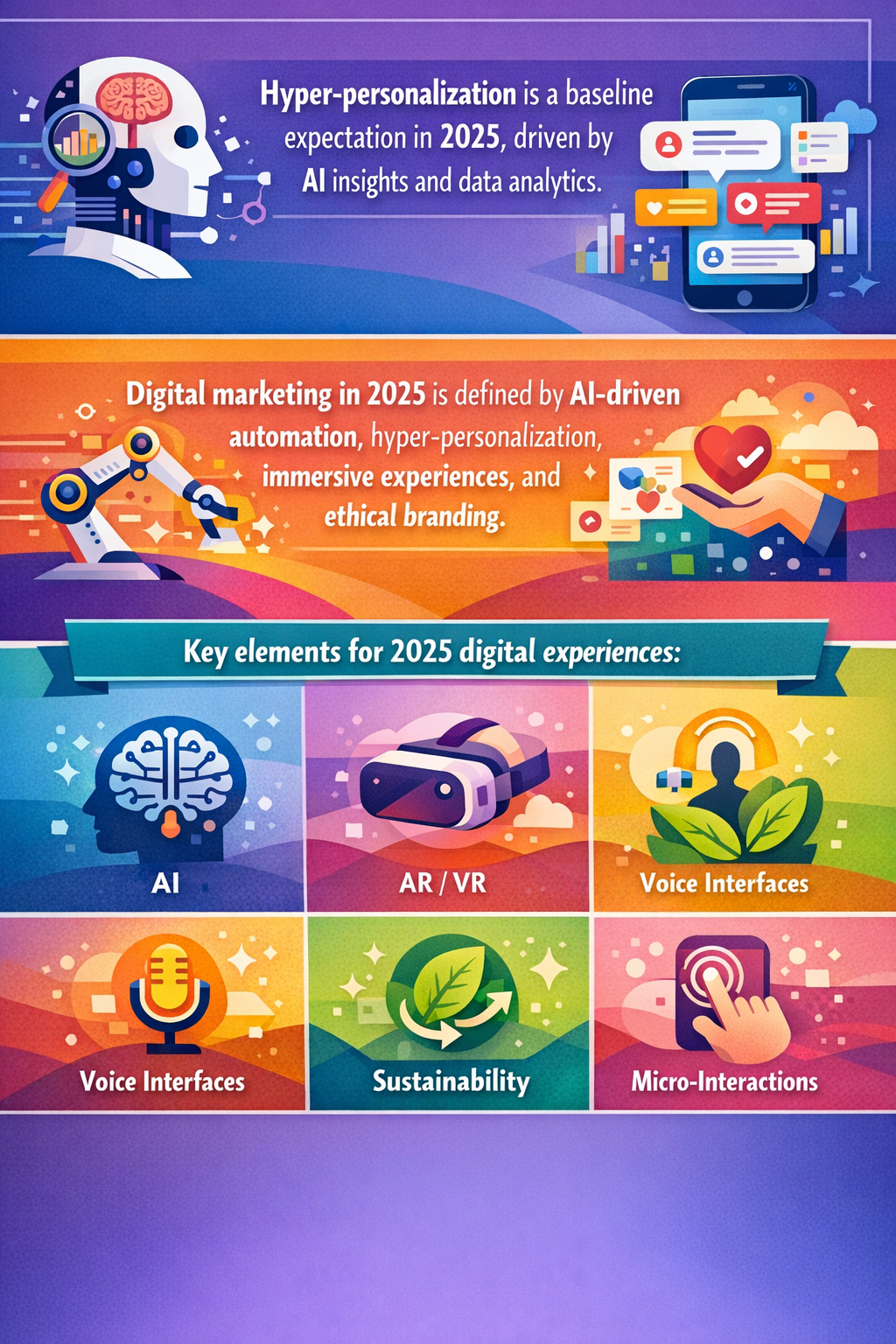
While hyper-personalisation is anticipated to be the norm by 2025, incorporating nuanced taxpayer behavior prediction as a service axis remains nascent. This subtle yet substantive shift may precipitate structural change, influencing compliance, risk governance, and public trust, demanding proactive foresight for agencies such as Belastingdienst.
Signal Identification
This development qualifies as a weak signal due to its current limited visibility despite its plausible long-term significance. It is distinct from general AI hyper-personalisation trends by embedding behavioral economics to tailor taxpayer services dynamically — anticipating not only taxpayer preferences but predicted behaviors and compliance likelihood. The time horizon is 10–20 years with a medium plausibility, contingent on advances in AI explainability, privacy frameworks, and adaptive regulatory mechanisms. Exposed sectors include government tax agencies, digital public services, regulatory compliance, and fintech-integrated consumption tracking services.
What Is Changing
Sources collectively emphasise AI’s maturation powering hyper-personalised experiences in financial and digital sectors by 2025–2026 (interface.ai 28/04/2024; Vrinsofts 15/02/2026). These hyper-personalised services utilize data analytics to configure user interfaces, offer tailored recommendations, and optimise operational workflows (moondraft.blog 12/05/2026). However, current narratives focus primarily on customer experience and operational efficiency, overlooking how integrating behavioral data — such as taxpayer decision patterns influenced by social and psychological factors — can refine service protocols, nudging compliance or optimized payment timing.
For tax authorities, this suggests moving beyond reactive personalization (e.g., reminders, segmented messaging) to proactive engagement models that anticipate taxpayer needs and likely actions. The fusion of AI capabilities with behavioral science exemplified in commercial AI-human centered design collaborations (EVA.Guru 20/03/2025) illustrates the potential for 'next-gen' government services that dynamically adjust based on inferred taxpayer sentiment or risk profiles rather than solely demographic or transactional data.
This approach signifies a systemic break from traditional one-size-fits-all tax compliance frameworks to fluid, contextually adaptive regimes unseen in current service delivery models. Importantly, the ethical and governance dimensions of such integration remain under-discussed even as digital marketing trends highlight the rise of AI-fueled hyper-personalization framed by trust and ethics (BoundlessTech 02/12/2024).
Disruption Pathway
Initially, increasing volumes of multi-dimensional taxpayer data combined with growing AI capabilities will enable models that identify not just what a taxpayer might want but what they are likely to do under varied circumstances. This can accelerate engagement precision, for example by pre-emptively offering tailored payment plans when financial distress indicators arise, or nudging voluntary compliance through trust-building communications informed by psychological models.
Such conditions, catalyzed by ongoing investments in AI-driven analytics and advances in digital identity frameworks, will stress current compliance systems relying on uniform regulatory enforcement and static segmentation. Agencies will need structural adaptations including dynamic regulatory thresholds, adaptive audit sampling strategies, and new accountability methods for opaque AI decisioning.
Over time, feedback loops emerge as taxpayers respond positively to more relevant, empathetic interactions, potentially increasing voluntary compliance rates and reducing enforcement costs. Conversely, intense personalization raises risks of perceived intrusion or profiling bias, triggering public backlash or legal scrutiny that could push governance reforms towards greater transparency and explainability requirements.
If successful, this shift could disintermediate traditional tax advisory and enforcement models, potentially ushering in a new industrial structure with integrated AI-enabled compliance platforms co-managed by public agencies and trusted third-party providers. Regulatory frameworks could morph from rule-based to outcome-based compliance overseen by continuous AI-driven monitoring, entailing sweeping governance model evolution.
Why This Matters
For capital allocation, government agencies may need to prioritize investments in advanced AI systems and cross-disciplinary talent that integrate behavioral science with data analytics, pivoting away from legacy IT modernization. This also influences vendor selection and contract frameworks, emphasizing ethical AI and transparency.
Regulators face emergent liabilities arising from AI-driven decisions affecting taxpayer rights, fairness, and data protection. There’s a risk that inadequate frameworks could impair trust and lead to costly legal challenges. Strategically, agencies that lead in harnessing these insights could achieve superior compliance outcomes and public engagement, thus strengthening fiscal stability.
Supply chains expand beyond traditional technology vendors to include psychological profiling experts and AI ethics consultants. Liability may shift towards shared accountability between government and AI developers, necessitating new risk governance protocols.
Implications
This signal suggests that hyper-personalized taxpayer services may evolve beyond superficial customization to behaviorally adaptive, AI-fueled systems driving continuous interaction optimization. Such transformation likely to occur over 10–20 years may structurally alter how tax compliance and enforcement are conceptualized and operationalized.
This is not merely a refinement of customer experience but a paradigm shift in digital public service architecture. It likely requires rethinking regulatory doctrines, privacy norms, and trust frameworks. However, some interpretations may contest this as an incremental technical upgrade rather than a systemic disruption, emphasizing enduring legal constraints and public scrutiny as barriers.
Nonetheless, ignoring this signal risks misallocating capital and lagging in strategic innovation, potentially undermining tax authorities' ability to engage increasingly digitally savvy and privacy-aware populations.
Early Indicators to Monitor
- Increased patent filings related to AI-driven behavioral analytics for compliance and public sector applications.
- Procurement shifts prioritizing AI vendors with behavioral science and explainability capabilities.
- Draft regulatory frameworks or standards explicitly addressing AI fairness, transparency, and behavioral data use in tax administration.
- Venture funding clustering in AI platforms integrating behavioral economics and compliance risk prediction.
- Capital reallocation by government agencies from legacy IT to interdisciplinary AI-human factors research partnerships.
Disconfirming Signals
- Regulatory clampdowns restricting the use of behavioral or psychological data in government service personalization.
- Persistent failures or public backlash over AI privacy violations or perceived bias in tax service personalization.
- Technological stagnation in explainable AI and adaptive service delivery hindering trust and adoption.
- Major taxpayer population resistance to behavioral nudges leading to opt-outs or disengagement.
Strategic Questions
- How can Belastingdienst integrate behavioral insights into AI-driven personalization without compromising transparency and taxpayer trust?
- What governance models are required to oversee AI-enabled adaptive compliance systems and mitigate emerging liability risks?
Keywords
AI-driven personalization; Behavioral economics; Taxpayer services; Regulatory innovation; Digital government; Explainable AI; Public sector AI; Compliance automation
Bibliography
- In 2025, hyper-personalization will be a baseline expectation, powered by AI-driven insights and advanced data analytics. Interface.ai. Published 28/04/2024.
- The FinTech industry in 2026 will be characterized by hyper-personalization and embedded, AI-driven services. Vrinsofts. Published 15/02/2026.
- By 2026, AI's maturity will have moved beyond nascent experimentation into widespread, practical application, fundamentally reshaping three core areas: knowledge work automation, operational efficiency, and hyper-personalization. moondraft.blog. Published 12/05/2026.
- The fusion of OpenAI's cutting-edge AI capabilities with Ive's human-centered design approach will likely reimagine how consumers discover and purchase products across major platforms. EVA.Guru. Published 20/03/2025.
- AI-fueled automation, hyper-personalization, immersive experiences, and ethical branding will characterize the world of digital marketing in 2025. BoundlessTech. Published 02/12/2024.