Our Scans
·
Practical AI in healthcare
·
Roadmap
BLUF (Bottom Line Up Front)
Atradius must proactively integrate AI governance, data-driven healthcare innovation, advanced emergency management, and social mobility commitments into a unified transformation roadmap to sustainably manage risk, enhance operational resilience, and drive equitable growth in an evolving regulatory and technological landscape.
Key Drivers, Trends & Signals
- AI Governance Expansion: Autonomous AI agents demand robust runtime controls, audit trails, and insurance frameworks to mitigate escalating operational risks (Windows Forum).
- Healthcare AI Adoption & Regulation: AI-driven care can improve outcomes by 40% and cut costs by 50%, yet ethical, legal, and algorithmic bias concerns slow adoption (NIHCM), compounded by fragmented federal/state regulatory frameworks (Real Economy Blog).
- Social Mobility & Workforce Equity: Growing opportunity gaps, youth unemployment, and rigid workplace cultures require that businesses embed inclusive recruitment, progression, and flexible work policies (Fair Play Talks).
- AI-Powered Marketing & Enterprise Tools: Agentic AI workflows, integrated with enterprise systems and supported by platforms like Microsoft 365 and OpenAI Codex, are reshaping automation and governance demands (MarketingProfs).
- Emergency Management Market Growth: The U.S. emergency management market is expanding at 5.6% CAGR, driven by climate crises, government funding, AI-based decision support, and cloud adoption (Persistence Market Research).
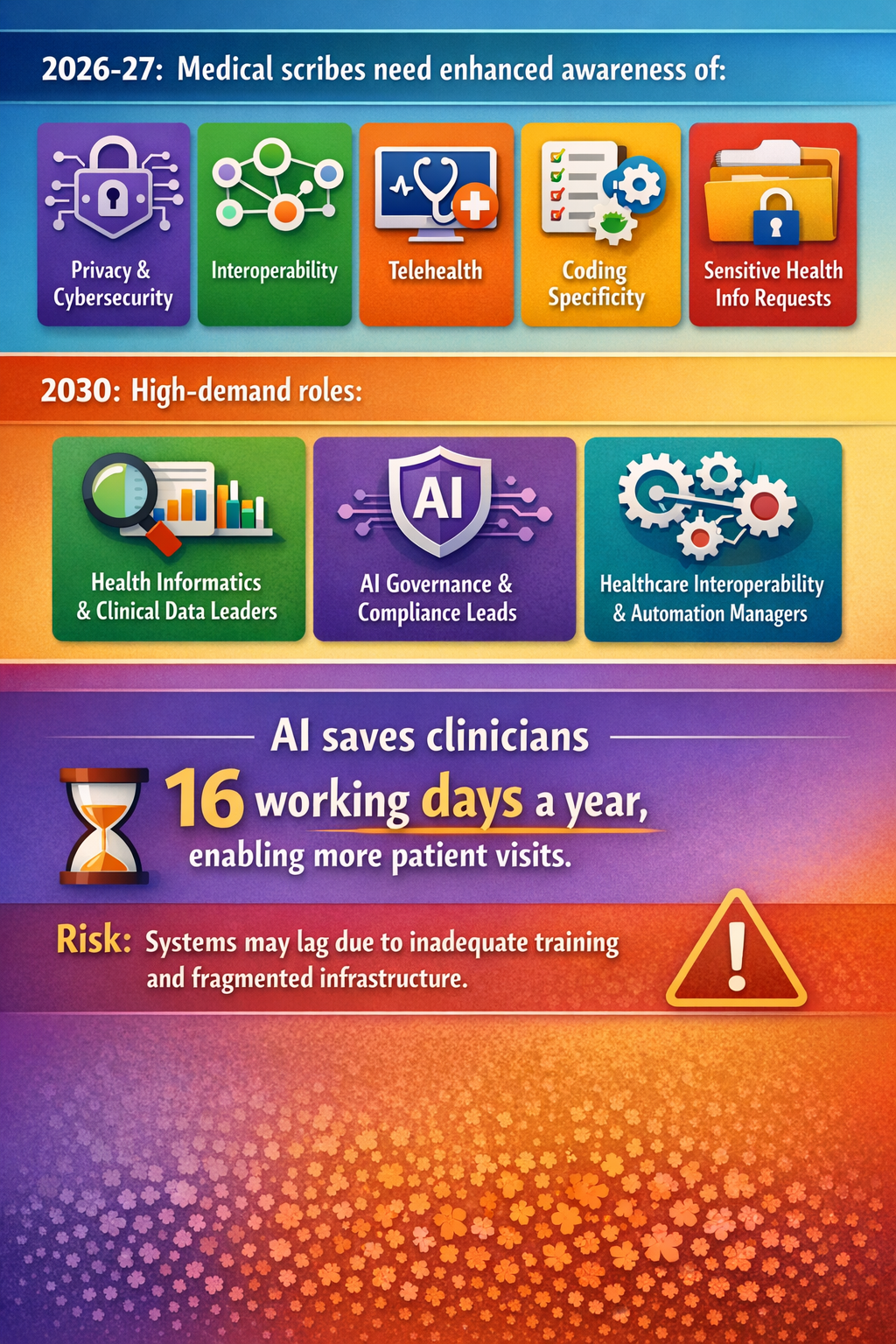
- Healthcare Workforce Evolution: By 2030, hybrid roles bridging technology, clinical care, governance, and operations will dominate, highlighting the need for adaptability and translational talent (Senior Executive).
Priority Concerns
Immediate Concerns
- Regulatory fragmentation in AI use across states and sectors increasing compliance complexity, particularly in healthcare and insurance.
- Operational risks from widespread deployment of autonomous AI agents without enforceable governance and audit systems.
- Low adoption rates of potentially transformative AI solutions in healthcare due to trust, bias, and workforce readiness gaps.
- Urgent need for embedding socioeconomic inclusion into hiring and retention to mitigate talent shortage and social inequity risks.
Damaging Concerns
- Catastrophic AI failures resulting from unchecked agent autonomy leading to financial, legal, and reputational damage.
- Entrenchment of health inequities and regulatory non-compliance due to biased AI models and poor governance.
- Legacy IT and siloed data ecosystems impeding integration of AI-driven emergency management and healthcare workflows.
- Failure to adapt workforce strategies leading to loss of competitiveness and innovation capacity by 2030.
Scenario Implications
Most Likely
Progressive but uneven AI adoption with evolving regulatory oversight mandates; gradual workforce transformation; mixed success in social mobility efforts; growing emphasis on AI governance; sustained emergency management services growth bolstered by climate pressures.
Best Case
Seamless AI integration across insurance, healthcare, and emergency management powered by unified governance platforms, optimized workflows, and data interoperability; robust socially inclusive talent pipelines; mutual trust with regulators and stakeholders; significant operational efficiencies and risk reductions.
Worst Case
Regulatory fragmentation causes delays and legal risks; AI deployments lead to high-profile governance failures; healthcare AI adoption stalls due to bias and safety concerns; social mobility stagnates widening inequity; emergency response capabilities overwhelmed by unmanaged legacy infrastructure and ineffective leadership.
Stakeholder Perspectives
- Enterprises/Insurers/Healthcare Providers: Winners if agile in deploying AI governance and workforce transformation; losers if failing to adapt to compliance and tech demands.
- Employees & Workforce: Neurodiverse, socially disadvantaged, and adaptable professionals stand to gain; rigid roles and skill gaps risk displacement.
- Regulators: Winners if able to harmonize frameworks and enforce transparency; challenged by rapid tech evolution and jurisdictional overlaps.
- Consumers & Vulnerable Communities: Safeguarded by responsible AI use and inclusive policies; at risk if bias and opaque systems prevail.
- Technology Vendors & Partners: Winners if delivering integrated, auditable AI governance solutions; marginalized if unable to meet enterprise-grade controls.
Transformation Roadmap
Short-term (1–3 years)
- Technology: Deploy AI governance platforms integrated with enterprise workflows; initiate audit trail and authority boundary enforcement for AI agents.
- Governance: Establish cross-functional AI risk and compliance committees; embed continuous monitoring aligned with evolving regulations.
- Infrastructure: Begin modernization towards cloud-based emergency management and healthcare systems; address legacy interoperability gaps.
- People: Launch AI literacy, upskilling, and bias-awareness programs; initiate social mobility-aligned recruitment and inclusion pilots.
- Partnerships: Form alliances with AI governance tech vendors, insurers, regulatory bodies, and social mobility organizations.
- Sustainability: Assess AI technology environmental impact; begin embedding energy efficiency in procurement standards.
Mid-term (3–7 years)
- Technology: Scale trusted AI agents with risk-based pricing and dynamic control enforcement; integrate healthcare AI diagnostics with clinical workflows.
- Governance: Standardize transparent reporting and auditability; expand compliance across multi-jurisdictional environments.
- Infrastructure: Fully adopt cloud-native, AI-enabled emergency operations centers; optimize data strategy and cybersecurity integration.
- People: Institutionalize cross-disciplinary translator roles bridging clinical, operational, and technical domains; broaden social mobility frameworks to progression.
- Partnerships: Develop public-private innovation coalitions focusing on equitable AI deployment.
- Sustainability: Implement AI usage benchmarks tied to carbon impact; foster green IT practices.
Long-term (7–15 years)
- Technology: Mature AI ecosystems with self-governing agents, continuous compliance, and integrated insurance-backed risk transfer mechanisms.
- Governance: Achieve globally aligned regulatory frameworks and adaptive governance models informed by real-time telemetry.
- Infrastructure: Realize fully interoperable, AI-optimized healthcare and emergency management systems driving predictive resilience.
- People: Embed AI fluency and adaptability as standard workforce competencies; sustain robust, inclusive social mobility outcomes.
- Partnerships: Institutionalize multi-sector alliances driving ethical AI advancement and social value creation.
- Sustainability: Lead in climate-conscious AI ecosystem stewardship with transparent reporting and continuous improvement.
KPIs & Metrics
- AI adoption rate and delegated authority scope within autonomous workflows.
- Compliance coverage and audit trail completeness ratios.
- Healthcare outcome improvements and treatment cost reductions.
- Reduction in incident rate attributable to AI governance failures.
- Social mobility indicators: recruitment diversity, retention, and progression statistics.
- Cloud migration percentage and legacy system decommission metrics.
- Energy consumption and carbon footprint related to AI infrastructure.
- Employee AI literacy and upskilling completion rates.
Enablers & Barriers
- Enablers: Cross-sector partnerships, evolving regulatory clarity, advanced AI governance platforms, workforce adaptability programs, and government funding support.
- Barriers: Regulatory fragmentation, complexity of integrating legacy systems, cultural resistance, AI trust deficits, budget constraints, and sustainability trade-offs.
Benchmarks & Case Insights
- Microsoft’s integrated AI governance stack demonstrates the power of native compliance woven into enterprise identity and productivity tools.
- Utah’s AI Policy Act and sandbox model exemplify pragmatic regulatory experimentation balancing innovation and safety in health AI.
- BT Group and EE’s partnership with Future Leaders UK provides a replicable model for embedding social mobility at scale via employer-community collaboration.
- Everbridge’s cloud-based emergency operations centers showcase effective deployment of scalable, GIS-integrated emergency management systems.
- Health systems investing in Clinical AI Architects highlight the criticality of translational roles bridging operations, tech, and patient care.
Early Warning Signals
- Emergence of high-impact autonomous AI failures in enterprise operations with unclear liability attribution.
- Regulatory pushbacks or moratoriums in key jurisdictions signaling governance inadequacies.
- Declining workforce engagement or social mobility metrics indicating talent pipeline risks.
- Escalating legacy system failures hindering emergency response or healthcare delivery.
- Rapid increases in AI-related energy consumption triggering sustainability criticisms.
- Publicized data breaches or bias incidents affecting AI credibility.
Implementation Guidance
- Establish an Executive AI and Transformation Steering Committee with representation from risk, compliance, technology, operations, HR, and external partners.
- Deploy an AI Innovation Hub to pilot governance, workflow integration, and social mobility programs with clear, iterative evaluation milestones.
- Coordinate a multi-disciplinary regulatory coalition to anticipate and shape policy environments.
- Adopt agile project management methodologies that link technology deployment with workforce capability development.
- Engage insurance partners early to co-develop risk transfer models aligned with AI governance structures.
Communications & Engagement Recommendations
- Develop transparent, frequent internal communications highlighting AI governance principles, use case benefits, and safeguards to build trust among employees and leadership.
- Share social mobility success stories and progression pathways to inspire and retain diverse talent.
- Engage regulators and public stakeholders proactively through open forums and impact reporting to establish legitimacy.
- Use multi-channel campaigns incorporating behavioral insights to overcome fear of AI adoption and change.
- Employ continuous learning platforms and feedback loops to refine engagement and adoption efforts.
Briefing Created: 24/06/2026