
Algorithmic Psychosocial Risk Management: A Nascent Inflection in Workforce Technology
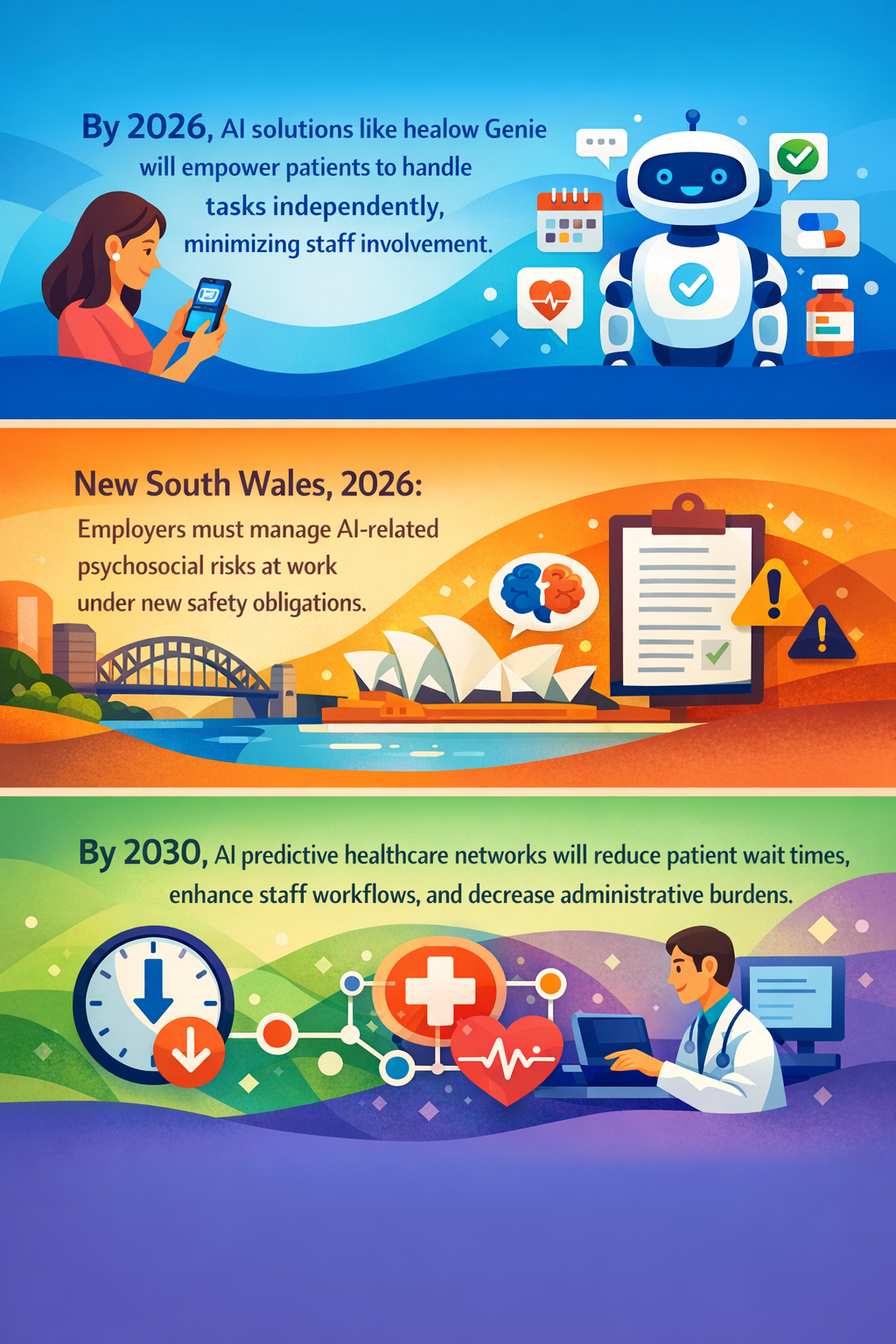
This insight paper explores the emerging regulatory and operational imperative for managing psychosocial risks driven by AI and algorithms in workplaces, forecasting potential structural shifts in workforce governance over the next decade. By 2026, employers in New South Wales will face new mandates addressing AI-induced psychosocial hazards, a development signaling a deeper integration of algorithmic oversight into workforce health and safety protocols. This weak signal could cascade into widespread redefinition of labor capital allocation, compliance frameworks, and industrial relations.
The integration of AI technologies in workforce environments is no longer just a productivity enhancer or cost reducer — it is becoming a material determinant of worker well-being and organizational liabilities. Yet the psychosocial stressors generated by algorithmically managed workflows remain under-examined and inadequately regulated across global jurisdictions. Recognizing and managing these risks preemptively may trigger fundamental changes in industrial standards and capital deployment strategies that extend well beyond traditional occupational health measures.
Signal Identification
The focal development qualifies as a weak signal with potential inflection indicator properties. It concerns mandated employer obligations to manage psychosocial risks arising specifically from AI and algorithm-driven workplace decision-making, commencing in New South Wales in 2026 (Business Chamber QLD 01/01/2026). While the presence of AI in workplaces is widely acknowledged, the explicit psychosocial risk management mandate tied to AI is narrowly recognized and under-addressed globally.
The estimated time horizon for scaling structural impact is medium-term (5–10 years), with medium to high plausibility given regulatory momentum and rising operational incidents linked to AI-managed environments. Key exposed sectors include healthcare, logistics, manufacturing, and technology services — all intensive in algorithmic oversight.
What Is Changing
Several cross-cutting trends emerge from the referenced articles, converging on a structural recalibration of workforce governance under AI influence. First, legislated health and safety requirements are moving beyond physical risks to legally encompass psychological hazards induced by AI and algorithmic management (Business Chamber QLD 01/01/2026). This marks a systemic shift toward embedding algorithmic accountability in labor law.
Second, AI’s dual role is underscored: it holds promise for enhanced worker safety and discrimination mitigation, yet concurrently risks intensifying workplace pressures, fostering job insecurity, and suppressing collective worker agency (Orange County Register 16/01/2025). Empirical fallout has manifested in higher injury rates in AI-managed warehouses, highlighting unintended psychosocial harms.
Third, enterprise adoption of AI to enhance productivity and health workflows is accelerating, as exemplified by Microsoft’s acquisition of Nuance for AI-driven clinical and workforce support, promising better worker experience but also complexity in oversight (Datamation 19/12/2023). This industrial intensification increases opacity around decision-making algorithms and their psychosocial footprints.
Fourth, cost-containment pressures in healthcare and employment are driving automation and benefit scaling back, exacerbating workforce vulnerabilities to algorithmic management stressors (KevinMD 01/09/2021).
Finally, projections that AI-powered predictive healthcare networks might reduce administrative burden and improve workflows by 2030 suggest that AI will deeply embed into staff operations, making psychosocial risk management a frontline industrial challenge (Forbes 19/12/2023).
The substantive structural theme is the emergent regulatory and operational recognition that AI-driven workplace psychosocial risks form a new class of obligations for employers and industrial regulators, distinct from traditional injury and safety challenges. This theme is under-recognized globally and may require rethinking industrial relations, capital allocation to workforce technology safety, and compliance governance.
Disruption Pathway
This signal could evolve into structural change through several sequential causal mechanisms. Initially, regulatory bodies in NSW and subsequently other regions may broaden psychosocial risk frameworks to explicitly include algorithmically driven stressors and discriminatory practices, forcing employers to audit and redesign AI systems for worker well-being. This legal imperative could catalyze a surge in technology compliance investments, creating new capital deployment vectors conditioned on algorithmic transparency and human-centered design.
As AI managerial oversight intensifies across sectors, workplace stress and injury claims linked to algorithmic decision-making may rise, imposing reputational and liability costs. Increasing public and union scrutiny would intensify pressure to regulate opaque AI systems.
Industry adaptations would likely include formalizing AI psychosocial risk indexes, embedding real-time monitoring of algorithmic labor impact, and developing new governance models combining AI ethics, occupational health, and labor relations. Enterprises may restructure capital allocations towards compliant, transparent AI tools and psychosocial support systems, diminishing appetite for aggressive automation devoid of worker protections.
Feedback loops could amplify these dynamics — improved psychosocial monitoring revealing further AI harms would accelerate mandates, while insufficient regulatory frameworks might exacerbate labor disputes and drive demands for industry-wide AI standards.
Ultimately, dominant industrial relations and regulatory models could shift from reactive injury compensation towards proactive AI-psychosocial governance frameworks. This transition would realign industrial power balances, elevate worker digital rights, and reconfigure occupational health paradigms aligned with algorithmic labour management realities.
Why This Matters
This signal carries critical decision relevance. Capital allocation might pivot towards technologies demonstrably compliant with psychosocial risk management requirements, thereby creating a new investment category within workforce tech. Employers and insurers face potential shifts in liability due to algorithm-induced harms, amplifying governance and risk frameworks’ complexity.
Regulatory landscapes are likely to evolve rapidly, necessitating proactive compliance strategies and interdisciplinary collaboration between technologists, HR, occupational health professionals, and policymakers. Competitive positioning will favor organizations able to transparently integrate AI with worker well-being priorities, while supply chains may require analogous risk management adaptations to meet downstream compliance.
For government, implications include setting regulatory precedents and benchmarks that could influence global AI and labor policy norms. There is a tangible risk that absent early adaptation, institutions may confront intensified litigation, workforce unrest, or systemic safety failures.
Implications
This development may structurally redefine labor regulation by embedding AI-related psychosocial risk as a core compliance criterion, likely expanding occupational health and safety's scope. Traditional notions of workplace safety might evolve into hybrid techno-social governance paradigms.
The phenomenon should not be conflated with general AI adoption hype or isolated productivity gains; rather, it is a systemic risk governance evolution. It might be transient if regulatory inertia prevails or enforcement difficulties arise; however, medium-term regulatory and market pressures render this less probable.
Competing interpretations might view these developments as incremental controls without wider industrial repercussions, but the convergence of regulatory action, documented AI-induced harms, and capital responses suggests a potential inflection rather than mere trend layering.
Early Indicators to Monitor
- Publication of further regulatory guidelines and standards on AI psychosocial risk management beyond NSW, nationally and internationally
- Surge in occupational health and safety claims or litigation citing AI-induced psychosocial harms
- Increased enterprise disclosure of algorithmic impact audits and psychosocial risk mitigation investments
- Venture capital and procurement shifts favoring compliant AI workforce solutions with psychosocial risk features
- Formation of interdisciplinary working groups or standards bodies integrating AI ethics and occupational health domains
Disconfirming Signals
- Regulatory rollback or dilution of AI psychosocial risk management requirements post-2026
- Empirical evidence showing negligible psychosocial harm attributable to workplace AI management
- Industry-wide refusal or inability to implement mandated psychosocial risk mitigation technologies
- Lack of litigation or worker organizing around AI-driven psychosocial injuries
- Emergence of effective AI governance models that minimize psychosocial risks without regulatory intervention
Strategic Questions
- How can ministries and enterprises proactively integrate psychosocial risk assessments into AI workforce systems before regulatory mandates become binding?
- What cross-sectoral governance frameworks can best balance AI innovation benefits with emergent psychosocial risk liabilities?
Keywords
AI psychosocial risk; algorithmic management; workplace health safety AI; occupational health innovation; workforce regulatory change
Bibliography
- In New South Wales, new work health and safety obligations will require employers to manage psychosocial risks from AI and algorithms in the workplace starting in 2026. Business Chamber QLD. Published 01/01/2026.
- AI has the potential to reduce discrimination and improve worker health and safety but it also has the potential to drive job losses, help suppress worker organizing efforts, and intensify demands placed on workers, a phenomenon that led to higher injury rates at Amazon warehouses. Orange County Register. Published 16/01/2025.
- Microsoft plans to use AI technology from Nuance to help clients enhance consumer, clinician, and employee experiences as well as improve productivity and financial performance. Datamation. Published 19/12/2023.
- In response to the growing unaffordability of medical care, 80% of CFOs are expected to implement aggressive cost-containment measures in 2021, which include scaled-back employee benefits, further layoffs, and accelerated automation. KevinMD. Published 01/09/2021.
- AI-powered predictive healthcare networks are expected to aid in decreasing patient wait times, improving staff workflows, and reducing the ever-growing administrative burden by the year 2030. Forbes. Published 19/12/2023.