
Unveiling Gamified Talent Ecosystems: The Emerging Wildcard Reshaping Workforce Operational Strategies
Discover how gamification-driven workforce engagement could transform hiring, skills development, and organisational resilience in health and related sectors. This insight surfaces a low-recognition wildcard with potential to realign capital allocation, regulatory constructs, and industrial frameworks over the next decade.
Amid rising operational pressures and a global workforce strained by skill shortages, novel approaches leveraging game mechanics and behavioural economics are emerging beyond common digital recruitment or employer branding tactics. These “gamified talent ecosystems” embed work, training, and career advancement within interactive, adaptive environments that drive intrinsic motivation, granular data capture, and continuous upskilling—far deeper than analytics or skilling initiatives alone. Currently underappreciated outside niche HR tech circles, such ecosystems could catalyse structural disruption in workforce strategies across healthcare, emergency services, and public sector domains. This paper investigates their potential scale and systemic impact, drawing evidence from multiple sectoral developments and institutional moves poised to accelerate this trend.
Signal Identification
This development constitutes a wildcard signal. It is currently nascent, under-recognised, and exhibits high uncertainty yet substantial transformative potential. As gamified talent ecosystems blend behavioural science, data analytics, and technology-driven workforce engagement, they deviate significantly from typical talent acquisition or strategic workforce planning methods. These ecosystems may scale to structural change within a medium horizon (5–10 years) as adoption moves beyond HR leaders into core organisational strategy, especially in sectors facing acute labour constraints and systemic risk such as healthcare and emergency services. The plausibility band is medium given current technological feasibility and early policy signals incentivising workforce innovation. Exposed sectors include healthcare providers, public safety, government workforce initiatives, and skilling-driven growth economies of Asia Pacific.
What Is Changing
Multiple developments reflect and underpin the unfolding of this wildcard.
First, there is a ubiquitous recognition that traditional talent management and recruitment strategies insufficiently address systemic workforce strain and skills gaps. Only 15% of firms engage in strategic workforce planning (Leapsome 28/02/2026), highlighting a widespread inability to anticipate talent needs effectively. This planning deficit creates critical openings for adaptive frameworks that gamified systems could provide by aligning employee development with organisational goals via real-time feedback and rewards.
Second, data analytics is increasingly central, with 67% of HR leaders budgeting for HR analytics investments in 2026 (Pact and Partners 15/01/2026). However, most analytics efforts remain tactical, focused on recruitment funnel improvement or employer branding through social media platforms such as LinkedIn, Instagram, and TikTok (Talos360 10/02/2026). The shift toward gamified ecosystems transcends this by integrating behavioural motivators and continuous learning into daily operations rather than episodic recruitment drives or passive brand promotion.
Third, workforce resilience programs like Pennsylvania’s professionalisation of Emergency Medical Services, with bonuses, training, and mental health mentorship (National Governors Association 03/03/2026), reveal a policy traction toward improving workforce stability through systemic support rather than isolated incentives. Gamified systems could amplify these objectives by embedding skill acquisition, performance recognition, and wellbeing monitoring into participatory frameworks, making workforce enhancement both proactive and scalable.
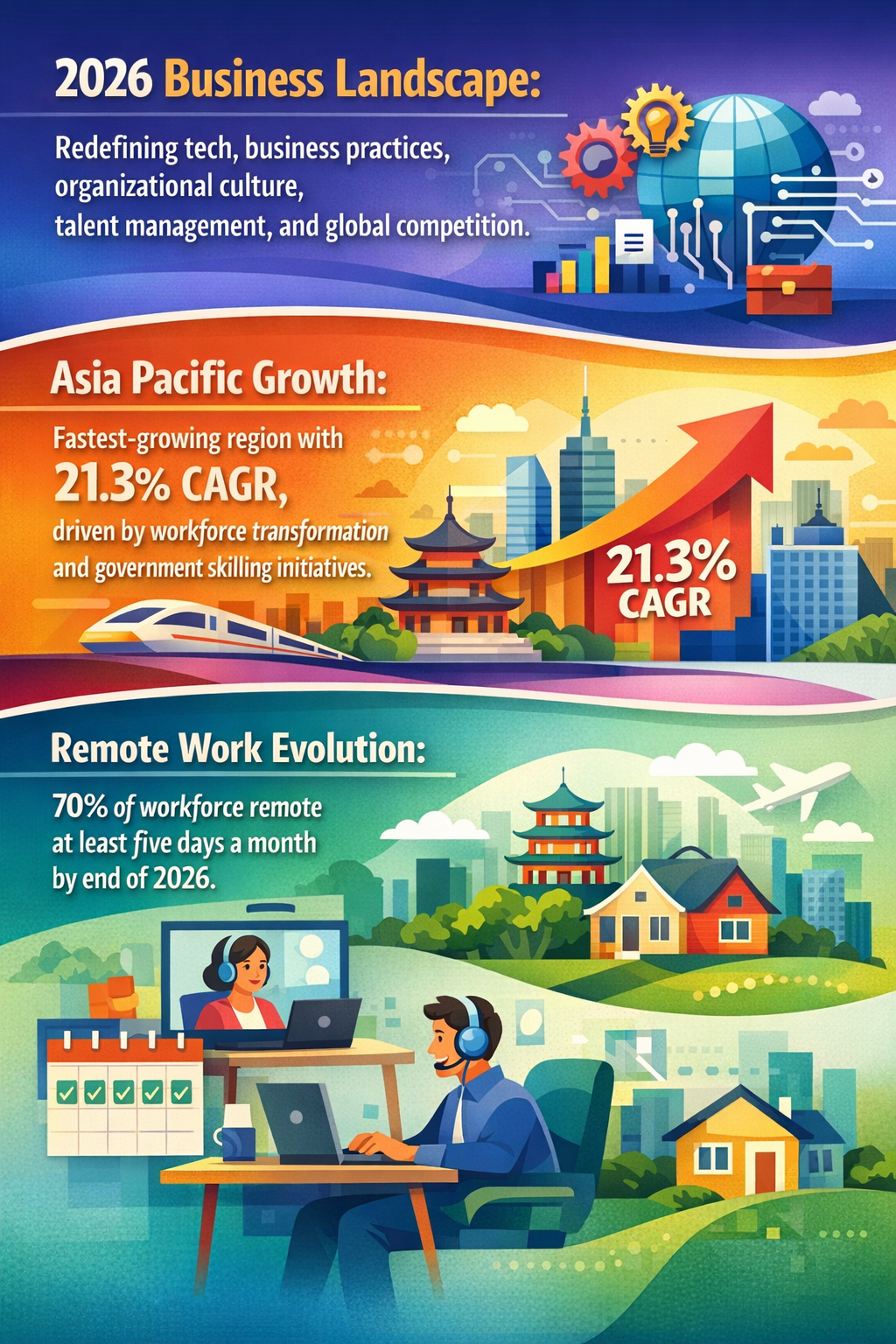
Fourth, the Asia Pacific region’s anticipated 21.3% compound annual growth rate in alternative credential markets driven by broad skilling initiatives (Persistence Market Research 20/04/2026) signifies a fertile environment for gamified approaches to credentialing and continuous education, potentially redefining talent pipelines beyond traditional university or employer-led programs.
Disruption Pathway
The escalation of gamified talent ecosystems into structural workforce change would first require broadening pilot projects and early adopter programs within critical, strained sectors such as healthcare and emergency services. As workforce challenges intensify—evident in projected respiratory therapist shortages impacting rural health (Market Data Forecast 11/01/2026)—the urgency to innovate operational models will accelerate.
This would introduce stresses to current HR and regulatory systems, which are largely unprepared to integrate continuous, technology-mediated behaviour incentives and skills validation at scale. Institutional resistance may emerge from legacy compliance requirements, union contracts, or cultural inertia, but policy shifts favoring workforce flexibility and professionalisation (as in Pennsylvania’s EMS reforms) create openings for adaptation.
The structural adaptation would see organisations transition from linear, infrequent talent assessments to dynamic, gamified environments facilitating ongoing learning, mentoring, and performance metrics tied to both workforce wellbeing and operational outputs. These systems generate rich data streams enabling predictive workforce planning and risk management beyond what static analytics currently permit.
Feedback loops would reinforce positive reinforcement of skill acquisition and engagement, reducing turnover and burnout, which currently strain healthcare provision (LinkedIn/Alithya 08/01/2026). Unintended consequences could involve workforce segmentation, where gamified rewards disproportionately benefit digitally-savvy employees or marginalise those less engaged with technology, necessitating inclusive design.
Over time, dominant industrial and regulatory models governing workforce qualification, licensure, and compensation may be redefined, incorporating gamified credentials as legitimate, standardised markers for skill and reliability. Regulatory frameworks could evolve to accommodate continuous competency validation rather than periodic licensure renewal, reshaping workforce governance fundamentally.
Why This Matters
For senior decision-makers, this wildcard carries significant implications for capital deployment decisions, particularly regarding investments in workforce technology platforms, training infrastructure, and analytics capabilities. Misjudging the trajectory could lead to suboptimal allocation in traditional recruitment and training methods facing diminishing returns.
Regulatory bodies need to anticipate potential shifts in compliance frameworks, licensing paradigms, and workforce credential recognition, to avoid lagging behind rapidly evolving operational realities.
From an industrial structure standpoint, gamified talent ecosystems could recalibrate competitive positioning within healthcare and public safety sectors by privileging organisations that master continuous workforce engagement and skill alignment. Supply chains relying on specialised labour could see changed dependencies and risk profiles as digital credentialing and engagement modulate talent availability and distribution.
Governance systems overseeing employee welfare and organisational risk must adapt to integrate data privacy, ethical use of behavioural data, and equitable access considerations intrinsic to gamified environments. Liability shifts may occur if performance metrics become externally monitored or tied to remuneration and employment conditions.
Implications
This development may redefine workforce operational strategies from episodic interventions toward immersive, continuous engagement models. Organisations might increasingly rely on gamified ecosystems to manage talent supply and demand dynamics adaptively, complementing or supplanting conventional HR analytics and strategic planning approaches.
It is unlikely a transient HR fad given convergence with broader digital transformation trends and policy signals targeting professionalisation and wellbeing.
However, competing interpretations could view this development as overhyped novelty lacking scalability or argue persistent challenges in inclusivity and data governance may constrain adoption.
This signal should not be conflated with mere employer branding or social media recruitment trends but understood as a system-integrated approach leveraging behavioural science tools to drive workforce structural change.
Early Indicators to Monitor
- Increased venture capital and institutional funding into gamified workforce engagement platforms tailored for healthcare and public sector.
- Formal pilot programs or regulatory consultations on credentialing reforms that integrate continuous digital validation or gamified learning components.
- Procurement shifts within government health agencies toward immersive talent analytics and engagement solutions beyond basic HR data tools.
- Corporate policy announcements expanding employee skill gamification and mental health engagement programs.
- Standards development entities initiating frameworks around gamified credentialing, data ethics, and interoperability in workforce ecosystems.
Disconfirming Signals
- Regulatory opposition to use of gamified behavioural data in workforce evaluation or licensure delaying standard adoption.
- Widespread employee resistance to gamified work environments reflecting privacy or fairness concerns.
- Technological fragmentation limiting interoperability of gamified platforms across industries and government programs.
- Capital retraction from HR tech segment due to unmet scalability or ROI expectations.
- Policy retrenchments favoring traditional workforce credentials and linear career paths over digital disruption.
Strategic Questions
- How prepared are current workforce governance frameworks to accommodate continuous, gamified credentialing and performance validation?
- What investments in digital infrastructure and data ethics capability are required to scale gamified talent ecosystems in healthcare and public sectors?
Keywords
Gamified talent ecosystems; Workforce operational strategies; HR analytics; Continuous credentialing; Healthcare workforce transformation; Workforce resilience; Workforce governance; Workforce professionalisation
Bibliography
- Data analytics is critical to recruitment strategy (Source: MSH 2026). Pact and Partners. Published 15/01/2026.
- Pennsylvania will treat Emergency Medical Services workers as a professional provider workforce by providing rural service bonuses, training opportunities, tuition reimbursement for career advancement and mental health mentorship. National Governors Association. Published 03/03/2026.
- Healthcare providers are entering 2026 with strong expectations for growth, but their ability to deliver hinges on how well they manage systemic risk, workforce strain, and mounting operational pressure. LinkedIn/Alithya. Published 08/01/2026.
- Asia Pacific is likely to be the fastest-growing region, with a projected CAGR of 21.3%, driven by large-scale workforce transformation and government-led skilling initiatives. Persistence Market Research. Published 20/04/2026.
- Only 15% of companies engage in strategic workforce planning, limiting their ability to anticipate talent needs. Leapsome. Published 28/02/2026.
- Employment of respiratory therapists is projected to grow, but supply remains insufficient to meet rising demand, particularly in rural and underserved areas. Market Data Forecast. Published 11/01/2026.
- LinkedIn is the ideal place to promote job opportunities and your employer brand, while platforms like Instagram and TikTok can be used to showcase your company culture and engage with both active and passive candidates. Talos360. Published 10/02/2026.