
Welcome to Shaping Tomorrow

Our Scans · Culture & Diversity in the workplace · Weak Signals & Wild Cards


Foresight Briefing: Weak Signals & Wild Cards in Workplace Culture & Diversity for Ministry of Health NSW

Foresight Briefing: Weak Signals & Wild Cards in Culture & Diversity in the Workplace
Ministry of Health NSW

1. Headline & Summary

Within the domain of workplace culture and diversity, particularly for the Ministry of Health NSW, a constellation of nascent and fragmented signals hints at evolving workforce demographics, cultural identity shifts, and changing workforce expectations—especially driven by Gen Z’s emerging prominence and new cultural dynamics such as the “Chinamaxxing” trend. These signals challenge conventional assumptions about diversity inclusion as solely demographic or compliance-driven, instead surfacing subtle shifts in cultural value systems and expectations about hierarchy, productivity, and community benefits. While largely early-stage and disconnected, these weak signals suggest pathways toward systemic inflection points involving cultural alignment, equity-driven procurement policies, and redefined employer branding. There is also potential for disruptive wild cards around labour standards and fast-evolving workforce behaviours that could trigger substantial opportunity or risk, particularly if public policy or global cultural flows accelerate these undercurrents.

2. Weak Signals Overview

Weak Signal Name Description Visibility / Maturity Direction of Travel Why it Matters
Chinamaxxing: Gen Z Cultural-Work Shift A nascent Gen Z trend emphasizing simplicity, balanced productivity, and a questioning of hierarchical workplace norms influenced by Chinese cultural aesthetics and values. Fragmented, early-adopter niche; mostly social media and commentary level Emerging (gaining conceptual traction in 2025-26) Challenges orthodox assumptions about leadership, work pace, and global cultural flows influencing Australian workplace culture; signals changing employee value drivers.
Demand for Workplace Culture Reviews Strong upward demand for culture assessments in workplaces, seen in 2025 with momentum into 2026. Moderate visibility; expanding beyond early adopters into mainstream organisations Emerging, with new actors entering market Reflects growing awareness of culture as a dynamic factor affecting retention, equity, and compliance; indicates opportunity for proactive culture shaping.
Evolving Australian Cultural Landscape Impacting Business Businesses—across marketing, products, and engagement—are having to adapt to Australia’s diversifying cultural milieu. Moderate; sector-wide discussions emerging but mostly tactical Emerging, moving from fragmented to more cohesive acknowledgement Underscores need to rethink diversity beyond quotas, including cultural fluency and intersectionality; potential to reshape workforce policies.
Push by Canada's Unions for Inclusive Public Procurement Union advocacy to leverage policy tools to improve workplace standards, diversifying opportunities, and social benefits through government projects. Niche to moderate visibility; largely policy and advocacy phase in Canada Emerging with increasing political attention Signals possible systemic integration of equity and diversity into employment via public infrastructure projects; a governance lever not typical in Australia yet.
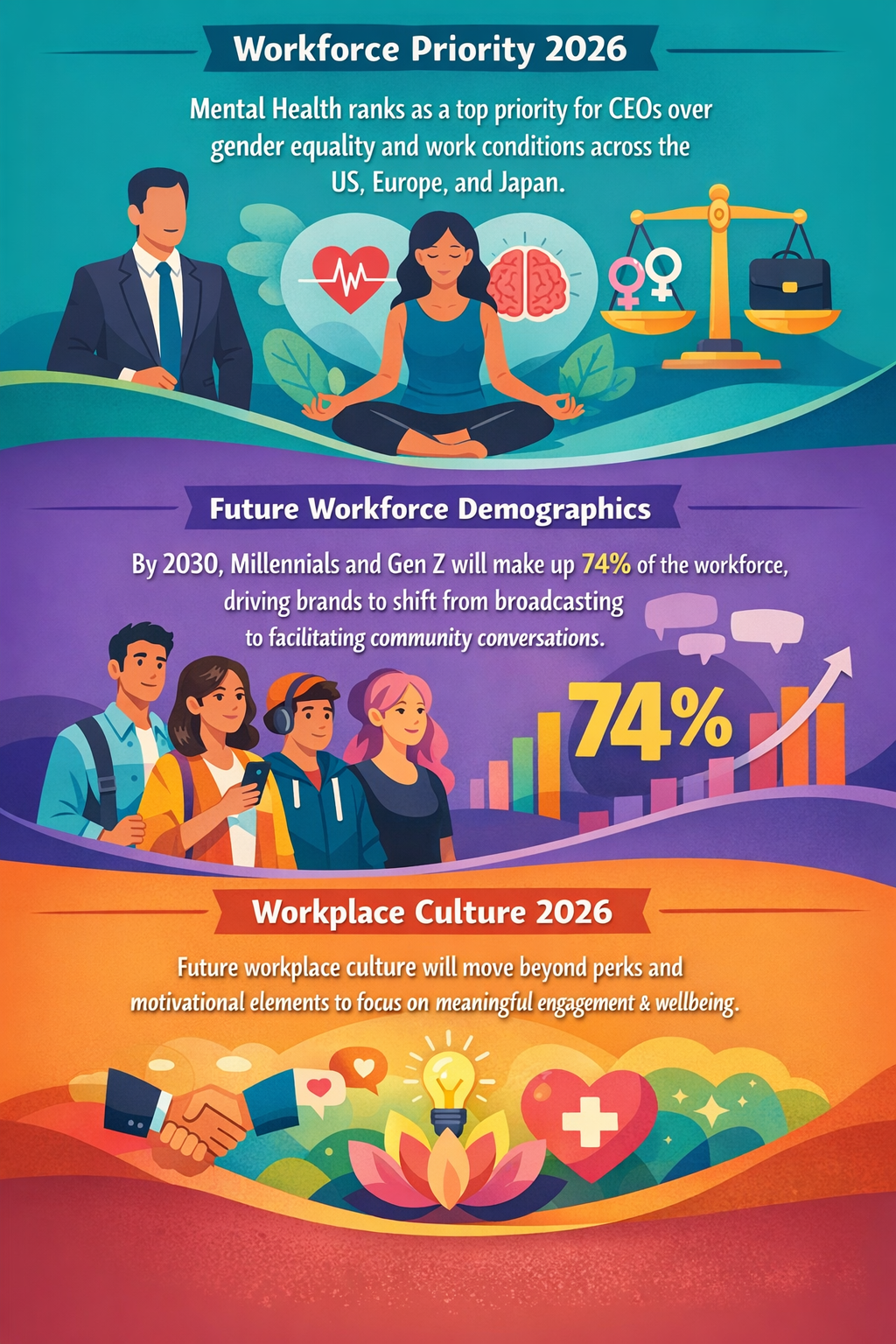
Rising Gen Z Workforce Share and Hiring Expectations Gen Z share of workforce rising sharply (projected 30% by 2030), with emerging expectations for fast, transparent hiring processes. Moderate visibility in workforce analytics and HR planning Emerging, with accelerating uptake Suggests generational values impacting recruitment, retention, and cultural fit strategies; delays or opacity threaten talent pipelines.

3. Emerging Proto-Patterns

Three linked proto-patterns emerge from these weak signals, each representing a potential future pathway that could reshape workplace culture and diversity dynamics within the Ministry of Health NSW:

Culture Beyond Demographics: The “Chinamaxxing” trend combined with evolving Australian cultural complexity highlight a proto-pattern where cultural identity, values, and modes of work (e.g., attitudes to hierarchy, work-life balance) become as significant as traditional diversity metrics. This pathway challenges the assumption that workplace culture is only about visible demographic markers and compliance, pushing towards layered, nuanced engagement that integrates global cultural currents.

Governance as a Lever for Inclusion: The Canadian union push for equity through public procurement and policy signals a proto-pattern where systemic, governance-driven interventions could dramatically shift workforce inclusion, standards, and community benefit outcomes. If similar policy approaches are considered or emerge in NSW, this could represent a powerful disruptor to current diversity and procurement strategies.

Generational Expectations Driving Recruitment & Retention: The rising Gen Z proportion in the workforce paired with their low tolerance for slow hiring processes and desire for cultural fit forms a proto-pattern signaling recruitment as a frontline for culture and diversity impact. This threatens legacy HR practices and underscores the risk of cultural misalignment causing talent loss, reinforcing the need for agile, transparent culture and engagement strategies.

4. Wild Cards to Watch

Wild Card Name: Rapid Policy-Driven Public Procurement for Diversity

  • Classification: Wild Card – Disruptive Opportunity
  • Potential Impact: Very High
  • Surprise Characteristics: Unexpected rapid adoption of aggressive equity mandates in government procurement policies, following the example of Canada but accelerating faster than expected.
  • Plausible Escalation Pathways: Heightened social and political pressure post-pandemic spotlighting workforce inequities; active union and community lobbying; political leadership shifts favoring inclusion-driven industrial policies.
  • Early Warning Indicators:
    • Public release or drafts of government procurement guidelines mandating diversity benchmarks.
    • Increased union engagement in NSW health sector policy forums.
    • Major infrastructure or healthcare projects embedding community benefit clauses linked to workforce diversity.
    • Media focusing on equitable workplace standards within NSW Health procurement.

Commentary: Should this wild card manifest, it could reshape how the Ministry of Health approaches provider selection, supplier engagement, and workforce composition within funded projects—driving a more systemic approach to cultural inclusion beyond traditional HR policies.

Wild Card Name: Cultural Workstyle Fragmentation Driven by Gen Z Subcultures

  • Classification: Wild Card – Disruptive Risk
  • Potential Impact: High
  • Surprise Characteristics: Emergence of multiple distinct, possibly conflicting, cultural subgroups within Gen Z workforce (e.g., “Chinamaxxing” vs other cultural trends) leading to fragmentation and workplace conflict.
  • Plausible Escalation Pathways: Rapid expansion of social media-driven identity and workstyle trends; generational tension as older cohorts fail to adapt; organizational cultures unable to reconcile competing cultural priorities or definitions of productivity and hierarchy.
  • Early Warning Indicators:
    • Increased internal employee surveys reporting cultural misalignment or intergroup tensions.
    • Emergence of subculture-focused workplace affinity groups or conflicts reported internally.
    • Rising turnover rates in specific teams attributed to cultural dissatisfaction.
    • Shift from uniform corporate culture initiatives to fragmented or localized interventions.

Commentary: This wild card poses risks to cohesion and productivity if left unaddressed. The Ministry of Health may face operational challenges if workforce subcultures become siloed or oppositional, necessitating flexible culture frameworks.

5. Strategic Implications

Decision-makers within the Ministry of Health NSW should:

  • Monitor More Closely: Emerging cultural dynamics within the Gen Z cohort, especially the diffusion of workstyle subcultures such as “Chinamaxxing,” and their possible impact on workforce cohesion and productivity.
  • Stress-Test Existing Strategies Against: Potential shifts in public procurement policies linking diversity with funding and contracting; test preparedness for rapid governance-driven changes in workforce diversity standards.
  • Keep Deliberately Open or Flexible: The definition of workplace culture and diversity beyond traditional demographic metrics, emphasizing evolving values, intergenerational engagement, and culturally nuanced policies that accommodate multiple emerging subcultures.

Given the early-stage, fragmented nature of these signals, it is crucial to avoid deterministic assumptions. Instead, enable optionality and proactive scanning for these indicators so the Ministry can adapt policies and frameworks with agility as these weak signals evolve or consolidate into stronger trends.

References

Briefing Created: 09/06/2026

Login