
Recent evidence converges around persistent challenges and evolving dynamics in healthcare workforce clinical experience, particularly linked to burnout, staffing shortages, administrative burden, and intensified recruitment competition. Across Australia, Canada, and the United States (U.S.), workforce pressures stem from demographic shifts, systemic rigidity, and rising operational demands. While some indicators such as overall burnout rates show tentative improvement, several systemic and structural drivers continue to amplify workforce strain. Importantly, accelerated policy investment and strategic workforce planning are emerging as key transformation drivers within the healthcare workforce domain.
| Signal / Theme | Direction | Relative Frequency / % Change | Short Commentary |
|---|---|---|---|
| Physician and Clinician Burnout & Mental Health | Stable with pockets of acceleration | Frequency: High; 4 consecutive years of modest decline in burnout rates but persistent high levels in key specialties | Burnout rates have declined in aggregate for four consecutive years (e.g., from 48.2% in 2023 to 41.9% in 2025) but remain elevated in emergency medicine and hematology/oncology (~49%). Bureaucratic workload and EHR-related administrative burdens remain entrenched. AI-assisted documentation offers a nascent offset. |
| Healthcare Workforce Shortages & Aging Demographics | Accelerating | Mentions increasing sharply; e.g., projected US shortage of 86,000 physicians by 2036; Canadian shortages growing beyond 100,000 unfilled positions | The growing supply-demand imbalance driven by population growth, clinician retirement waves, and pandemic aftermath is intensifying. Shortages manifest as extended shifts, workforce redistribution, and service capacity risks, particularly acute in regional and emergency settings. |
| Workforce Recruitment Competition and Strategic Workforce Planning | Accelerating | Frequency rising notably in 2026 context; increased focus post-2026-27 Australian Federal Budget | Heightened competition across sectors (aged care, medical, allied health) is concentrated in shared talent pools with demand amplified by wage increases/staffing regulations. Strategic investment in culture, flexibility, and wellbeing is increasingly viewed as a competitive differentiator. |
| Administrative Burden and Electronic Health Records (EHR) Impact | Stable | Consistent high mentions over multiple years; little movement in "pajama time" hours outside work | Despite widespread recognition, documentation burden remains largely unchanged, imposing significant after-hours demands. Early AI-scribe pilots indicate potential reduction in time and cognitive load, signaling an area for transformational investment. |
| Wellness and Burnout Mitigation Interventions | Stable to Fading | Wide but consistent mentions with limited evidence of long-term impact | Individual-focused wellness programs show short-term benefits but are insufficient alone. Structural interventions (staffing, scheduling flexibility, workflow redesign) sustain momentum as strongest labor retention strategies. |
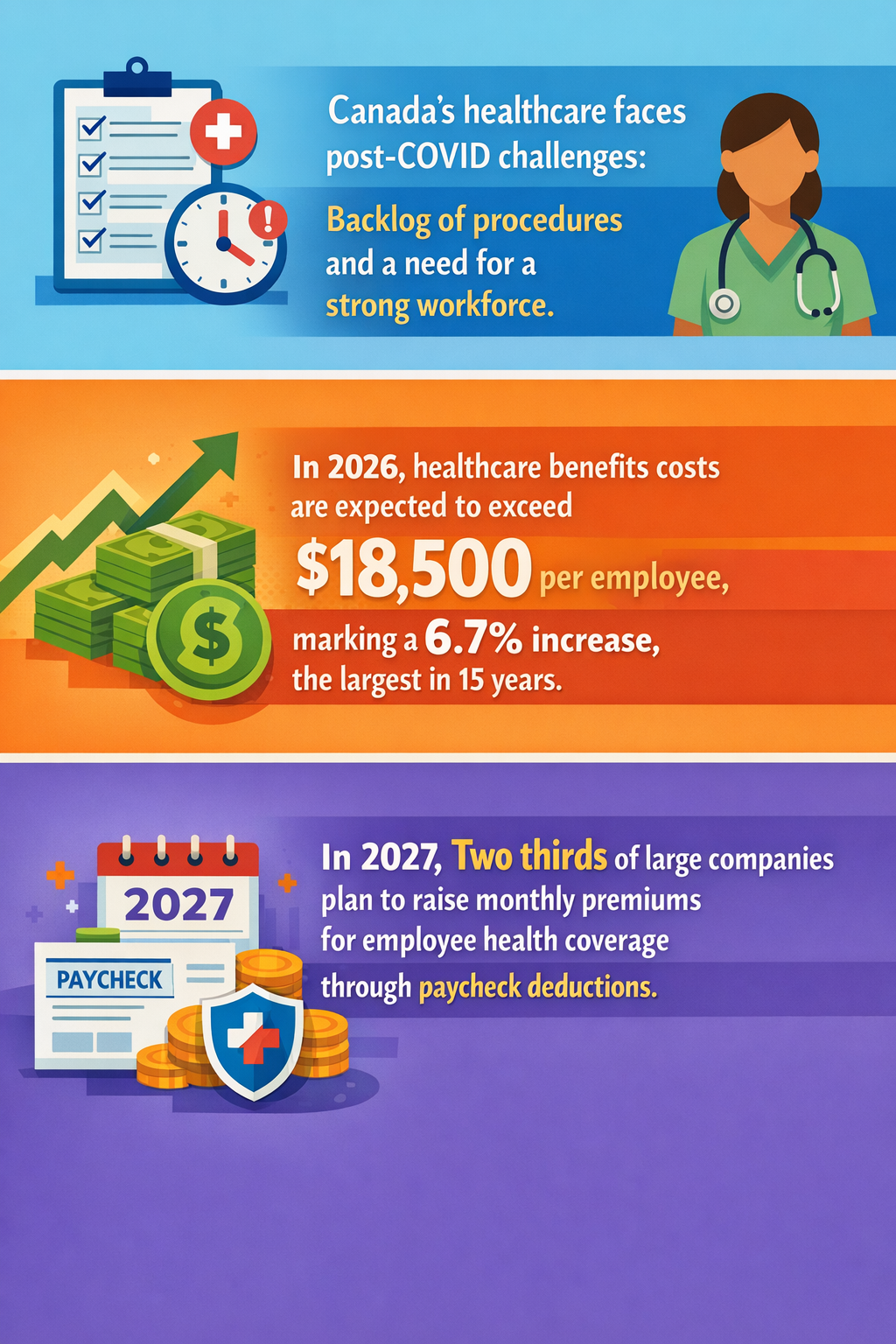
| Health Insurance Cost Pressures Affecting Workforce | Emerging / Accelerating | New topical mention in mid-2026 | Rising health insurance costs for employees and employers, driven by drug prices and insurer premiums, may indirectly influence workforce satisfaction, recruitment, and retention through total compensation and benefit design pressures. |
The dominant cluster revolves around workforce capacity and clinician well-being. Persistent clinician burnout and shortages compound operational strain, especially in emergency and specialized care. This cluster reflects an evolving risk pattern: while burnout rates have modestly improved at the aggregate level, systemic factors such as administrative burdens and demographic retirements sustain pressure and risk workforce depletion.
Parallel and linked is a cluster focusing on recruitment competition and workforce strategy, representing a transformation driver. Evidence from Australia signals strategic behavioral shifts where employers can no longer rely on reactive hiring but must invest in culture, flexibility, and staff wellbeing to attract and retain talent within a constrained labor market. This links closely with the aging workforce shortage signal across North America and Australia.
A third cluster concerns the administrative burden and technological innovation, where AI-based solutions begin to show early promise in offsetting one of the largest hidden drains on clinician clinical experience. Although this signal is stable, it has high transformational potential, positioning it as a prospective emerging opportunity subject to wider adoption.
Secondary signals such as rising health insurance costs (not directly related to clinical experience but relevant to workforce total compensation and stress) have started accelerating, potentially exerting indirect negative influence on workforce morale and retention.