
The Emerging Role of Climate and Workforce Data Integration in Reshaping Health Professional Ecosystems
Integrating climate impact metrics with detailed health workforce data signals a transformative convergence in healthcare regulation, capital allocation, and professional ecosystem design over the next two decades. This under-recognised development could catalyse structural shifts in how governments and industries manage health human resources, sustainability mandates, and care delivery frameworks globally.
Current discourse often treats climate mitigation and workforce planning as parallel issues; however, emerging efforts to expand granular health workforce data collection coupled with healthcare sector responsibility for climate emissions suggest a novel intersection. This nexus may become a fundamental inflection point, influencing regulatory regimes, funding priorities, and professional reskilling, particularly as public health systems face climate risks and aging populations. This paper explores the latent signal of integrated climate-health workforce governance and its potential to disrupt traditional health professional structures.
Signal Identification
This development qualifies as an emerging inflection indicator due to its nascent but accelerating linkage between climate-oriented health sector transformations and sophisticated, data-driven workforce management. Current global and national health systems recognize climate change’s impacts on health outcomes and operational costs, but have not historically incorporated environmental metrics into workforce regulatory or capital allocation decisions. The integration of environmental and workforce data infrastructures, such as expanded health workforce databases alongside climate risk oversight bodies, represents a qualitatively new management paradigm that could unfold over a 10–20 year horizon.
Plausibility is medium to high as regulatory bodies increasingly target climate-risk mitigation in health sector operations, and as investments in workforce analytics gain prominence (NCBI PMC 26/01/2021; Daily Maverick 15/05/2022). Affected sectors extend beyond traditional health professional groups to include public health administration, aged care workforce development, and environmental health and safety compliance.
What Is Changing
Detailed workforce data collection protocols, such as those proposed by Statistics South Africa, exemplify a growing recognition that granular, longitudinal health professional data is vital for effective policy and investment decision-making (Daily Maverick 15/05/2022). These mechanisms provide a platform for dynamic modelling of health human resource supply, demand, and competency gaps.
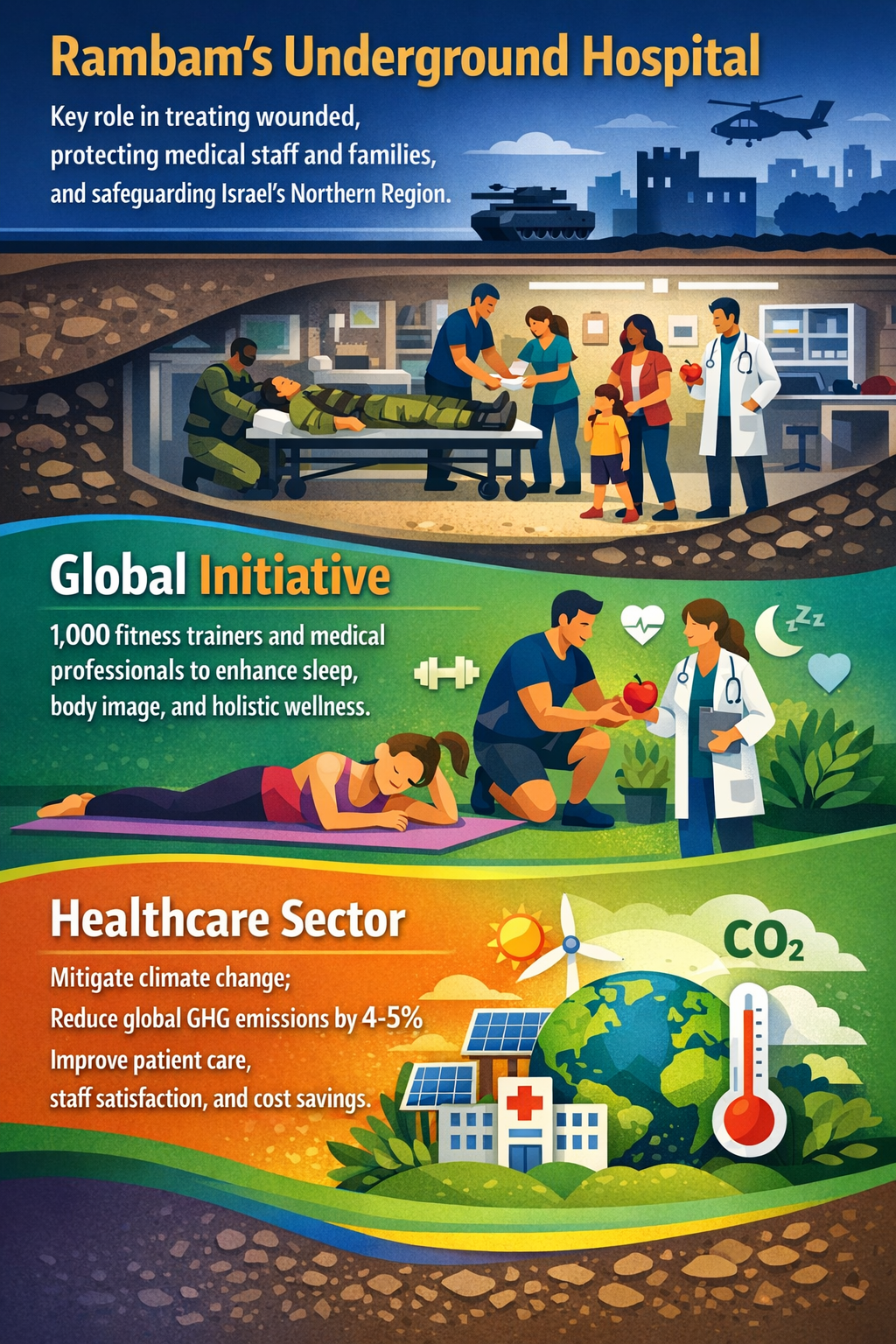
Concurrently, the health sector’s accountability for 4-5% of global greenhouse gas emissions positions it in a critical role for climate mitigation initiatives. The linkage between sustainability efforts and patient care outcomes suggests that reductions in emissions can co-benefit staff well-being and operational costs (NCBI PMC 26/01/2021). This dual mandate—improving care while mitigating environmental externalities—requires novel governance models that bridge workforce management and climate strategy.
In parallel, the UK Health and Safety Executive’s expanding remit over climate-related workplace risks reflects regulatory evolution motivated by environmental factors directly impacting workforce safety and productivity (IOSH 11/03/2024). This suggests a likely trajectory towards integrated climate-health regulatory frameworks that embed environmental risk in labor standards and compliance regimes.
Ageing population strategies, such as Australia’s investment in residential aged care outreach and workforce upskilling through virtual care programs, indicate increasing reliance on multi-skilled health professionals and a shift in care delivery contexts (COTA 09/03/2024). Such transitions necessitate data-driven workforce coordination capable of anticipating climate-induced health demand volatility.
Finally, workforce development partnerships, exemplified by the Nubian Ascends and BFCIT collaboration in Boston’s healthcare sector, highlight emergent multi-sector approaches to workforce reskilling and placement within climate-sensitive urban economies (Boston Herald 09/03/2024). These efforts build momentum for ecosystem-wide changes in health professional education and labor market integration with sustainability objectives.
Disruption Pathway
The convergence between granular workforce data and climate-focused health governance may begin with regulatory pilots that require mandatory emissions reporting alongside workforce qualifications and deployment metrics. Such policies could be accelerated by intensifying climate-driven health crises—heatwaves, vector-borne diseases, and extreme weather events—that stress existing care delivery models and highlight vulnerabilities in workforce capacity and environmental footprint.
These stresses could force health systems to embed environmental risk assessments into workforce planning and occupational safety standards, mandating new competencies related to climate resilience and sustainable practice. This would drive structural adaptations, including the emergence of hybrid roles (e.g., health professionals trained in environmental health science) and expanded virtual care capabilities to reduce carbon-intensive facility use.
Capital allocation may shift towards technologies and training programs that enhance both environmental performance and care outcomes. Feedback loops could emerge as workforce outcomes—retention, burnout rates—improve through enhanced occupational safety created by climate-adaptive measures, further incentivizing integration. Unintended consequences may include workforce segmentation where professionals in climate-resilient roles capture greater investment, creating disparities unless policies address equity explicitly.
Over time, dominant regulatory models may morph into multi-dimensional governance frameworks that unify health human resource development, environmental sustainability, patient safety, and emerging digital health modalities. Institutional silos between environmental regulators, health workforce planners, and public health authorities may dissolve, creating complex new industrial architectures for health professional ecosystems.
Why This Matters
For decision-makers overseeing capital deployment and regulation, this inflection indicator signals a potential realignment of investment priorities towards integrated health-climate resilience initiatives. Deployments in workforce data infrastructure, reskilling programs, and sustainable health delivery models could yield system-wide efficiencies and risk mitigations.
From a regulatory perspective, policies that introduce cross-sectoral oversight focusing simultaneously on emissions, workforce safety, and care quality may require new compliance frameworks and liability models, reshaping provider responsibilities and insurer risk pools. Competitive positioning within health services and education could pivot to those entities anticipating and innovating along these integrated vectors.
Supply chains may feel the pull towards greener medical products and sustainable operations, further intertwined with workforce demand patterns and skill requirements. Governance implications include managing potentially complex stakeholder coalitions across environmental, health labor, and community domains, necessitating new coordination mechanisms.
Implications
This development could likely transform health professional ecosystems within 10–20 years, moving beyond incremental operational change to affect capital allocation strategies, regulatory mandates, and workforce development paradigms. It may redefine roles, skills, and career pathways in health professions while fostering stronger alignment with sustainability goals.
It is important to note this signal is not merely another climate compliance fad or digital health trend. Its distinctiveness lies in merging environmental accountability with workforce analytics in governance and industrial strategy, a domain often treated separately.
Alternate interpretations might see this integration as too complex or slow to operationalize given entrenched siloed institutions and financing constraints. However, mounting climate pressures and data transparency demands make ignoring the convergence increasingly untenable.
Early Indicators to Monitor
- Regulatory drafts mandating simultaneous climate impact and workforce competency reporting within healthcare sectors.
- Significant increases in public and private funding for integrated health workforce and sustainability data infrastructures.
- Emergence of vocational and higher education curricula blending climate resilience and health professional training.
- Growth in cross-sector collaborations combining health services, environmental safety, and workforce development organizations.
- Incorporation of climate risk metrics into health workforce planning tools and hospital accreditation standards.
Disconfirming Signals
- Persistent institutional resistance to data integration between environmental and health workforce agencies.
- Legislative rollback or stagnation in climate-related health sector regulation, especially under political shifts.
- Significant delays or defunding of workforce data initiatives by public bodies or health sector stakeholders.
- Decoupling of climate action from health professional development due to competing priorities or lack of consensus.
- Failure of pilot programs that attempt integration due to operational complexity or stakeholder conflicts.
Strategic Questions
- How can investment frameworks incentivize early adoption of integrated health workforce and climate risk management practices?
- What governance models might effectively align multi-sector regulatory bodies to oversee this convergence without imposing prohibitive compliance burdens?
Keywords
Health workforce data; Climate change mitigation; Workforce planning; Health regulation; Sustainable healthcare; Aged care workforce; Occupational health and safety
Bibliography
- Statistics South Africa could expand its role to collect detailed health workforce data. Daily Maverick. Published 15/05/2022.
- Older Australians living in residential aged care will benefit from funding through state and territory governments to provide hospital outreach, deliver virtual care, upskill the residential care workforce, and support the Transition Care Program. COTA Australia. Published 09/03/2024.
- Leveraging the Nubian Ascends and BFCIT partnership could play a central role in Greater Boston's workforce development strategy, complementing the existing strategy to place workers in culinary, hospitality, and healthcare jobs. Boston Herald. Published 09/03/2024.
- Tools will be developed by 1,000 new fitness trainers globally and a team of medical professionals and researchers who will provide actionable ways to improve sleep, body image and other factors that play a role in holistic wellness. Forbes. Published 16/06/2023.
- In the UK, the Health and Safety Executive plays a pivotal role in overseeing workplace safety, including emerging climate-related risks. IOSH. Published 11/03/2024.
- Responsible for some 4-5% of global greenhouse gas emissions, the health-care sector has a vital role to play in climate change mitigation efforts, which will not only result in substantial reductions in emissions, but can often lead to enhanced patient care, staff satisfaction, and cost savings. NCBI PMC. Published 26/01/2021.