
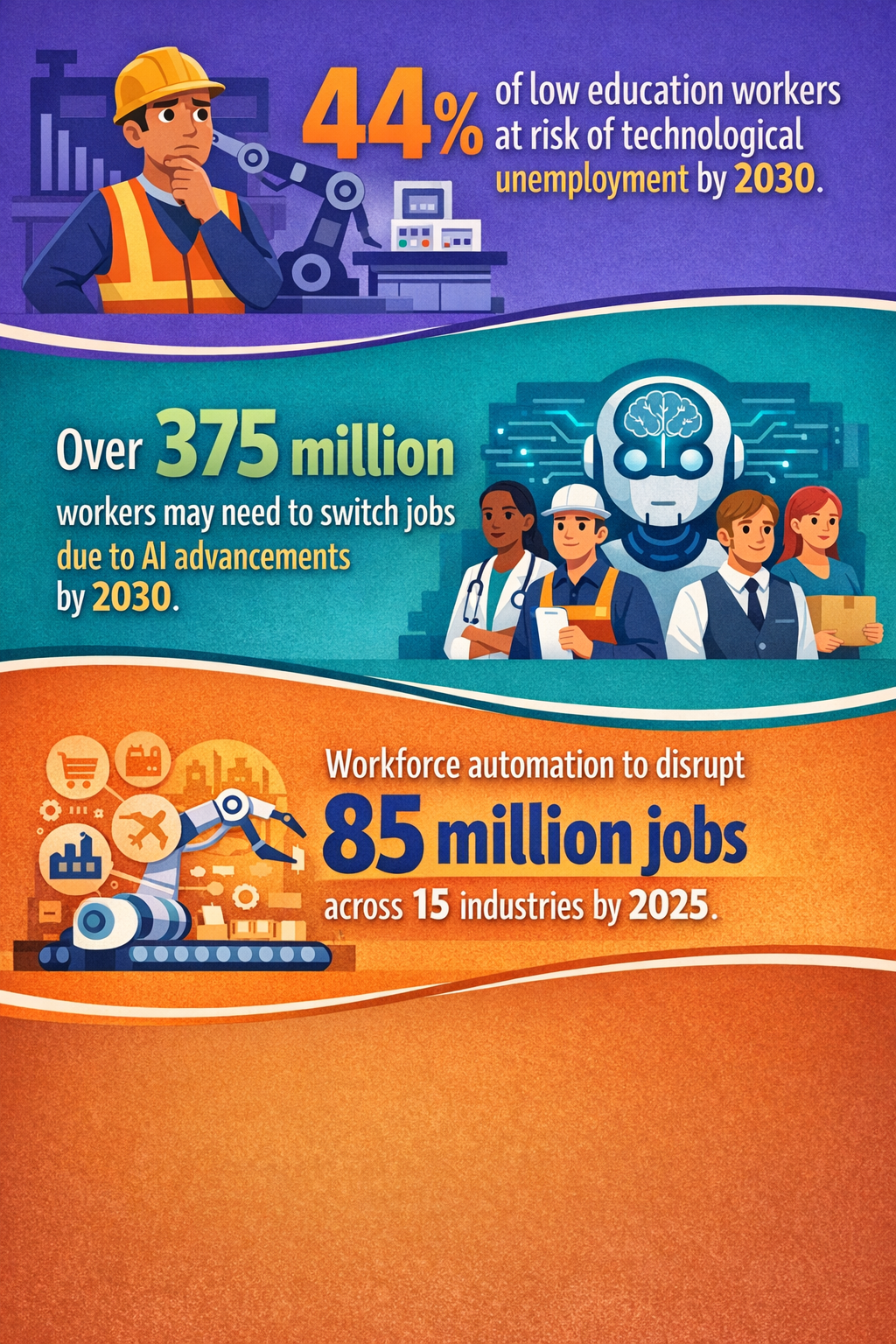
Examining the future of work and demographic change reveals a set of intertwined themes shaping global socio-economic landscapes: the advancing digital economy with remote work and gig employment models, and profound demographic shifts notably aging populations and declining fertility rates. These forecasts, though emerging from different contexts, have overlapping implications across technology, society, economics, and governance. However, they each carry inherent biases that merit consideration. For instance, enthusiasm for digital work trends may underestimate infrastructural inequalities, especially in developing countries, and demographic forecasts often focus on challenges of aging without fully considering potential innovations in healthcare, immigration, or social policies.
This report frames four plausible futures using scenario archetypes, integrating insights drawn from contemporary analyses of technological gig economies in Nigeria and the global demographic pivot toward aging populations (Punch Newspapers, 2025; GZERO Media, 2024). These narratives shed light on emerging constraints and opportunities that organizations and policymakers might face in the coming decades.
Under this scenario, current trends accelerate without major disruption. Remote work and gig economy models continue to expand globally, driven by continued improvements in communication technologies and digital platforms. Organisations increasingly adopt distributed teams, lowering operational costs and accessing a diversified global talent pool. However, infrastructural challenges in regions like Nigeria persist, marginalizing some local talents despite their skills (Punch Newspapers, 2025).
Meanwhile, the demographic shift to an older global population unfolds predictably. By 2050, with one in six people over 65, aged societies strain existing healthcare systems and social security frameworks, leading governments to make incremental adjustments, often without comprehensive reform (GZERO Media, 2024).
Implications: Organizations should invest in robust digital platforms and remote management capabilities while advocating for infrastructure improvements in underserved regions. Governments must prepare for rising healthcare and pension costs by planning gradual reforms rather than radical policy shifts.
This scenario envisions societies forced to confront environmental and infrastructural limits, compelling disciplined adaptation. Power outages and unreliable internet in developing regions exacerbate skill and productivity gaps in the digital economy, prompting both governments and businesses to invest heavily in infrastructure. Labor protections for gig workers become a focus to stabilize incomes and reduce precarity (Punch Newspapers, 2025).
Demographically, shrinking working-age populations and rapid aging challenge the sustainability of welfare systems. Societies implement policies encouraging longer workforce participation among older adults, increased immigration, and diversified labor models to offset declining fertility rates (GZERO Media, 2024).
Implications: Clients should actively engage with infrastructure upgrade initiatives and advocate for inclusive labor policies. Continuous workforce reskilling will be vital to adapt to shifting demographic realities and evolving technological tools. Governments must prioritize sustainable systems that balance economic productivity with social welfare.
In this darker future, persistent infrastructural deficits and widening economic disparities precipitate the fragmentation of the global digital economy. Remote workers, especially in developing countries, face growing marginalization due to unreliable power and internet, undermining global trust and furthering stereotypes against emerging market technical talent (Punch Newspapers, 2025).
Simultaneously, severe demographic imbalances exacerbate social security failures. Aging populations outpace government capacity to provide adequate healthcare and pensions, fueling social unrest and economic contraction (GZERO Media, 2024).
Implications: Organizations and governments must proactively mitigate risks of fragmentation by investing in resilient infrastructure, combating bias, and ensuring social safety nets. Clients should prepare for crises by diversifying talent sourcing and strengthening local ecosystems to reduce dependency on unstable systems.
In this optimistic vision, radical technological progress combined with imaginative social policy transforms the future of work and demographic challenges. AI, machine learning, and advanced automation redefine job categories, creating novel opportunities for creative, technical, and caregiving roles. Distributed work becomes seamless globally, supported by universal high-speed connectivity and decentralized energy systems (Punch Newspapers, 2025).
Demographic pressures catalyze breakthrough healthcare innovations extending healthy lifespans and flexible retirement. Policies embracing gender equity, immigration reforms, and lifelong education reshape societies to support diverse, multigenerational workforces (GZERO Media, 2024).
Implications: Clients should invest boldly in emerging technologies and comprehensive workforce development programs. Partnerships across sectors and borders will be critical to unlocking shared prosperity. Governments must promote policies that embrace technological potential without leaving vulnerable populations behind.