Gender Equality Backsliding & Girls’ Rights: Navigating Uncertain Horizons
- Globally, advances in gender equality and girls’ rights face mounting threats from rising authoritarianism, conflict, and the manipulation of "public morals" to restrict freedoms (CGTN, 2023).
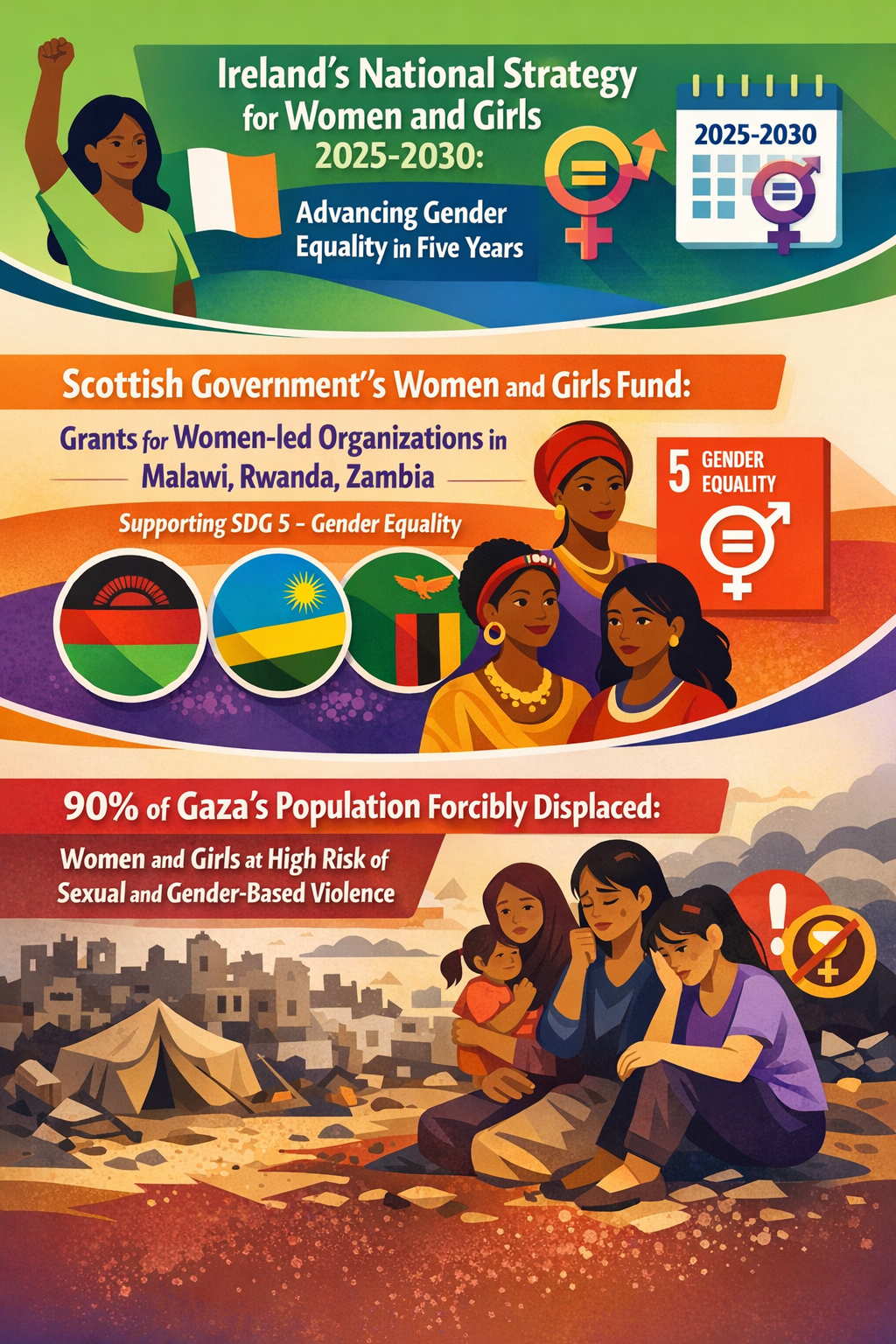
- Conflict zones and displacement aggravate girls’ vulnerability to sexual and gender-based violence, forced marriage, and reduced access to education (Centre for Feminist Foreign Policy, 2023), (Women Peace & Security, 2026).
- Gender-based violence like FGM/C persists with alarming prevalence, including in countries with strong civil society engagement, underscoring global cultural and structural barriers (GWU Public Health, 2023).
- Environmental stressors such as water insecurity increase girls’ susceptibility to exploitation and harassment in rural and marginalized communities (PMC, 2024).
- Simultaneously, progressive government strategies and international funding streams offer strategic entry points to advance gender equality if leveraged effectively (Gov.ie, 2024), (Scottish Gov, 2024).
A Fearful Future – and how to mitigate:
In this scenario, authoritarian regimes and conservative backlash accelerate the erosion of girls’ rights worldwide.
Legal restrictions on education, expression, and reproductive health intensify. Conflict zones remain entrenched, with increased displacement and rampant gender-based violence going unaddressed.
Cultural narratives weaponizing “public morals” justify systemic discrimination and silencing of girls’ voices.
Signals/Drivers:
What could Plan International do?
- Enhance protection mechanisms and safe spaces for girls in conflict and displacement settings to mitigate immediate harms.
- Invest in covert, community-led advocacy networks to maintain engagement where open activism is suppressed.
- Develop strategic partnerships with regional and faith-based actors to challenge harmful norms from within communities.
An Uncertain Future – and how to adapt:
This future sees oscillation between progress and regression depending on political shifts, crises, and external influences. Some countries advance gender equality while others backslide unpredictably.
Funding landscapes and advocacy environments remain volatile, complicating long-term planning.
Signals/Drivers:
- Fluctuating political will and policy reversals on women’s rights (Gov.ie).
- Variable access to humanitarian funding responding to crises (Women Peace & Security).
- Episodic social mobilization and backlash movements globally.
What could Plan International do?
- Implement flexible programming that can scale or pivot rapidly based on changing contexts.
- Strengthen data systems and foresight capabilities to monitor emerging risks and opportunities in real time.
- Maintain core work on girls’ empowerment while developing contingency partnerships with diverse actors to sustain momentum amidst volatility.
A Cautious Future – and how to manage:
Progress in girls' rights unfolds steadily but cautiously, constrained by continued societal conservatism and resource competition.
Gains in policy and education are balanced by persistent pockets of inequality and resistance.
International frameworks and cooperation are maintained but modest in ambition and pace.
Signals/Drivers:
- Moderate government investments in gender equality programs (Scottish Government).
- Incremental improvements in community awareness paired with enduring harmful practices (PMC).
- Stable but conservative funding and policy environments.
What could Plan International do?
- Focus on consolidating existing gains through robust monitoring and targeted capacity building at local levels.
- Promote inclusive dialogue forums that safely address resistance and gradually shift norms.
- Prioritize sustainable partnerships with governments to embed gender equality in policy and budgeting.
A Confident Future – and how to navigate:
A proactive global momentum drives accelerated gender equality reforms.
Innovative technologies, inclusive policies, and vibrant social movements empower girls and transform discriminatory practices.
Cross-sectoral collaboration thrives, opening pathways for systemic change and resource mobilization.
Signals/Drivers:
- Adoption of ambitious national gender strategies with measurable targets (Ireland’s National Strategy).
- Scale-up in funding for women and girl-led organizations (Scottish Government).
- Leverage of digital platforms amplifying girls' voices and access to information.
What could Plan International do?
- Position as a strategic convenor to foster multi-sector partnerships driving innovation in girls’ rights.
- Scale effective, technology-enabled empowerment programs with a focus on marginalized groups.
- Invest in leadership development for girls to sustain advocacy and policy momentum.
A Hopeful Future – and what actions could Plan International take now:
The best-case scenario envisions transformative global commitments and cultural shifts that eradicate systemic barriers to girls’ full equality.
Integrated policy action, collective social mobilization, and innovative resource use dramatically improve girls’ safety, education, and agency.
Lessons from setbacks and volatility inform adaptive and inclusive strategies at all levels.
What could Plan International do today?
- Develop a dynamic foresight unit to integrate early warning signals from fragile contexts and global trends, enabling anticipatory action.
- Invest in building resilient community networks that can sustain girls’ rights advocacy even amid backlashes.
- Accelerate partnerships across sectors, leveraging technological innovations and inclusive funding mechanisms to amplify girls' voices.
- Embed risk management practices from more cautious scenarios, ensuring sustainability of progress and capacity to adapt to uncertainty.