
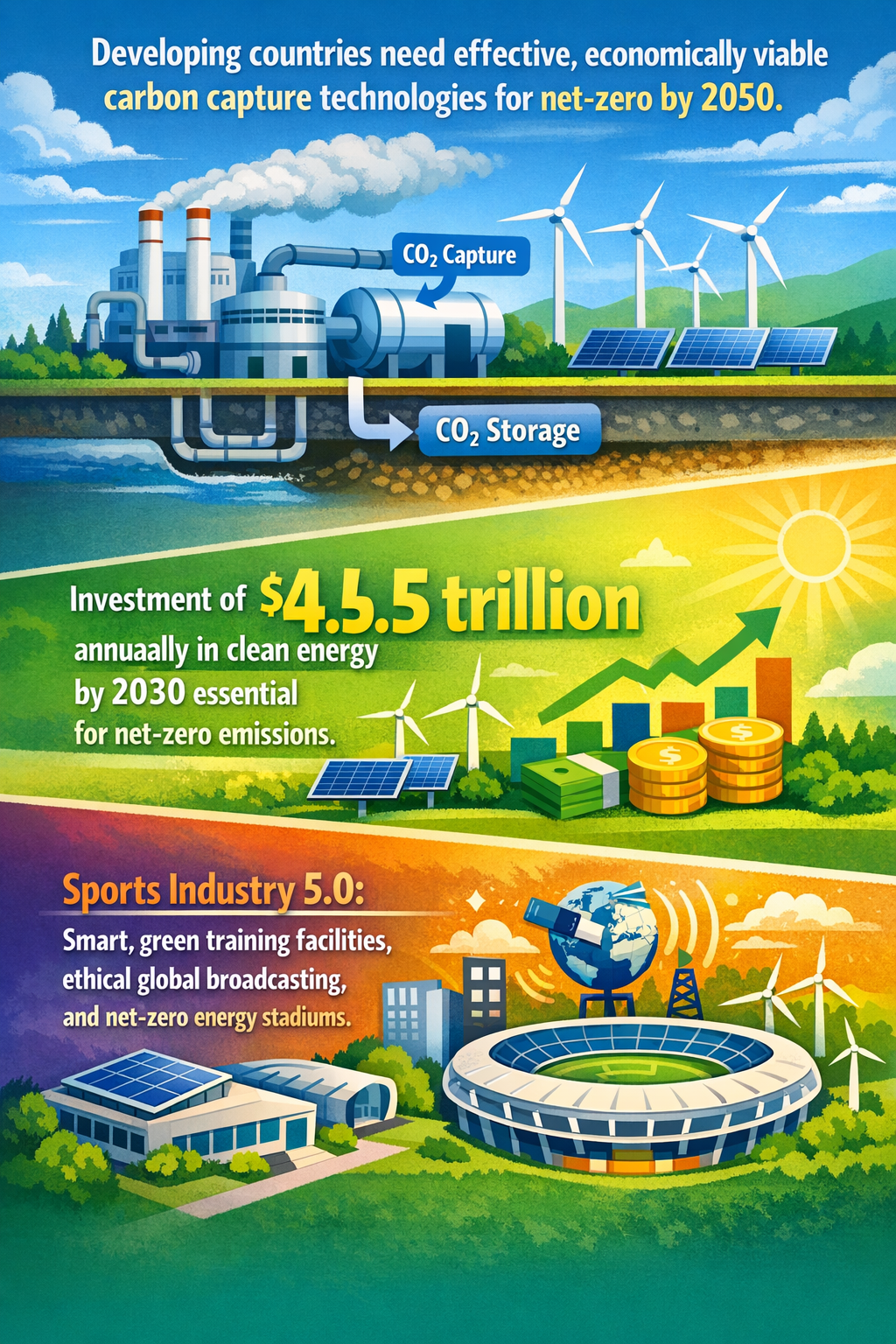
Recent evidence across technology and energy sectors highlights key signals displaying varied momentum in the landscape of technology needs for net zero, relevant to NXPO’s strategic positioning. The dominant themes range from accelerating investments in hydrogen and carbon capture catalysts, growing deployment of decentralized energy systems, to emerging emphasis on sustainable and human-centric technological frameworks in adjacent sectors like sports. These signals demonstrate convergence around transition metals and advanced materials innovation, infrastructure modernization with clean energy integration, and evolving governance toward ethical, social, and environmental priorities. This analysis quantifies the frequencies, maps clusters, and uncovers systemic shifts while flagging potential disruptive wild cards.
| Signal / Theme | Direction | Relative Frequency / Momentum | Commentary |
|---|---|---|---|
| Hydrogen Technology and Fuel Cell Catalysts | Accelerating | High frequency, rapid investment expansion projected through 2035 | Strong growth in platinum-group and transition metal catalysts for hydrogen production and fuel cells, with strategic production scale-up and regional expansion (e.g., China, India, Japan) |
| Carbon Capture via Biotechnologies (Algae-based Systems) | Accelerating | Emerging, high-impact innovation with recent global recognition | Microalgae photobioreactors gaining traction as economically viable carbon capture integrated with biomass production, aligned with SDGs and circular economy strategies |
| Decentralized and Hybrid Energy Systems | Accelerating | Growing adoption and policy endorsement across multiple regions | Hybridization of centralized and decentralized energy models is enhancing grid resilience and ESG compliance, supported by smart grid, battery storage, and solar PV growth |
| Hydrogen and Low-Carbon Energy Integration in Asia-Pacific | Stable to Accelerating | Consistent regional investment, with prominent project announcements and international events | Southeast Asia, particularly Thailand, is positioning as a regional clean energy hub focused on LNG, hydrogen, and transitions demonstrated by global forums like Gastech 2026 |
| Technology with Human-Centric and Sustainability Governance (Cross-Sector) | Emerging/Evolving | Increasing scholarly and strategic interest | Conceptual frameworks like Industry 5.0 applying human-centricity and sustainability as core design principles, indicating systemic convergence beyond energy into sports and governance |
A clear cluster emerges around Hydrogen Technology and Fuel Cell Catalysts—the proliferation of platinum-group metal catalyst innovations and planned capacity expansions underscore a robust investment trajectory. This momentum is supported by ongoing government policies and market demands in Asia-Pacific, notably China and Japan (TANAKA PRECIOUS METAL TECHNOLOGIES, Research Nester).
Concurrently, Carbon Capture Technologies leveraging biotechnologies such as microalgae demonstrate a rising signal as evidenced by international academic awards and pilot-scale demonstrations, especially from developing countries aiming for competitively viable solutions serving net-zero roadmaps (Laotian Times).
The energy sector is witnessing acceleration in Decentralized and Hybrid Energy Systems that blend traditional large-scale centralized infrastructure with distributed renewables, smart grids, and battery storage solutions. ESG frameworks and emerging regulatory incentives bolster these trends, with notable implementations such as virtual power plants and microgrids enhancing resilience (Seneca ESG).
Regionally, Asia-Pacific's hydrogen and low-carbon energy integration is stabilizing with signs of acceleration tied to high-profile events and government-led initiatives making Thailand a clean energy hub. This reflects a strategic intent to leverage natural gas transition fuels alongside renewables and green hydrogen technologies (Nation Thailand).
A cross-sectoral phenomenon is the rise of Human-Centric Technology and Sustainability Governance paradigms exemplified by frameworks like "Sports Industry 5.0". This trend underscores the growing importance of embedding technology within ethical, social justice, and environmental sustainability domains, suggesting broader systemic transformation drivers that align with net-zero transitions (PubMed Central).
Monitoring should concentrate on detailed technology maturation and regional adoption rates in hydrogen catalysts and carbon capture innovations—key enablers of decarbonization in industrial and energy sectors. Investments and collaborations supporting localized production capacities, especially in emerging markets, merit prioritization.
The burgeoning decentralization of energy infrastructure introduces both opportunity and complexity—integrating digital monitoring, smart grids, and hybrid systems. NXPO should assess policies around grid interconnection, regulatory shifts, and ESG disclosure that influence adoption rates.
Close attention to governance trends in human- and planet-centric technology application across sectors signals a need for NXPO to embed sustainability and social equity into technology roadmaps, bridging innovation with ethical frameworks.