
This evidence set reveals several key signals in AI development, infrastructure expansion, geopolitical competition, and emerging technologies shaping the Asia-Pacific science and innovation landscape. Momentum is particularly strong in AI capability acceleration, China’s growing strategic presence in Southeast Asia, AI’s environmental footprint, and geopolitical technology rivalry including nuclear deterrence modernization and advanced defense systems.
| Signal Name / Theme | Direction | Relative Frequency & Change | Commentary |
|---|---|---|---|
| Rapid Acceleration of Frontier AI Capabilities and Adoption | Accelerating | High frequency; mentions increased dramatically from 2023 baseline to 2026 (several-fold growth in adoption, investment, and model capabilities) | AI systems are rapidly advancing toward human- and expert-level performance, with increasing autonomy, broader task coverage, and expanding real-world deployment. This momentum is driven by scaling compute, improved algorithms, and ecosystem growth (Government Office for Science). |
| China’s Strategic AI Expansion & Commercial Integration in Southeast Asia | Accelerating | Moderate to high mentions in 2025-26; strong narrative on market presence and ecosystem bundling | China is deploying tailored “good enough,” affordable AI infrastructure and applications, targeting developing Southeast Asian nations through partnerships, open-weight models, and the Digital Silk Road/BRI framework. This represents a commercially focused strategy emphasizing dependence and normative influence (Hudson Institute). |
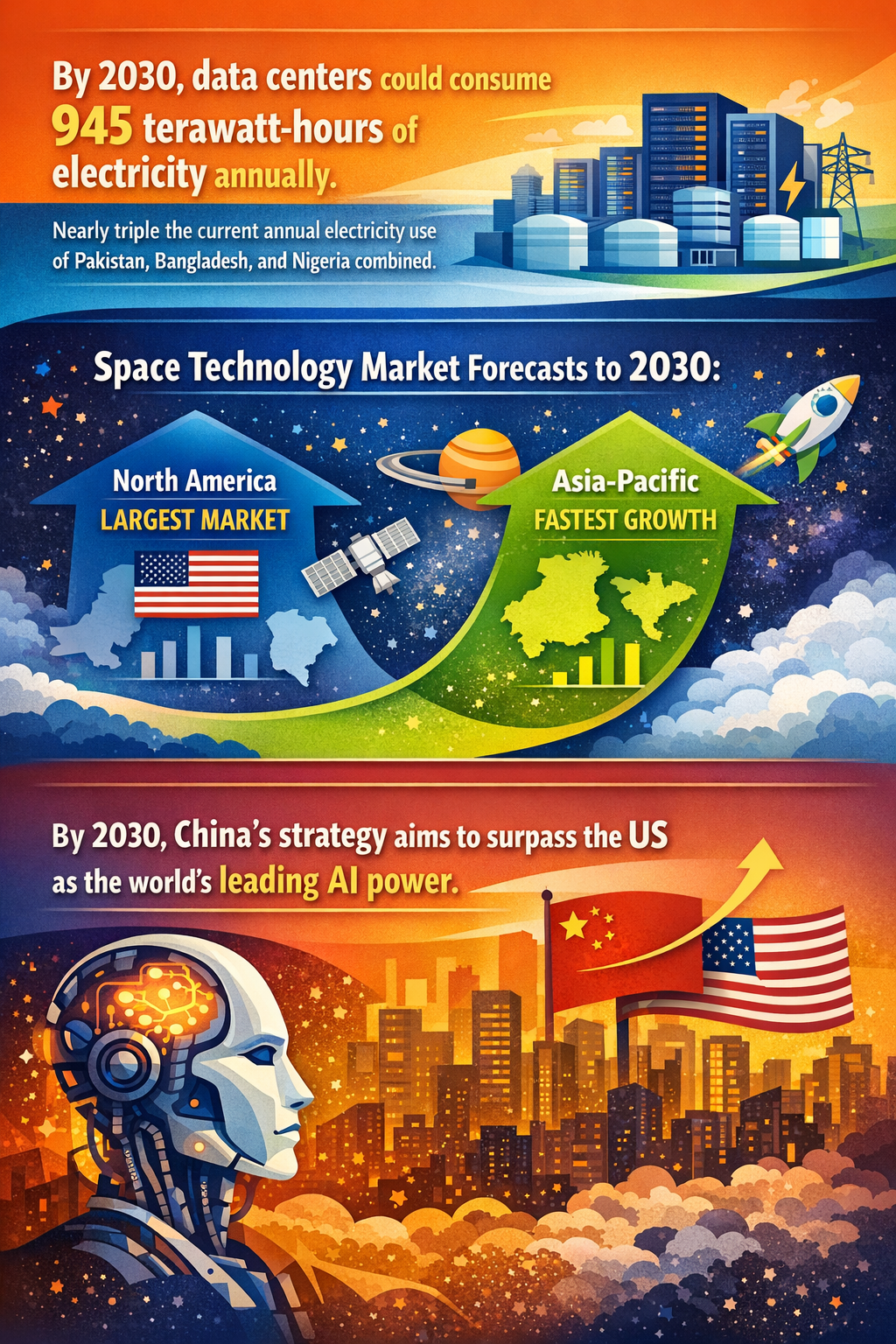
| Environmental Footprint & Energy Demand from AI Infrastructure | Accelerating | Increasing frequency in reports and policy discussions, especially data center power consumption and sustainability impacts | AI’s expansion is driving rapidly growing electricity, water, and land use demands, with data centers projected to consume terawatt-hours comparable to entire nations by 2030. Rising energy prices and infrastructure strain pose risks to AI scalability and political acceptance (UN News, Atlantic Council). |
| Geopolitical AI Competition & Defense Technology Development (Including Nuclear Deterrence) | Accelerating | Steady to increasing references in 2025-26, with intensified focus on Indo-Pacific militarization and nuclear posture | US-China rivalry intensifies as China narrows technological gaps in AI and space, with concurrent modernizations of extended nuclear deterrence frameworks, undersea defense technologies, and AI-enabled military applications. These developments elevate strategic tensions and defense investments (Perry World House, BBC News). |
| Policy and Regulatory Responses to AI Risks and Adoption Gaps | Stable to Accelerating | Moderate mentions; growing focus on regulatory adaptations, workforce impacts, and governance challenges | Governments in the US, EU, and Asia-Pacific are actively reviewing and adjusting AI regulatory frameworks, workforce upskilling, and international cooperation efforts in response to rapid AI adoption and evolving associated risks (The AI Policy Newsletter). |
Across the Asia-Pacific, the evidence highlights a multi-dimensional acceleration of AI-driven science and technology advancement, intertwined with escalating geopolitical strategic competition — especially between China and the United States. The momentum of AI capability improvements fuels transformative innovation opportunities (e.g., scientific breakthroughs in health, energy, and manufacturing), while simultaneously stressing critical infrastructure such as energy grids and data center ecosystems.
China’s distinct strategy in Southeast Asia—offering widely accessible AI technologies bundled with infrastructure investments—has rapidly gained traction among emerging economies seeking immediate benefits. This approach contrasts with the US and Western emphasis on frontier innovation leadership and regulatory governance, exposing a commercial and geopolitical contest over influence, standards, and dependency.
Environmental and social considerations around AI’s energy and resource consumption are emerging as pressing systemic challenges. Without urgent infrastructure investments and sustainability frameworks, AI’s growth trajectory risks fueling societal backlash or operational bottlenecks, which could dampen deployment and equity in access.
Military and security domains increasingly integrate AI modernization alongside defense posture recalibrations, particularly nuclear deterrence and undersea technologies, reflecting wider concerns about strategic stability and emerging arms races in the Indo-Pacific region.