
The analysis of recent evidence in the domain of Higher Education Reform reveals several coalescing signals that illustrate dynamic shifts toward skill-focused, technologically enabled, and inclusive educational ecosystems. Key momentum is driven by the rapid expansion of alternative credentials, the accelerated adoption of soft skills training adapted to hybrid and AI-influenced workplaces, and equity-oriented innovations in STEM education for women bolstered by active and flipped learning methodologies. These signals collectively underscore a transformation toward modular, efficient, and socially responsive higher education pathways aligned with workforce needs and sustainability goals.
| Signal Name / Theme | Direction | % Change or Relative Frequency | Short Commentary |
|---|---|---|---|
| Alternative Credentials Market Growth | Accelerating | Market CAGR ~17.5% (2026–2033) | Rapid expansion of alternative credentials driven by skills-first hiring, digital delivery, and blockchain-verified ecosystems, with North America leading and Asia Pacific fastest growing. Strong employer and government policy support reinforce momentum. |
| Soft Skills Training Expansion | Accelerating | Market CAGR ~9.65% (2026–2031) | Growth fueled by hybrid work demands, AI ethics leadership, and rising corporate accountability (ESG mandates). Blended learning and certification-linked courses gain traction, with Asia Pacific again fastest growing following North America. |
| STEM Education for Women & Flipped Learning | Accelerating | Increasing policy, programmatic, and research attention | Inclusive, active, and flipped learning pedagogies explicitly designed to empower women in STEM are gaining adoption. These approaches advance gender equity aligned with SDGs, tackling systemic barriers through innovative curriculum reform and community engagement. |
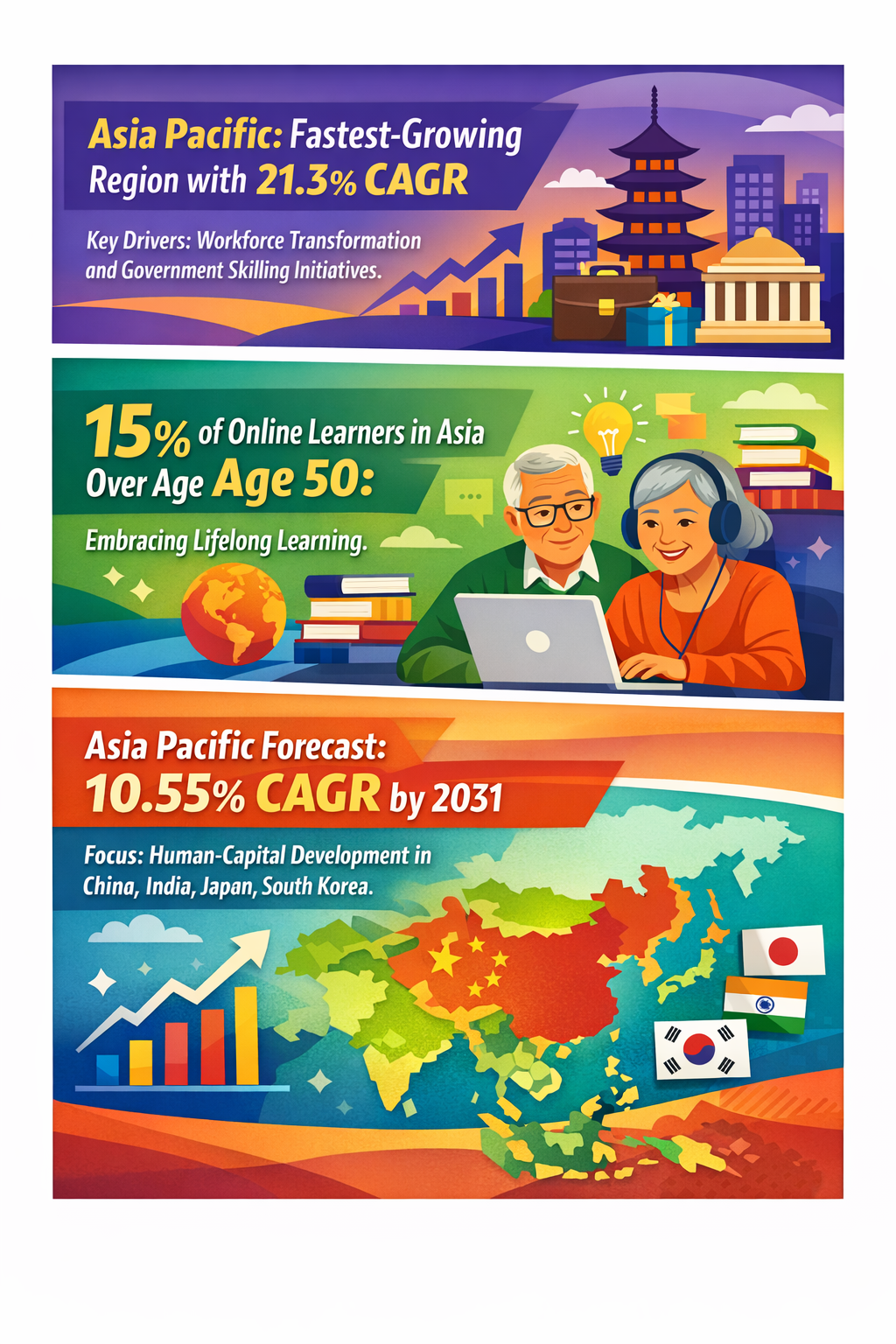
| Government-Led Workforce Skilling in Asia Pacific | Accelerating | Regional CAGR 21.3% (Alternative Credentials), 10.55% (Soft Skills) | Robust government initiatives and large-scale digitization strategies in Asia Pacific are propelling rapid credentials and skills training market growth, emphasizing affordable, localized, and scalable solutions targeting emerging workforce needs. |
| Blockchain and AI Integration in Credentialing and Learning Analytics | Accelerating | Growing investments and adoption rates | Blockchain-enabled verification and AI-driven personalization and behavioral analytics are becoming critical enablers for scalable, trustworthy, and tailored learning systems, strengthening adoption while addressing quality assurance challenges. |
The convergence of rapid market expansion in alternative credentials and soft skills training signals a systemic transformation in higher education toward modular, skill-aligned, and technology-enhanced learning pathways. The pronounced acceleration in Asia Pacific, anchored by government programs and digital infrastructure investments, marks this region as a pivotal growth engine reshaping global education dynamics. Simultaneously, pedagogical innovations like flipped learning aimed at increasing women’s participation in STEM reflect the growing prioritization of equity and inclusion within reform agendas. These shifts are reinforced by both public policy frameworks and private sector participation, particularly in leveraging AI and blockchain to improve delivery, verification, and outcomes measurement.
Together, these clusters create a landscape where higher education reform is not solely focused on access but intensively oriented toward relevancy, adaptability, and sustainability. An important theme is the institutionalization of lifelong learning frameworks that bridge formal and informal education while integrating rigorous credentialing standards. Efforts to harmonize quality assurance and digital interoperability remain a critical challenge and opportunity, shaping provider competitiveness and institutional adoption.