Decarbonizing Tomorrow: Navigating the Complex Futures of Carbon Capture & Storage
- Carbon Capture & Storage (CCS) is gaining momentum driven by climate policies, technological improvements, and energy security demands.
- Significant cost reductions are expected by 2035, with energy penalties in post-combustion capture predicted to drop by 30%, and capture system costs halving in the best case (Nature).
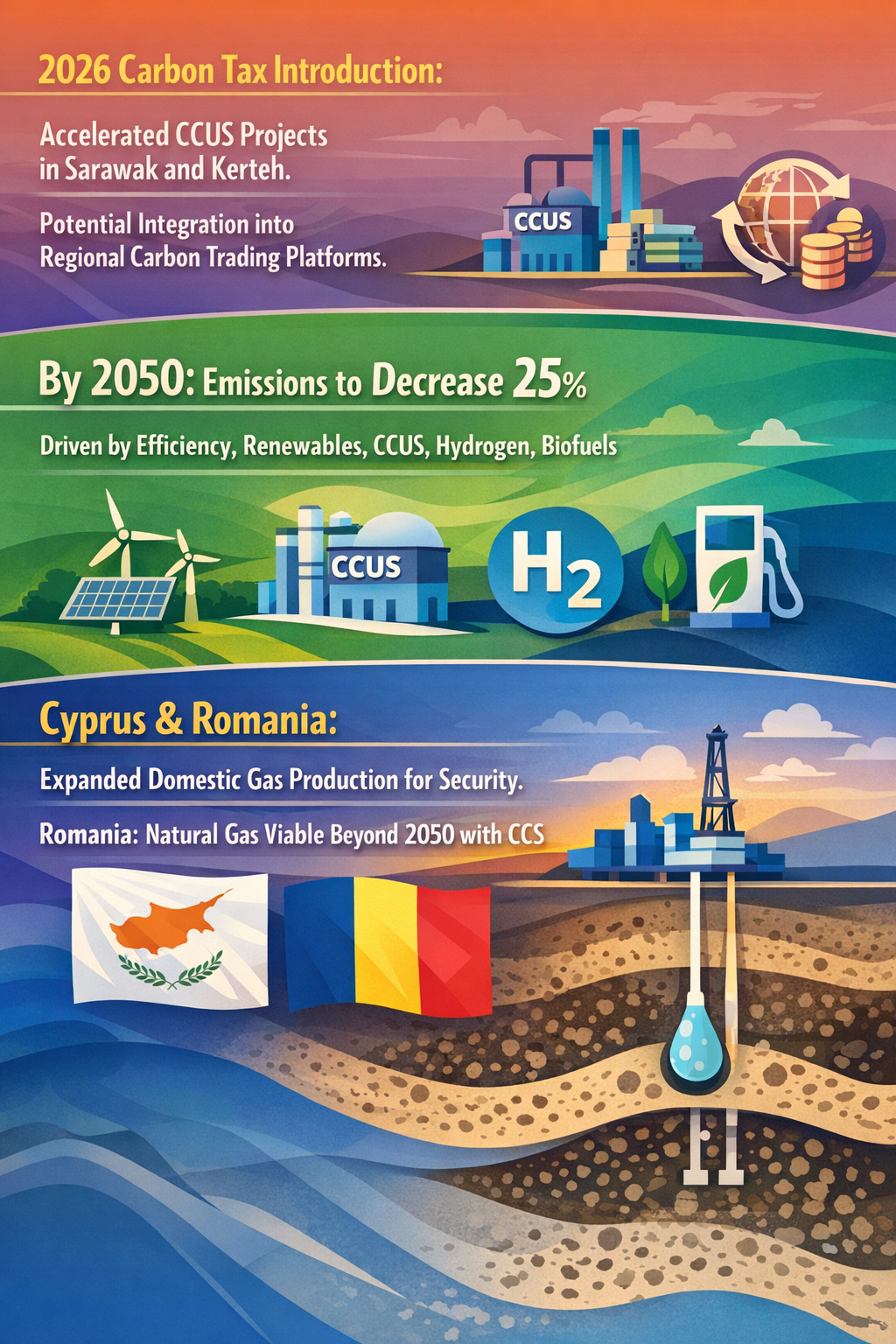
- Emerging carbon taxation policies, such as Malaysia’s 2026 carbon tax, are poised to accelerate CCS deployment particularly in Southeast Asia, linking CCS to regional carbon trading platforms (LinkedIn).
- The geopolitical push for energy security, illustrated by Cyprus and Romania’s advocacy for expanded gas production balanced by CCS development, introduces an uncertain timeline and diverse regulatory pressures (Discovery Alert).
- Early-stage funding, like California’s $11 million program for direct air capture, signals growing interest but also highlights technological and market adoption risks (Carbon Removal Updates).
A Fearful Future – and how to mitigate:
In this scenario, CCS technologies fail to scale as expected due to rising costs, regulatory delays, and public opposition. Carbon taxes stall or are inconsistently applied, creating fragmented markets. Energy security concerns lead to increased fossil fuel reliance without effective CCS, resulting in stalled emissions reduction and reputational risks for stakeholders.
What could QMarkets do?
- Diversify into advisory services focused on risk mitigation and policy shaping for CCS deployment to support clients navigating uncertain regulations.
- Develop contingency strategies and scenario planning tools for partners to manage reputational and financial exposures linked to CCS setbacks.
- Engage actively with policymakers and community stakeholders to foster transparency and trust around CCS projects.
An Uncertain Future – and how to adapt:
This outlook is characterized by volatile policy landscapes, uneven CCS technological progress, and fluctuating investment flows. Carbon pricing schemes vary widely across regions, while technological breakthroughs in capture efficiency intermittently emerge but with uneven commercialization.
What could QMarkets do?
- Build flexible, modular innovation platforms that allow quick shifts between emerging CCS technologies and markets.
- Invest in data analytics and foresight services to monitor policy developments and technology trends, enabling agile client responses.
- Facilitate multi-stakeholder collaborations that pool risks and share knowledge to stabilize investments.
A Cautious Future – and how to manage:
Incremental progress marks this scenario, with steady but slow CCS deployment under moderate carbon regulations. Public acceptance improves gradually, but investment focuses mainly on proven technologies within selective regions. Cost reductions and energy efficiency improvements materialize but are insufficient for rapid decarbonization.
What could QMarkets do?
- Consolidate knowledge assets and best practices to support clients in cautious CCS scaling.
- Develop risk assessment frameworks that balance cautious investment with innovation incentives.
- Promote stakeholder engagement initiatives to strengthen social license for CCS projects.
A Confident Future – and how to navigate:
CCS technologies reach cost and energy efficiency milestones ahead of schedule, catalyzed by robust carbon pricing, widespread regulatory support, and breakthrough innovations like direct air capture. Energy security concerns align with sustainability goals, leading to expansive deployment across sectors and geographies.
What could QMarkets do?
- Position as a strategic partner in scaling CCS by providing ecosystem services—innovation scouting, policy strategy, and stakeholder engagement.
- Invest in platforms that integrate CCS value chains with carbon markets, leveraging regional initiatives such as in Malaysia and California.
- Forge alliances with technology developers and governments to co-create and pilot next-generation CCS solutions.
A Hopeful Future – and what actions could QMarkets take now:
In this transformative scenario, CCS plays a central role in achieving net-zero targets globally. Technological breakthroughs and aligned policies drive cost-effective, large-scale carbon removal. CCS becomes a backbone for sustainable energy systems, enabling climate resilience and new economic opportunities.
What could QMarkets do today?
- Leverage insights from cautious and uncertain futures to build resilient and adaptable innovation processes prioritizing CCS technologies showing promise.
- Engage early with policymakers, industry leaders, and communities to co-develop frameworks that address risks seen in fearful scenarios while enabling confidence illustrated in the confident future.
- Secure funding partnerships and pilot projects that bridge the current technology gap, drawing lessons from direct air capture initiatives in California.