Pollution & Resource Cycles: Navigating Futures in a Changing World
- Global pollution levels remain a critical challenge, exacerbated by accelerating industrial growth and urbanization, while resource cycles strain under increasing consumption and waste mismanagement.
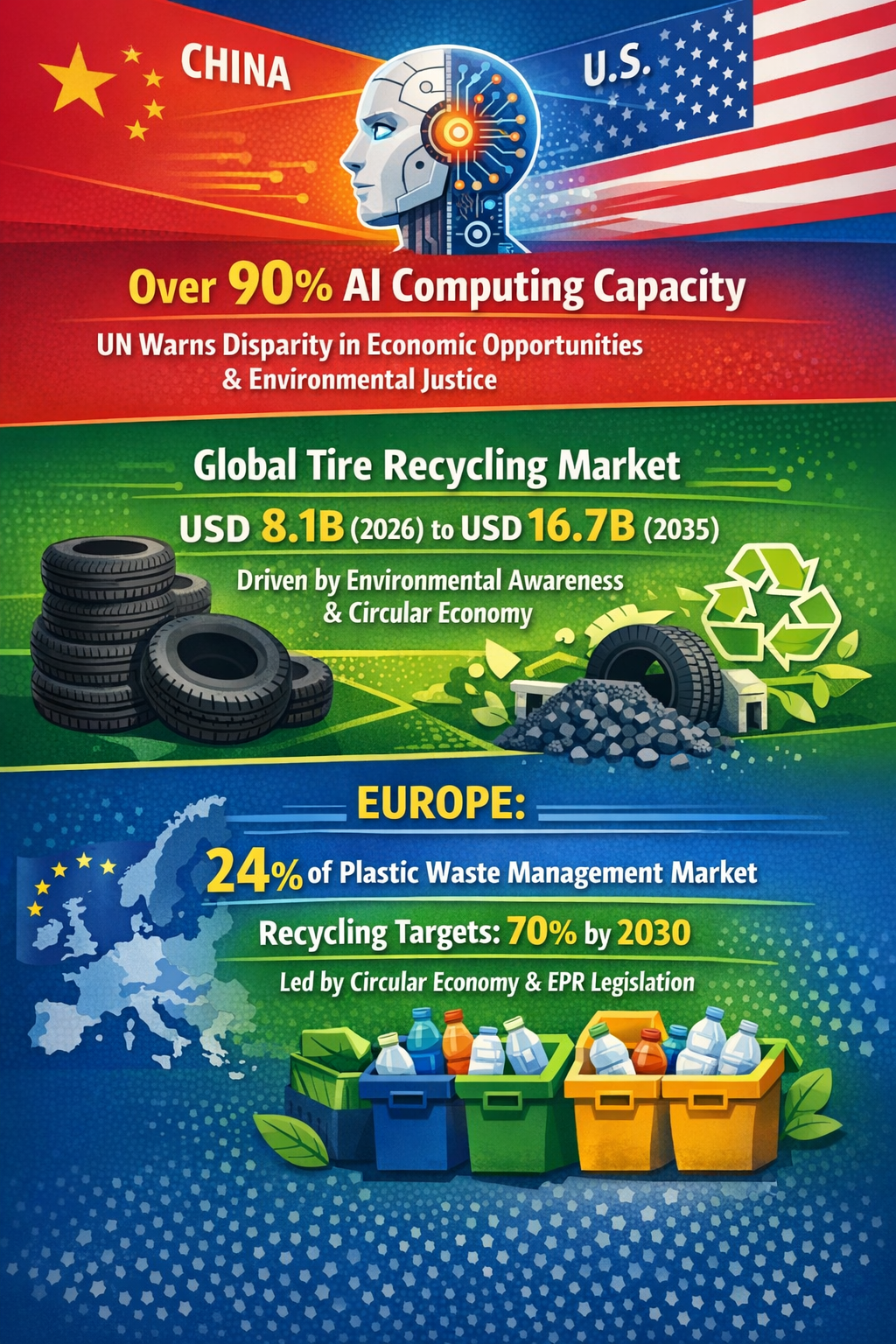
- Regulatory momentum builds, with policies like the EU’s mandated recycled content in plastics and India’s escalating recycling targets driving systemic shifts in material flows (Persistence Market Research).
- Health impacts from pollution, especially respiratory issues among children, amplify societal costs and political pressure to implement environmental safeguards (The Guardian).
- Technological disparities, notably in AI computing capacity dominated by China and the US, risk deepening environmental justice divides while posing governance challenges (Jurist).
- For Atradius, pollution and resource cycle dynamics present both risk exposures—via clients in hard-hit sectors—and opportunities to support transitions to circular economy models and sustainable innovations.
A Fearful Future – Choking Under Pressure
In this scenario, insufficient regulatory enforcement and fragmented global cooperation mean pollution worsens and resource depletion accelerates. Urban air quality declines sharply, exacerbating health crises, while plastic waste floods ecosystems amid failure to meet recycling targets. Economic disparities grow, fueling social unrest and tightening credit markets for vulnerable industries.
Signals/Drivers: Weak coordination in waste management policies, persistent industrial emissions, rising health costs tied to pollution, and geopolitical tensions reducing environmental collaboration.
What could Atradius do?
- Prioritize stringent risk assessments for high-pollution sectors, tightening credit terms and setting exposure limits to clients with poor environmental compliance.
- Develop insurance products tied to environmental performance improvements, incentivizing clients to reduce emissions and improve resource cycles.
- Strengthen early-warning systems leveraging environmental and social risk data to anticipate market shocks linked to pollution crises.
An Uncertain Future – Riding the Waves of Change
This future reflects volatile progress where some regions push aggressive recycling and pollution control measures while others lag, creating a patchwork of outcomes. Resource prices fluctuate with uneven supply chains, and technological breakthroughs in AI and waste processing emerge sporadically but face regulatory and ethical headwinds.
Signals/Drivers: Divergent regulatory enforcement, emerging AI-driven sustainability technologies unevenly adopted, and fluctuating commodity markets driven by resource scarcity and pollution penalties.
What could Atradius do?
- Adopt agile credit underwriting processes that dynamically integrate environmental regulation developments and technological adoption to assess client viability.
- Build diversified portfolios balancing exposure across regions and industries to mitigate localized regulatory or environmental disruptions.
- Invest in predictive analytics combining environmental data with financial indicators to spot early signs of risk or opportunity.
A Cautious Future – Balancing Progress with Prudence
Here, a moderate trajectory unfolds: steady improvements in pollution control and resource recycling backed by consistent policy frameworks and industry collaboration. Incremental health improvements like reduced childhood lung damage occur alongside the scaling of circular economy initiatives. However, progress is tempered by careful risk management and avoidance of overreach.
Signals/Drivers: Regulatory alignment across key markets, investment in established recycling infrastructure, and public-private partnerships advancing sustainable practices (IMARC Group).
What could Atradius do?
- Support sustainable client segments through tailored credit solutions, leveraging positive environmental performance as a creditworthiness factor.
- Consolidate risk frameworks that incorporate emerging environmental regulations and industry best practices to guide product development.
- Engage in multi-stakeholder partnerships to co-develop standards and share environmental risk knowledge, strengthening market confidence.
A Confident Future – Steering the Green Revolution
In this optimistic but attainable scenario, concerted global efforts drive transformative improvements in pollution reduction and resource circularity. AI-enabled technologies optimize waste streams and emissions, while regulatory mandates push industries toward zero-waste systems. Public health dramatically improves as environmental justice advances across regions.
Signals/Drivers: Innovative AI applications for sustainable resource management, ambitious international environmental agreements, and rapid scaling of circular economy investments.
What could Atradius do?
- Invest proactively in fintech and data solutions that enable clients to demonstrate their environmental impact and access better financing.
- Expand offerings to support green innovations and circular business models, including risk-sharing and performance-based financing products.
- Position Atradius as a thought leader by publishing insights and collaborating with governments and industry to shape future-proof environmental finance policies.
A Hopeful Future – Building Today for Tomorrow’s Clean World
The best-case future envisions a transformative shift where pollution drastically declines and resource cycles close, enabled by equitable technology access and robust global governance. Health outcomes soar, economic opportunities abound in green sectors, and social equity strengthens as environmental harms recede.
Signals/Drivers: Emerging universal environmental standards, democratization of AI technology, cross-sectoral commitment to sustainable development goals, and breakthroughs in biodegradable materials.
What could Atradius do now?
- Embed sustainability criteria firmly into credit evaluation to incentivize clients adopting circular economy and pollution reduction measures.
- Foster partnerships with innovators and regulators to pilot advanced AI and green tech in assessing and mitigating environmental risks.
- Learn from risk mitigation strategies of the Fearful Future and agility principles of the Uncertain Future to build resilient yet opportunity-focused portfolios.