
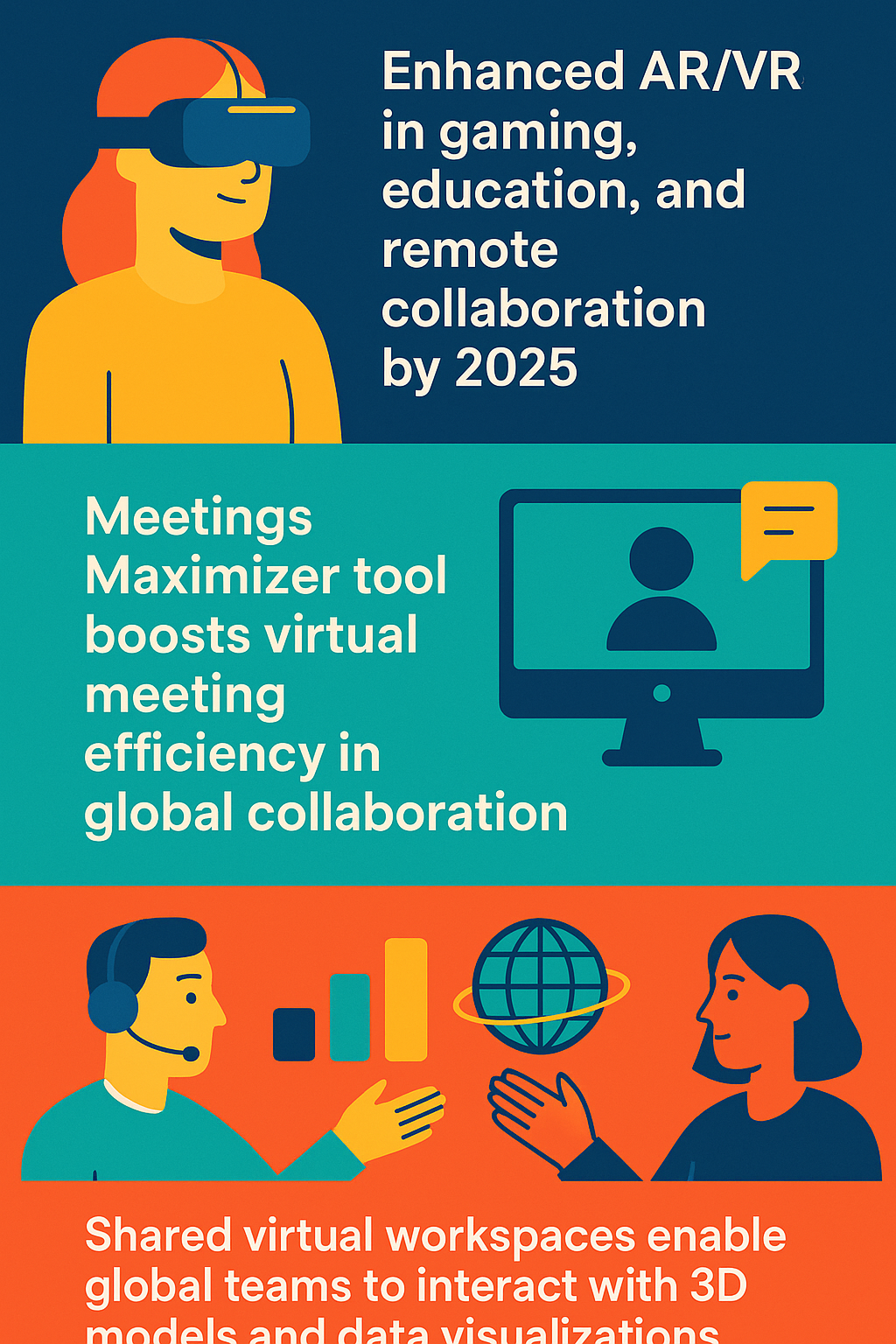
In this scenario, rapid adoption of complex online facilitation tools overwhelms learners and educators alike. Technology becomes a barrier rather than an enabler, with users fatigued by poorly designed, intrusive AR/VR environments and opaque AI facilitation. Privacy concerns escalate, creating backlash against data collection in learning spaces. Inequities widen as under-resourced learners cannot access high-end devices or reliable connectivity, causing dropouts and a loss of trust in online learning platforms.
How to mitigate: FutureLearn should prioritize user-centered design and accessibility, ensuring incremental technology rollouts that complement—not replace—effective pedagogy. Transparent privacy policies and data ethics must be core. Investing in low-bandwidth, device-agnostic facilitation supports equitable inclusion. Fostering human-led facilitation alongside AI augmentation preserves personal connection and trust.
The online facilitation landscape fragments into niche offerings. Some providers aggressively adopt immersive and AI-driven tools aiming for premium experiences, while others focus on basic video and text collaboration. Interoperability challenges and the absence of unified standards limit seamless cross-platform experiences. Learners and educators face confusion and variable quality, hampering scaling of effective practices.
How to adapt: FutureLearn should actively participate in and help define open standards for online facilitation technologies, advocating interoperability and cross-platform compatibility. Developing modular facilitation tools adaptable to various hardware and bandwidth levels will allow agility amid changing technology adoption. Collaborating closely with educators to monitor what facilitation models actually improve learning outcomes will guide sound investment.
In this future, online facilitation evolves steadily as organizations, instructors, and learners become more comfortable gradually incorporating AR/VR spatial computing and AI supports. Privacy safeguards and ethical guidelines are established industry-wide. Remote and hybrid learning engagement improves moderately, balancing novel tools with proven methods. However, adoption is uneven, with segments slower to engage due to cost, training, or preference for traditional formats.
How to manage: FutureLearn should focus on scalable but flexible facilitation solutions that allow educators to tailor the level of technology. Comprehensive training and support empower facilitators to blend new tools with best practices. Ongoing research and feedback loops will refine facilitation approaches. Alliance-building with academic institutions and employers will drive credible, outcome-focused facilitation models.
Online facilitation becomes highly intuitive and effective, powered by advanced AI and spatial computing embedded in everyday devices. Learners engage in rich virtual environments that mimic natural interaction, collaboration, and co-creation. Adaptive facilitation systems personalize learning pathways and group dynamics in real-time, maintaining high motivation and achievement. Privacy and ethical considerations are deeply embedded, and accessibility is widespread.
How to navigate: FutureLearn should invest in AI and spatial computing research and partnerships that enhance facilitation without overriding human empathy and insight. Leading with ethics and transparency will strengthen user confidence. Experimentation with adaptive learning facilitation frameworks will create differentiated experiences that scale. FutureLearn can play a role as an ecosystem integrator, connecting tools, content, educators, and learners.
By 2025 and beyond, online facilitation unlocks the full potential of blended realities and AI-enhanced human facilitation to democratize access to high-quality learning worldwide. Virtual and physical learning worlds converge, allowing learners to navigate seamless learning journeys that include remote labs, interactive workshops, and collaborative projects spanning geographies and cultures. Learners are actively co-creators in their education, supported by facilitators equipped with smart tools that amplify inclusivity, creativity, and deep understanding.
What could FutureLearn do now to get there in light of the other futures?
By balancing pragmatic caution with bold exploration, FutureLearn can shape online facilitation into a transformative force that enriches global learners' experiences across diverse contexts and needs.
Sources: