
The Silent Shift: Tokenised Governance Rights as a Structural Inflection in Decentralised Finance
Exploring an under-recognised emerging inflection in tokenised and decentralised finance — the progressive embedding of transferable, revenue-linked governance rights into stablecoin and deposit tokens — and its potential to recalibrate capital allocation, regulatory paradigms, and industrial power structures over the next 10–20 years.
While stablecoins and tokenised deposits are broadly acknowledged as enablers of blockchain-enabled commerce and financial infrastructure transformation, a discreet evolution in how these tokens represent governance entitlements may signal a deeper structural disruption. Specifically, the commodification of embedded governance rights tied to token holdings, exemplified by recent innovations granting depositors shares in platform-native token sales, points towards a hybrid convergence of capital ownership, voting power, and economic claims on chain. This phenomenon goes beyond payment rails optimization or simple asset digitization, anticipating a reconfiguration of strategic positioning between centralized institutions, decentralised protocols, and regulators.
Signal Identification
This development qualifies as an emerging inflection indicator because it signals a foundational shift in token utility — from passive digital money substitutes to active equity- and governance-bearing instruments — which is not yet widely recognised or integrated into policy frameworks. The signal could plausibly evolve into systemic structural change within 10–20 years given the current pace of DeFi innovation and institutional adoption.
The plausibility band is medium to high given rising institutional interest from traditional finance players such as Morgan Stanley (Yahoo Finance 05/06/2026) and underlying regulatory tensions evidenced by the Markets in Crypto-Assets (MiCA) framework restrictions (Forbes 06/04/2026).
Sectors primarily exposed include Decentralised Finance (DeFi), institutional crypto trading, stablecoin issuance, and financial regulation domains.
What Is Changing
The tokenisation of financial instruments, particularly stablecoins and deposits, has largely been associated with their function as on-chain money analogues designed to reduce friction in commerce and payments (Antier 01/2026). However, a subtler evolution is underway: these tokens are increasingly embedded with governance rights that confer participation in the economic upside of issuing platforms.
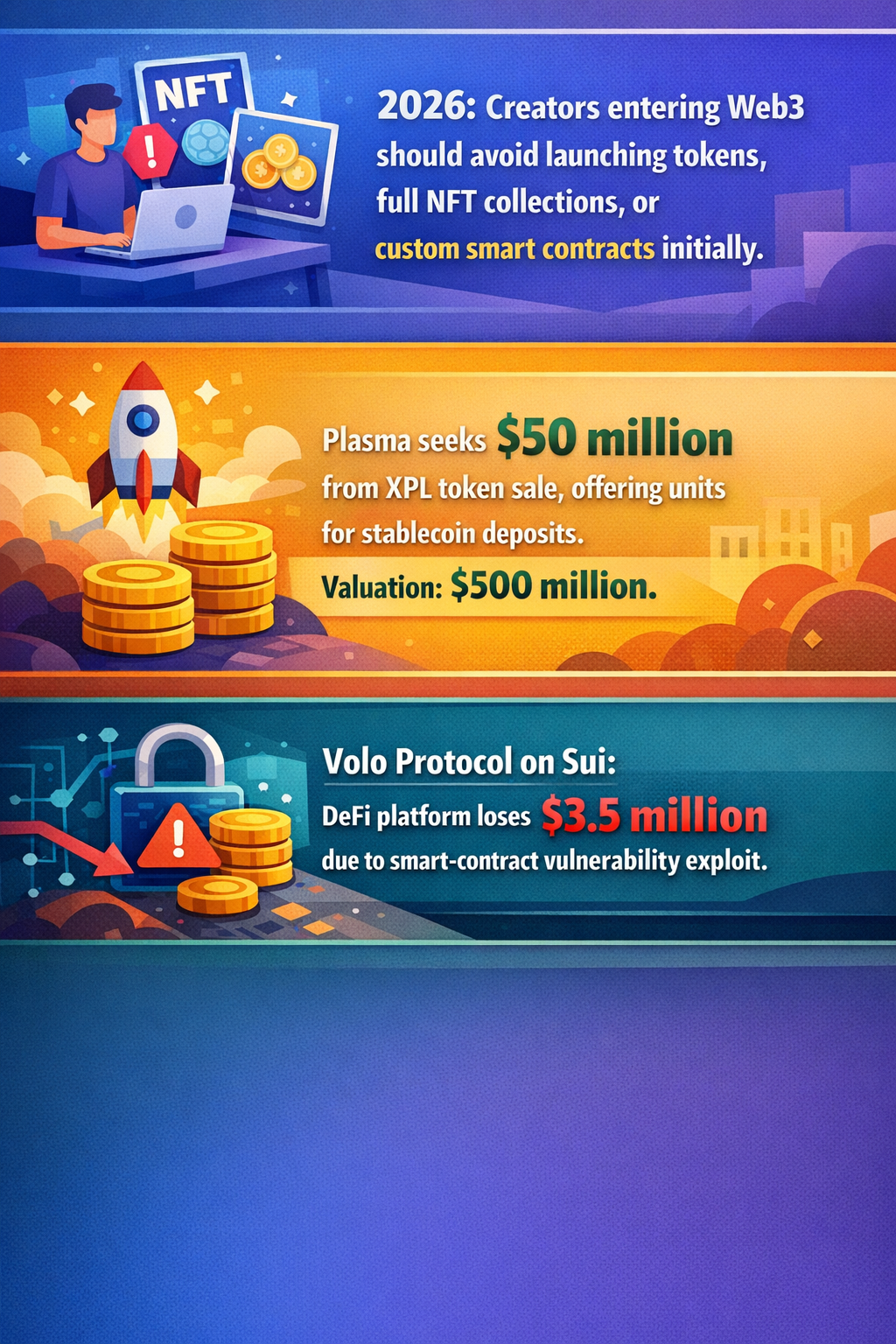
For example, Plasma’s stablecoin depositors earn units granting them allocations of Plasma’s native XPL token sale, directly linking token holding to capital formation activities and future platform governance (Galaxy Digital 13/06/2025). This represents a hybrid financial instrument that carries characteristics of both deposits and equity, rendering the underlying economics of these tokens opaque to traditional regulatory and risk models.
Traditional financial institutions are recognising these developments and are aggressively positioning to bridge DeFi and TradFi (traditional finance), exemplified by Morgan Stanley’s expansion into crypto trading and anticipation of merging DeFi and traditional capital markets (Yahoo Finance 05/06/2026). Meanwhile, regulatory frameworks such as Europe’s MiCA impose hard lines on stablecoin functionality by barring interest payments to holders, a move which may unintentionally stifle innovation or shift the locus of governance rights to more opaque channels (Forbes 06/04/2026).
Meanwhile, operational risks remain pronounced, as highlighted by recent exploits like the $3.5 million Volo Protocol smart-contract attack, underscoring the complexity and fragility of newly engineered governance-token hybrids (Hipther 22/04/2026).
Common narratives around stablecoins primarily regard them as payment utilities or on-chain liquidity facilitators. This emerging shift towards embedding governance-linked claims has been under-discussed but is critical because it melds financial control with economic benefits in unprecedented ways, raising new questions for capital allocation and regulatory oversight.
Disruption Pathway
The commodification of embedded governance rights in stablecoins and tokenised deposits may evolve into structural change through several stages.
Initially, protocols embed native token rights into stablecoin-like instruments to incentivize user lock-in and participation in governance, creating economic alignment between holders and platform success — effectively turning depositors into partial owners or stakeholders in DeFi platforms (Galaxy Digital 13/06/2025). This hybridization complicates the traditional regulatory classification into deposits (debt) versus equity, which underpins most prudential frameworks.
As adoption scales, especially with institutional backers such as Morgan Stanley pushing DeFi integration (Yahoo Finance 05/06/2026), regulators will face increased pressure to clarify or overhaul existing standards — particularly if hybrid tokens blur lines between bank deposits, securities, and utility tokens. Overly restrictive or incoherent rules, like those in MiCA banning interest payments to stablecoin holders (Forbes 06/04/2026), may drive capital and innovation offshore or into opaque networks.
In response, new industrial alliances and platform consortia may emerge, constructing layered governance frameworks combining on-chain voting, off-chain arbitration, and multi-jurisdictional compliance models. Strategic positioning may bifurcate between incumbents adopting tokenised governance (e.g., payments firms like Stripe using stablecoins as backend optimizers Forrester 2026) and new entrants focused on pure Decentralised Autonomous Organization (DAO)-style management.
These developments could generate feedback loops where governance and economic incentives are further entrenched in token architecture, magnifying systemic interdependencies and risks, as evidenced by smart-contract vulnerabilities (Hipther 22/04/2026). Consequently, new risk governance models will be essential, reshaping how capital allocation, compliance, and operational risk are conceptualized across decentralised and traditional platforms.
Why This Matters
For capital allocators, understanding that stablecoins and tokenised deposits may simultaneously embody governance and revenue rights challenges conventional risk-return paradigms. Portfolio exposure could become inherently linked to platform operational governance outcomes, not just price appreciation or liquidity.
Regulators may need to reconsider existing frameworks segmented by traditional financial categories. The hybrid nature of emerging tokens could shift liability frameworks, necessitating new standards for operational resilience and consumer protection.
Strategically, financial institutions and technology providers must assess whether to incorporate these governance tokens within their compliance models and infrastructure or risk competitive marginalisation. The industrial structure may realign towards entities capable of managing complex tokenized governance ecosystems.
Supply chains involving digital asset custody, smart-contract auditing, and cross-jurisdictional compliance will likely be reconfigured to handle these complexities, driving demand for expertise and technological solutions tailored to hybrid governance-financial tokens.
Implications
This emerging inflection could plausibly scale to a structural paradigm shift where tokenised deposits and stablecoins cease to be mere cash equivalents, becoming instead vehicles for economic ownership and governance influence. Capital flows might increasingly respond to governance outcomes coded onto tokens, altering price dynamics and liquidity characteristics.
It is unlikely this development will remain a niche innovation. Rather, it could catalyse transformative regulatory debates and industrial realignments, shaping the long-term evolution of capital markets infrastructure. Conversely, regulatory pushback or persistent technical vulnerabilities could stall or fragment its adoption.
This is not a simple extension of existing DeFi hype or incremental payments efficiency improvements but rather signals a deeper redefinition of financial ownership and control mechanisms on-chain.
Competing interpretations might construe these hybrids as intermediary steps towards traditionalization of DeFi or as speculative tokenomics fads with limited practical impact; however, growing institutionalization and embedded governance rights (>Galaxy Digital, Morgan Stanley) substantiate a more consequential trajectory.
Early Indicators to Monitor
- Increased issuance and adoption of stablecoins or deposit tokens granting embedded native platform governance or revenue rights (e.g., token allocations from deposits).
- Regulatory consultation papers or drafts addressing the classification of hybrid governance-deposit tokens.
- Institutional investor announcements or strategic alliances integrating staking or governance rights linked to deposit-like tokens.
- Standards development activity in token governance interoperability and compliance.
- Venture capital clustering targeting platforms offering hybrid token products blending deposit and equity features.
Disconfirming Signals
- Regulatory frameworks explicitly banning or structurally restricting embedded governance or revenue rights in stablecoins and deposits, leading to token redesign or fragmentation.
- Recurrence of major smart-contract failures undermining trust in hybrid governance tokens beyond isolated incidents.
- Shift of institutional capital away from DeFi-related instruments due to perceived regulatory or operational risks.
- Technological alternatives emerging that separate governance rights entirely from financial tokens, resulting in a decoupling trend.
Strategic Questions
- How should existing regulatory frameworks evolve to address the hybrid nature of tokenised deposits with embedded governance and economic claims?
- What operational and risk governance infrastructures must incumbent financial institutions adopt to engage competitively with emerging token governance models?
Keywords
Tokenised Governance; Stablecoins; Decentralised Finance; Governance Tokens; Financial Regulation; Hybrid Financial Instruments; Capital Allocation; Digital Assets; Smart Contract Risk
Bibliography
- Blockchain Trends Reshaping Web3 in 2026: What Leaders Must Know Now. Antier. Published 01/2026.
- Two Web3 Trends That Are Defining 2026. Forbes. Published 06/04/2026.
- Market Minute 5/6/26 — Morgan Stanley Pushes Crypto Trading. Yahoo Finance. Published 05/06/2026.
- Weekly Top Stories 6/13/25: Plasma XPL Token Sale and Stablecoin Deposit Allocations. Galaxy Digital. Published 13/06/2025.
- Blocks Headlines Today in Blockchain — Volo Protocol Exploit. Hipther. Published 22/04/2026.
- Stripe Sessions 2026: Stripe is Rearchitecting Payments for an Agentic AI Economy. Forrester. Published 2026.