
The Emerging Shift Toward Pesticide-Free Agriculture in the EU and Its Global Disruption Potential
The European Union’s commitment to drastically reduce pesticide use through its Farm to Fork strategy signals an emerging, transformative trend with potential to disrupt global agriculture and related industries. While much has been discussed about sustainability and organic farming targets, a subtler but critical weak signal lies in the push for halving pesticide use by 2030. This shift could redefine supply chains, regulatory frameworks, and innovation dynamics worldwide, with broad implications for governments, businesses, and consumers.
What’s Changing?
At the heart of the EU’s flagship Farm to Fork policy is the Sustainable Use of Pesticides Regulation (SUR) proposal, which aims to reduce pesticide use and risk by 50% by 2030 (Euractiv). This initiative extends beyond typical sustainability goals by imposing stringent limits across all member states, pushing agricultural practices toward non-chemical pest control methods and integrated pest management (IPM).
However, the path to this target is contentious and complex. Multiple sources report significant opposition and hurdles within the EU legislature (Euractiv, Euractiv). Resistance comes from agricultural lobbies concerned about crop yields and financial impacts, as well as political factions skeptical of regulatory overreach. Despite this, the framework is steadily gaining institutional backing, driven by clear environmental imperatives and public demand for safer food.
Along with pesticide reduction, the Farm to Fork strategy targets ambitious increases in organic farming—from about 8-10% currently to 25% of agricultural land by 2030 (Euractiv). This complements the pesticide goals by fostering agro-ecological approaches, further marginalizing chemical-heavy farming.
National variations provide a patchwork of adoption rates and challenges. Romania, for example, has set a 35% pesticide reduction target relative to past usage but struggles with institutional obstacles for integrated pest management (Euractiv). Sweden acknowledges progress has only just begun (Euractiv). These disparities suggest a complex, non-linear transition shaped by socio-economic, climatic, and political factors.
Another subtle development relates to gene editing and biotechnology. Proposals to reduce pesticide use have spurred debate over relying more heavily on gene editing to develop pest-resistant crops (Euractiv). Yet, this approach faces regulatory scrutiny and public skepticism, leaving a gap for alternative innovation.
Simultaneously, the EU plans to overhaul food labeling, potentially harmonizing nutritional and production information, which may increasingly reflect pesticide use reduction efforts (Euractiv). Consumer-facing transparency is expected to become a lever shifting demand toward pesticide-reduced produce.
Why Is This Important?
This evolving regulation could disrupt the global pesticide industry, which supports a multi-billion-dollar market. A mandated halving in use within the EU could cascade worldwide through trade relationships, raising costs, limiting market access, and pressuring farmers outside Europe to adapt or lose competitiveness.
Supply chains spanning agricultural inputs, food processing, retail, and waste management must also adapt. Less pesticide use might oblige stricter control systems, advanced monitoring technologies, or alternative pest management services, creating opportunities in digital agriculture and biotech innovation.
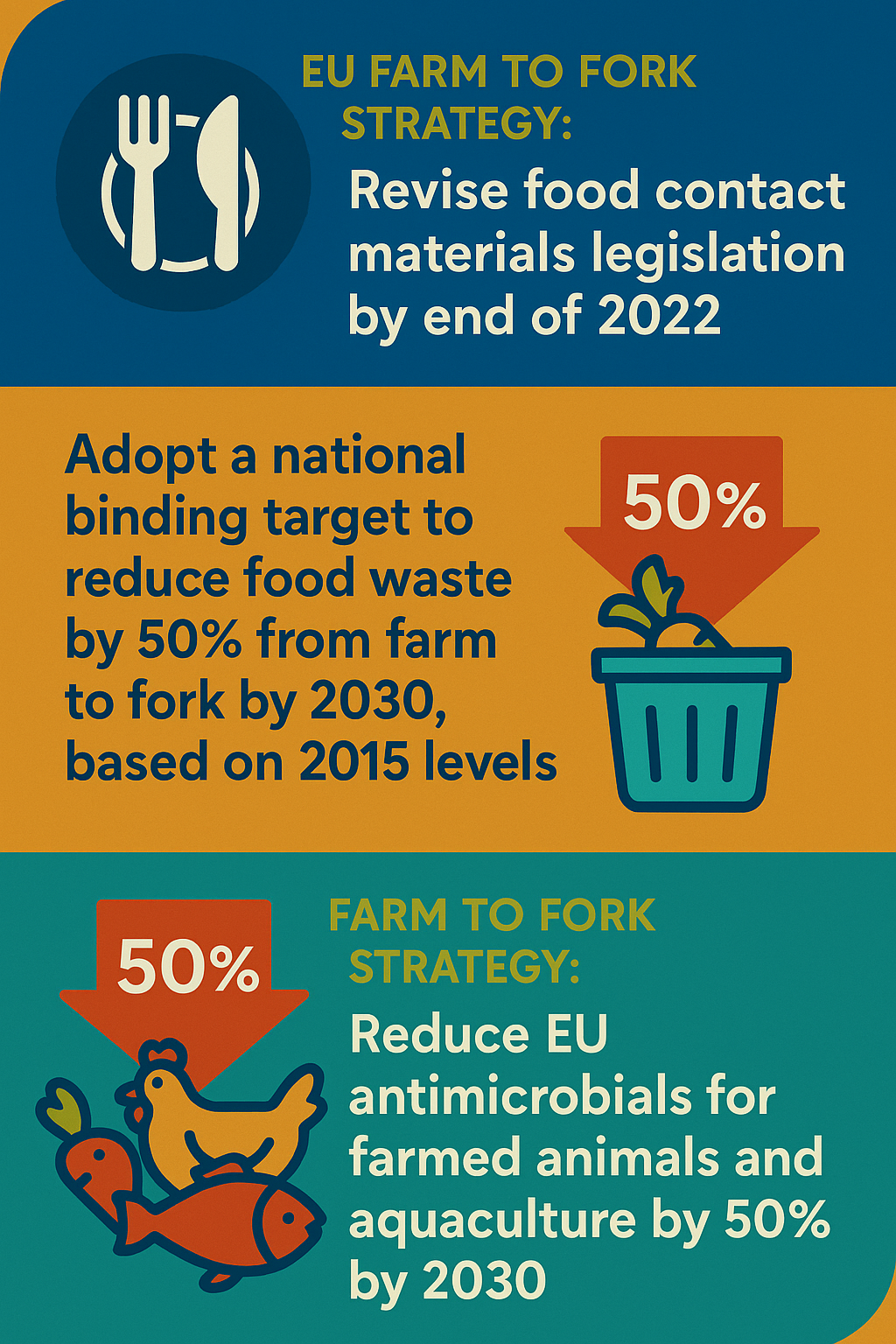
Environmental benefits are evident: pesticide runoff and residues impact ecosystem health and biodiversity, with links to pollinator decline and soil degradation. Reducing pesticides aligns with public health interests and climate goals, potentially reducing antibiotic resistance associated with pesticide use in animal farming (Euractiv).
Policy makers worldwide may take note of the EU’s assertive stance, inspiring similar initiatives in other jurisdictions. For example, national binding targets to reduce food waste parallel pesticide reduction efforts and contribute to sustainability (Table Debates).
The debates over gene editing and organic farming targets demonstrate tensions between innovation, market dynamics, and societal values. How these tensions resolve will shape research priorities, investment patterns, and regulatory landscapes for decades.
Implications
The ensuing disruption may take several forms:
- Technology and innovation: Growth in non-chemical pest control solutions like biological agents, precision agriculture, and robotics could accelerate, spurring new markets and cross-sector partnerships.
- Farm economics and productivity: Transition costs may challenge smallholders and regions with fewer resources, requiring targeted support to avoid economic inequities and food security risks.
- Regulatory and standards harmonization: To maintain market access, suppliers globally may adopt EU-equivalent pesticide thresholds, driving a de facto global standard.
- Consumer expectations and transparency: Enhanced food labeling schemes linked to pesticide reduction could shift demand patterns, benefiting producers who comply early and innovate.
- Environmental and health outcomes: Reduced chemical inputs could improve ecosystem services, lower health risks, and support broader climate action commitments.
For strategic planners, this calls for a comprehensive reassessment of supply chain resilience, research investments, and policy alignment. Businesses might evaluate diversification into sustainable inputs and digital agriculture platforms. Governments may need to coordinate regulations internationally and support farmer transitions.
Questions
- How might pesticide reduction regulations influence competitive advantage in global agricultural markets?
- What new technologies can deliver pest control that satisfies both environmental targets and productivity demands?
- How will supply chains adapt to increased transparency and traceability requirements linked to pesticide use?
- What policies are effective in supporting vulnerable farming populations during the transition?
- Could gene editing emerge as a balanced compromise in reducing pesticide use despite regulatory hurdles?
- How might consumer behavior evolve if pesticide use and organic farming labeling becomes universally standardized?
Keywords
Sustainable Use of Pesticides Regulation; Farm to Fork strategy; pesticide reduction; organic farming; integrated pest management; agricultural technology; gene editing; food labeling
Bibliography
- “Timmermans: EU farmers do not need more money to smooth green transition.” Euractiv. https://www.euractiv.com/section/agriculture-food/news/timmermans-eu-farmers-do-not-need-more-money-to-smooth-green-transition/
- “MEPs agree EU pesticide reduction plan, votes pushing final deal into 2024.” Euractiv. https://www.euractiv.com/section/agriculture-food/news/meps-agree-eu-pesticide-reduction-plan-votes-pushing-final-deal-into-2024/
- “No to pesticide cuts, no gene editing proposal, commission official warns.” Euractiv. https://www.euractiv.com/section/agriculture-food/news/no-to-pesticide-cuts-no-gene-editing-proposal-commission-official-warns/
- “Integrated pest management struggles to take off in Romania.” Euractiv. https://www.euractiv.com/section/agriculture-food/news/integrated-pest-management-struggles-to-take-off-in-romania/
- “Swedish minister expects job only half done on pesticide reduction plan.” Euractiv. https://www.euractiv.com/section/agriculture-food/news/swedish-minister-expects-job-only-half-done-on-pesticide-reduction-plan/
- “The AgriFood Brief: The great gene editing gamble.” Euractiv. https://www.euractiv.com/section/agriculture-food/news/agrifood-brief-the-great-gene-editing-gamble/
- “Special Capitals Edition: State of play of organic agriculture in the EU.” Euractiv. https://www.euractiv.com/section/agriculture-food/news/special-capitals-edition-state-of-play-of-organic-agriculture-in-the-eu/
- “Cut animal transport times to reduce rise of superbugs, says EU agency.” Euractiv. https://www.euractiv.com/section/agriculture-food/news/cut-animal-transport-times-to-reduce-rise-of-superbugs-says-eu-agency/
- “Why climate emergency demands food waste regulation.” Table Debates. https://www.tabledebates.org/blog/why-climate-emergency-demands-food-waste-regulation