
Plastic Packaging Shift in Craft Beer: A Non-Obvious Catalyst for Structural Innovation in Zero-Alcohol Beverage Markets
Emerging material and packaging shifts in adjacent beverage sectors may signal a transformative inflection for zero-alcohol (zBeverages) industries. Specifically, the accelerating adoption of polyethylene terephthalate (PET) bottles in craft beer—a sector traditionally wedded to glass—harbors underappreciated implications for packaging innovation, sustainability expectations, and supply chain realignment within zBeverages over the next two decades.
This insight paper highlights the subtle yet consequential inflection triggered by PET bottle growth in craft beer packaging, exploring its potential to recalibrate capital allocation, regulatory pressure, and industrial strategy in zBeverages. Despite appearing tangential, this shift may evolve beyond packaging convenience into a systemic enabler of market expansion, product innovation, and sustainability mandates that reshape strategic positioning across beverage categories.
Signal Identification
This development qualifies as an emerging inflection indicator. The substitution of glass with PET bottles among small and medium-sized craft breweries is currently a niche trend but demonstrates a clear pattern of innovation adoption driven by cost, weight, and sustainability considerations. The inflection horizon is medium term (5–10 years), with a medium to high plausibility band, given evident shifts in beverage packaging technologies and sustainability priorities. Affected sectors include nonalcoholic beverages broadly, zero-alcohol categories, craft beer, regulatory bodies overseeing food contact materials, and capital markets focused on packaging innovation.
What Is Changing
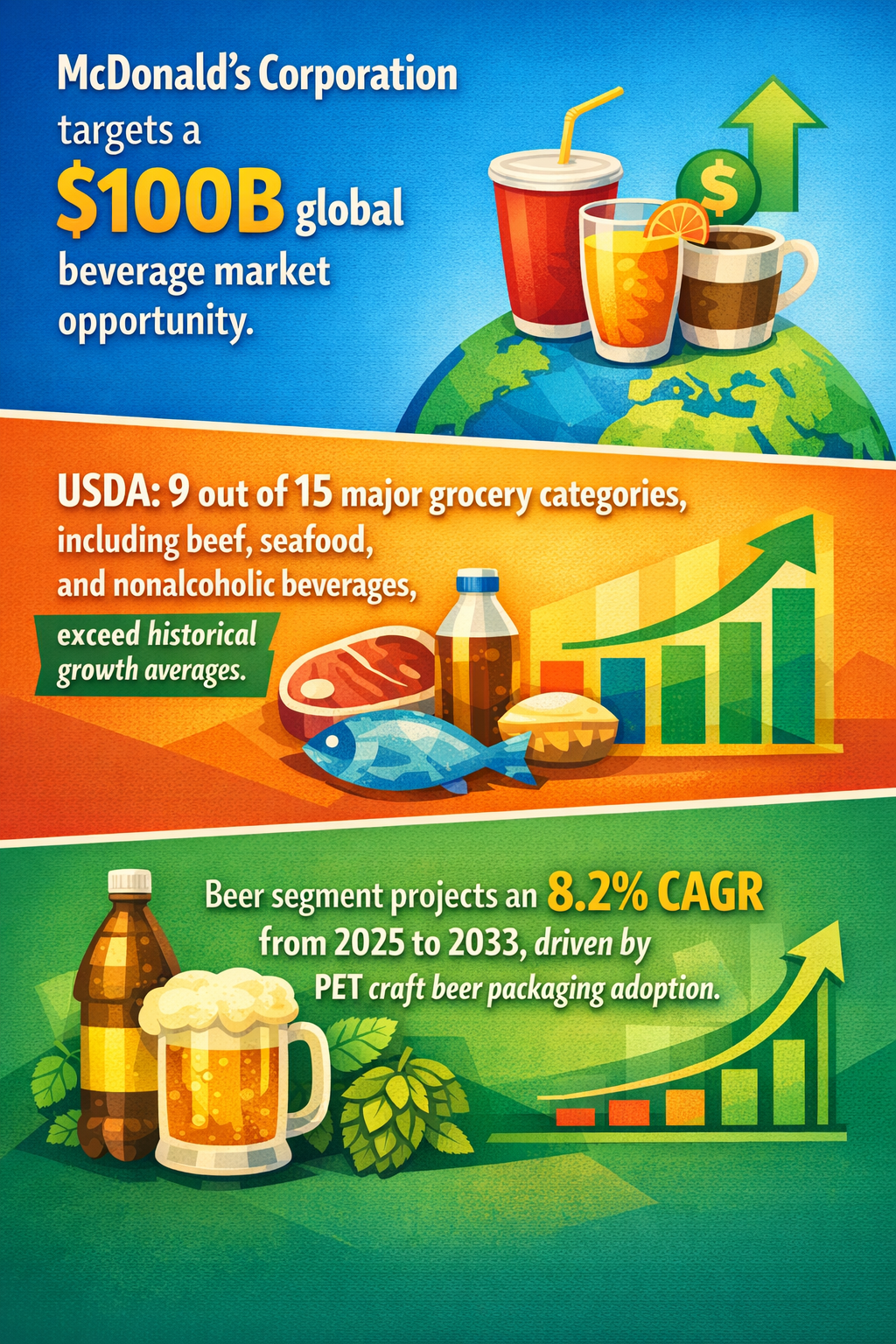
The packaging evolution in craft beer—growing at an 8.2% compound annual growth rate (CAGR) from 2025 to 2033 with increased PET bottle usage (Market Data Forecast 03/06/2026)—reveals a material transformation in how beverages are contained, distributed, and perceived. This represents a break from entrenched glass bottle reliance not only for aesthetic appeal but also for brand positioning and recycling expectations.
Meanwhile, USDA forecasts rising prices for nonalcoholic beverages along with sugar and sweets (AgBull 25/05/2026), which suggests cost pressures and consumer sensitivity to packaging costs in zero-alcohol offerings.
The broader food and beverage sector trajectory shows increased emphasis on categories aligned with wellness, health, and sustainability—exemplified by McDonald's strategic pivot towards growth in beverages and protein categories (Yahoo Finance 10/06/2026). This signals the growing importance of innovative product delivery aligned with evolving consumer preferences, where sustainable, lightweight packaging plays a critical role.
Energy drinks' associated health risks (Persistence Market Research 05/06/2026) sharply contrast with emerging regulatory scrutiny focusing on product ingredients. As regulatory frameworks tighten around health impacts, packaging innovations that reduce environmental footprint may become a vital differentiator and regulatory requirement, including in zero-alcohol alternatives that often target health-conscious consumers.
Considered collectively, these themes emphasize a structural pivot point: the intersection of packaging material innovation, regulatory pressure, consumer health trends, and cost inflation serves to reshape the industrial and competitive landscape of zBeverages. The moderate visibility of this shift, coupled with its systemic reach, renders it an under-recognized inflection worthy of strategic attention.
Disruption Pathway
The shift from glass to PET in craft beer packaging creates conditions accelerating adoption in zero-alcohol beverages through several mechanisms. First, the reduced weight and breakage risk of PET increase logistical efficiencies and lower distribution costs, directly addressing inflationary pressures forecast by the USDA for beverages and sugars (RFDTv 15/05/2026).
Second, evolving consumer demand for sustainability and health-friendly beverages creates stresses on packaging that can reconcile durability, environmental impact, and consumer safety. PET offers enhanced recyclability innovations compared to traditional multi-material alternatives. These material shifts are subject to emerging regulatory frameworks prioritizing circularity and material traceability, potentially pushing entire categories toward PET or even bio-based plastics.
Third, as boutique alcohol and zero-alcohol beverage producers experiment with formats to capture growth markets, PET's flexibility in design and branding responsiveness offers structural advantages over glass. These factors may provoke realignment in industrial supply chains—favoring PET resin manufacturers, recycling infrastructure investments, and packaging design innovation start-ups.
This evolving dynamic could trigger feedback loops whereby capital reallocates aggressively toward sustainable PET innovations, accelerating scale economies and price competitiveness. Regulatory frameworks might incorporate stricter recyclability mandates and carbon accounting methodologies, intensifying competitive pressure. In response, incumbent glass packaging firms may consolidate or pivot to hybrid solutions, altering the industrial structure fundamentally.
If these mechanisms fully unfold, dominant industry positioning and governance models—currently divided largely along glass-centric lines—could fragment, enabling new entrants and innovative consortia to set new packaging standards aligned with zero-alcohol beverage growth and regulatory sustainability imperatives.
Why This Matters
For capital allocators, identifying ongoing PET adoption beyond craft beer signals potential redeployments toward packaging innovation that could unlock cost savings and scalability in zBeverage production and distribution. Investment in feedstock alternatives, recycling technologies, and lightweight container manufacturing might become more attractive.
Regulators may need to anticipate new compliance frameworks reflecting circular economy principles applied across emerging beverage categories, affecting permitting, supply chain disclosure, and industry accountability. Early regulatory interventions could shape competitive parity and industrial consolidation.
Strategic positioning across beverage companies must integrate packaging innovation as a core element to differentiate, ensure regulatory alignment, and meet evolving consumer demands—particularly in fast-growing segments like zero-alcohol tonics, kombuchas, and functional beverages increasingly perceived as health substitutes for alcoholic drinks.
Supply chains will also transform, generating ripple effects across raw material suppliers, recyclers, and logistics providers emphasizing lighter, returnable, and recyclable packaging systems. Liability regimes could evolve around new health, safety, and environmental risks associated with novel packaging materials.
Implications
This packaging transition could likely become a structural enabler rather than a transient convenience trend. It might reshape cost structures within zBeverages, increase accessibility and distribution footprints, and align with tightening environmental standards that implicitly favor PET's lifecycle advantages.
Conversely, this is not a guaranteed substitution of all glass packaging; heritage brands, luxury positioning, and certain premium products may continue to rely on glass for qualitative differentiation. Injuries or failures in recycling PET that stall environmental gains could challenge regulatory acceptance.
Competing interpretations regard PET’s environmental impact as ambiguous, with some environmental groups advocating for glass return systems or emerging biodegradable alternatives. Thus, the trajectory depends on parallel innovations and regulatory consensus.
Early Indicators to Monitor
- Trends in capital investment toward PET resin plants and recycling infrastructure
- Regulatory drafts emphasizing recyclability, carbon footprint, and packaging transparency in beverages
- Venture funding clustering around packaging innovation startups targeting zBeverages
- Procurement shifts in beverage companies increasingly specifying PET over glass in product lines
- Standards development regarding food-contact PET and recycled content mandates
Disconfirming Signals
- New regulations or bans restricting PET usage due to microplastic concerns or health risk findings
- Resurgence in glass packaging innovations that undercut cost and sustainability advantages of PET
- Consumer backlash or shift in preferences toward zero-packaging or reusable glass bottle systems
- Economic shocks disrupting capital flows into packaging innovation infrastructure
Strategic Questions
- How should investors recalibrate capital allocation toward sustainable packaging technologies to prepare for regulatory and market evolution in zero-alcohol categories?
- What regulatory frameworks are necessary to balance sustainability mandates with innovation flexibility in beverage packaging?
Keywords
PET bottles; Zero alcohol beverages; Packaging innovation; Sustainability regulation; Craft beer; Supply chain reconfiguration; Capital allocation
Bibliography
- North America PET Bottles Market. Market Data Forecast. Published 03/06/2026.
- USDA Raises 2026 Food Inflation Forecast As Grocery Costs Accelerate. AgBull. Published 25/05/2026.
- USDA Sees Food Prices Rising Again in 2026. RFDTv. Published 15/05/2026.
- McDonald’s Unveils McDonald’s Next Global Growth Priorities. Yahoo Finance. Published 10/06/2026.
- US Energy Drinks Market. Persistence Market Research. Published 05/06/2026.