Our Scans
·
Artificial Intelligence
·
Intelligence Briefing
Intelligence Briefing about Artificial Intelligence
Critical Trends Impacting ETDA
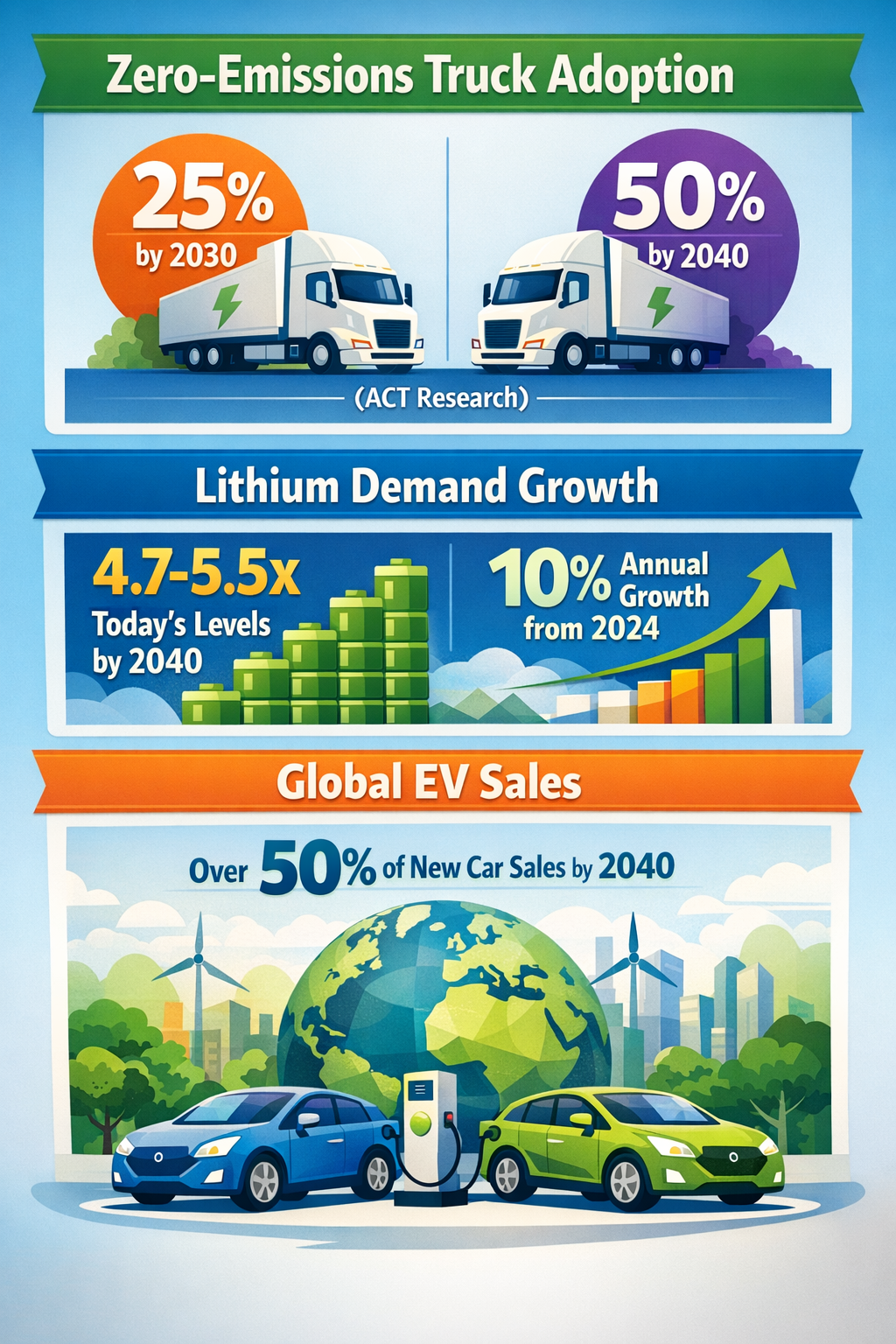
- Acceleration of electric vehicle (EV) adoption, with projections indicating EVs will constitute more than half of new car sales globally by 2040 (Renewable Institute).
- Surging electricity demand driven by EV charging peaks, especially highlighted in California's grid forecasts through 2045 (RTO Insider).
- Significant increase in lithium demand—up to 4.7-5.5 times current levels by 2040—reflecting intensified battery metal mining and supply chain pressures (Lithium Harvest).
- Commitments toward near-zero emissions by 2040 based on wide-scale adoption of renewable energy and full fossil fuel phase-out (Nature).
Key Challenges, Opportunities, and Risks
- Challenges: Managing infrastructure strain from EV-driven electricity demand peaks; ensuring sustainable mining practices amid surging battery metal needs; cyber and data security concerns related to AI integration in energy management systems.
- Opportunities: Leveraging AI for smart grid optimization, predictive maintenance, and demand response; fostering green technology innovation aligned with emission targets.
- Risks: Environmental degradation from expanded mining activities, including potential biodiversity loss; energy grid instability if technology and infrastructure development lag behind demand growth; regulatory and ethical complexities emerging from AI deployment.
Scenario Development
- Best-Case: Successful AI integration enables optimized EV charging, renewable energy use meets demand, lithium supply chains stabilize through sustainable mining, and near-zero emissions targets are achieved by 2040.
- Optimistic: AI-driven smart grids reduce peak load pressures partially, renewable adoption grows steadily but with intermittent challenges, lithium demand fuels increased mining mitigated by improved environmental practices.
- Challenging: Grid infrastructure struggles to keep pace with EV demand surges, environmental and community impacts from mining prompt regulatory delays, and AI adoption is limited by policy and technical constraints.
- Worst-Case: Grid failures become frequent due to unmanaged EV demand, unchecked mining causes significant biodiversity loss, AI systems introduce security vulnerabilities, and emissions targets are missed, triggering economic and environmental fallout.
Strategic Questions
- How can ETDA guide the secure and ethical integration of AI technologies in managing rapidly evolving energy and transportation systems?
- What frameworks could be developed to balance the acceleration of EV adoption with sustainable mining and environmental preservation?
- In what ways might AI-driven predictive analytics be leveraged to anticipate and mitigate risks related to peak electricity demands?
- How can ETDA position itself to influence policies ensuring that renewable energy infrastructure development keeps pace with growing energy consumption?
- What partnerships or collaborations could be forged to address the complex interdependencies between AI innovation, energy transition, and environmental stewardship?
Actionable Insights and Considerations
- ETDA could prioritize investment in AI capabilities focused on smart grid management and energy demand forecasting to enhance system resilience.
- Developing guidelines for sustainable AI applications in mining and energy sectors could mitigate environmental and social risks.
- Engaging cross-sector stakeholders early might facilitate coordinated responses to EV-related infrastructure demands and AI ethical considerations.
- Encouraging data transparency and sharing among energy providers could enable more effective AI-driven decision-making tools.
- Exploring adaptive regulatory frameworks that evolve with technological progress could help preempt emerging risks and unlock innovation benefits.
Briefing Created: 09/06/2026