
The Rising Complexity of Cross-Jurisdictional Liability and Parallel Enforcement as a Structural Legal Risk Inflection
Emerging enforcement landscapes reveal a growing structural risk where legal liabilities transcend traditional jurisdictional silos, creating complex webs of parallel civil, criminal, and administrative exposures globally. This evolving phenomenon could fundamentally recalibrate corporate regulatory risk management, capital allocation, and governance models over the next 5–20 years.
Recent patterns in government enforcement and litigation suggest a transformative shift from isolated compliance issues to multifaceted legal entanglements that simultaneously span multiple enforcement bodies and legal domains. This inflection feeds off expanding regulatory ambitions, activist litigation, and corporate responsibility doctrines extending beyond borders. Awareness remains uneven, with many institutions underestimating the cascading systemic pressures this creates on industrial and legal ecosystems.
Signal Identification
This development qualifies as an emerging trend with inflection potential. It transcends traditional enforcement escalation by integrating multiple enforcement tracks—civil, criminal, administrative, and international litigation—targeting corporate actors simultaneously, as evidenced in healthcare False Claims Act (FCA) scrutiny and multinational parent company litigations. The time horizon to systemic impact is medium to long term (5–20 years), with medium-high plausibility given current regulatory momentum and judicial activism. Primary sectors exposed include healthcare, federal contracting, digital industries, and resource extraction.
What Is Changing
Multiple sources highlight that enforcement tactics are expanding far beyond singular compliance failures into multi-agency, multi-jurisdictional prosecutorial landscapes. For example, healthcare providers face concurrent False Claims Act investigations, criminal inquiries, administrative actions, and state-level litigations for single compliance lapses (Medical Economics 15/02/2026). Federal contractors similarly encounter increased FCA risks related to diversity, equity, and inclusion (DEI) certification issues that formerly would have been peripheral concerns (Dechert LLP 18/04/2026).
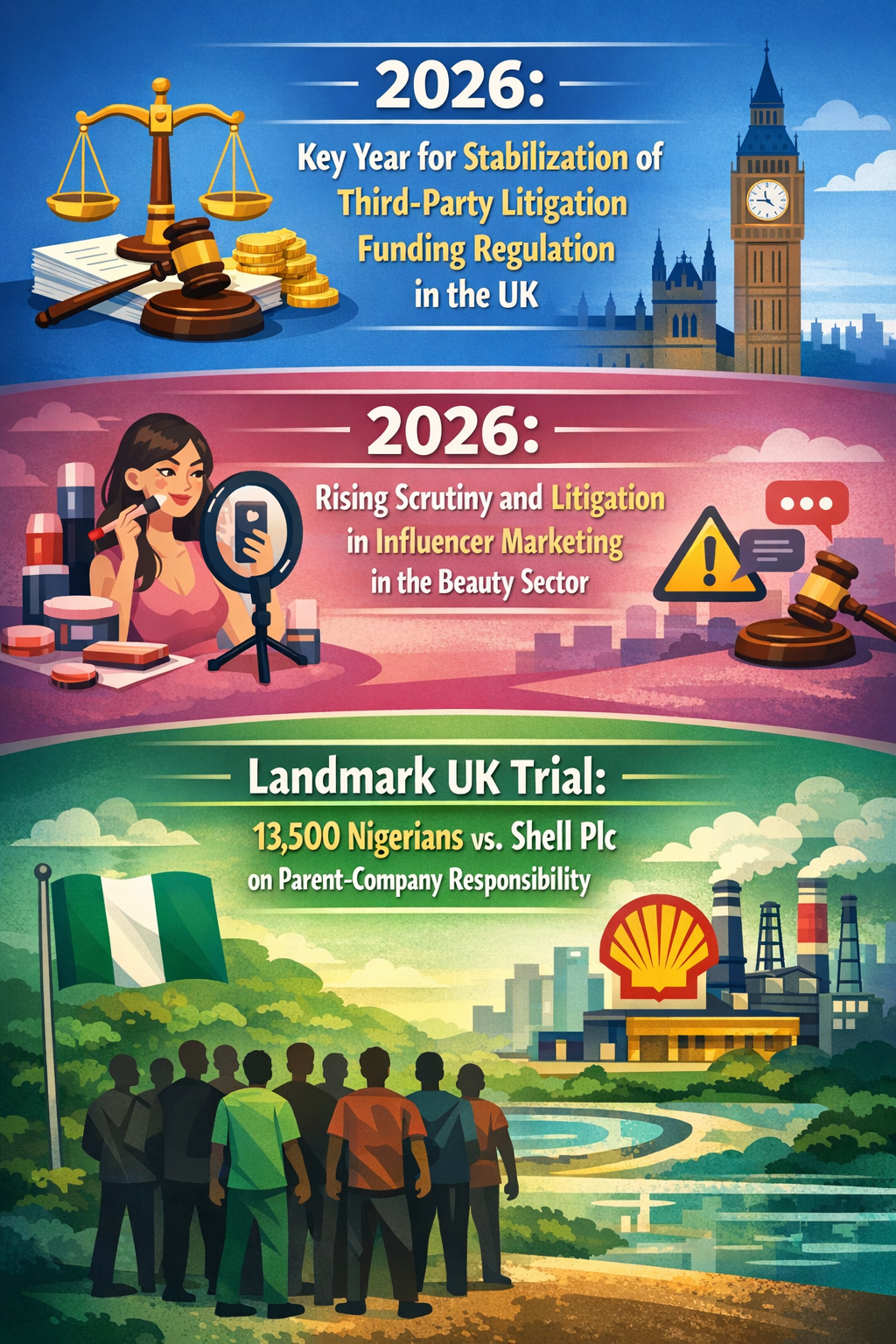
Concurrently, litigation involving parent companies for actions of overseas subsidiaries is rising, demonstrated by mass Nigerian community litigation against Shell Plc in the UK—potentially setting precedent for extraterritorial accountability (Insurance Journal 02/02/2023). Digital sector reforms and increased UK digital market competition enforcement signal higher litigation risks and regulatory scrutiny in technologically enabled sectors (DLA Piper 10/12/2024). Social media-driven influencer marketing, especially in fast-moving sectors like beauty, is experiencing heightened regulatory scrutiny for deceptive claims, further broadening exposure scopes (JD Supra 22/01/2026).
A substantive structural theme emerges: the legal risk landscape is evolving from isolated single-issue compliance to a multi-dimensional enforcement ecosystem. This system integrates criminal, civil, administrative, and transnational enforcement instruments, creating layered, intertwined exposure webs previously less common or feasible.
Disruption Pathway
This multidimensional enforcement pattern could evolve into a new structural reality driven by regulatory expansion, enhanced international cooperation, and technology-enabled surveillance. The conditions accelerating this include persistent political will to impose corporate accountability—especially in socially salient areas like healthcare fraud, DEI compliance, environmental justice, and digital market fairness—and judicial receptiveness to extraterritorial claims.
As enforcement bodies increasingly share data and harmonize approaches, corporations face stresses managing overlapping obligations and risks of duplicative or conflicting penalties. This may catalyze major adaptations such as integrated compliance and legal defense strategies encompassing simultaneously multiple jurisdictions and legal domains, incentivizing development of centralized risk orchestration platforms. New governance standards could emerge emphasizing anticipatory multi-lens risk modeling, beyond traditional siloed legal or compliance functions.
Feedback loops may materialize as increased litigation encourages more regulatory bodies to adopt ‘parallel enforcement’ models, driving up innovation in cross-border accountability claims (e.g., human rights in supply chains) and expanding doctrines of parent company liability, thereby fueling further litigation waves. Existing dominant paradigms—nation-state jurisdictional sovereignty over corporate compliance and enforcement—may shift towards hybrid regulatory frameworks blending domestic and international mechanisms.
Why This Matters
For capital deployment, this trend indicates rising legal risk premiums and liability costs, particularly for multinational corporations operating in regulated sectors. Investors must factor in the probability of multi-front enforcement battles impacting cash flow, reputational capital, and strategic partnerships. Regulatorily, policymakers may need to recalibrate frameworks to balance enforcement ambition with fair procedural safeguards and regulatory clarity. Strategic positioning will demand firms integrate multi-jurisdictional legal intelligence, re-evaluate supply chain configurations to mitigate liability, and invest in cross-functional compliance innovation.
The escalation of parallel exposures can shift liability burdens, with parent companies increasingly accountable for overseas subsidiary misconduct, reshaping industrial hierarchies and supply chain governance. Legal governance structures inside corporations may evolve towards more integrated, anticipatory models incorporating external stakeholder dynamics. These changes could compel governments and global standard setters to revisit enforcement doctrines and cooperative mechanisms.
Implications
This development may structurally change how companies approach legal risk, driving a shift from reactive compliance to proactive multi-dimensional risk orchestration. It might accelerate the emergence of integrated global enforcement regimes blending civil, criminal, administrative, and transnational litigation tools. Capital allocation strategies could pivot towards risk-averse sectors or those with less exposed cross-jurisdictional footprints, affecting industrial structure over two decades.
It is unlikely to be a transient regulatory noise due to its root in reformed enforcement philosophies, judicial innovations, and evolving corporate accountability norms. However, competing interpretations could frame this trend as mere incremental enforcement escalation rather than a paradigm shift, or as a geopolitical backlash that may be partially reversed under different political majorities.
Early Indicators to Monitor
- Increase in regulatory and judicial cooperation agreements or treaties on cross-border enforcement
- Surge in transnational class action and parent company liability cases filed in major jurisdictions
- Regulatory agency releases or consultations promoting integrated enforcement strategies
- Corporate investment trends in multi-jurisdictional risk management technologies
- Policy drafts expanding scope of enforcement beyond traditional compliance boundaries
Disconfirming Signals
- Regulatory rollbacks or moratoria on multi-agency or transnational enforcement mechanisms
- Judicial decisions limiting or reversing expansions in extraterritorial liability or parallel proceedings
- Failure of proposed international enforcement coordination frameworks to gain traction
- Corporate legal controls standardizing isolation of compliance units to limit cascading exposures
Strategic Questions
- How can legal risk management evolve to integrate multi-jurisdictional and multi-domain enforcement exposures effectively?
- What are the implications of expanding parent company liability on supply chain governance and capital allocation?
Keywords
Legal risk; Regulatory enforcement; Multijurisdictional litigation; Corporate governance; Parent company liability; Parallel enforcement; False Claims Act; Transnational litigation; Regulatory frameworks; Capital allocation
Bibliography
- In practical terms, issues that once might have been managed as a single compliance matter can now escalate quickly into parallel exposure across civil False Claims Act (FCA) investigations, criminal inquiries, administrative action and state enforcement litigation. Medical Economics. Published 15/02/2026.
- Federal contractors face heightened False Claims Act (FCA) risk tied to DEI-related certifications, while all employers should anticipate increased scrutiny and litigation risk. Dechert LLP. Published 18/04/2026.
- More than 13,500 Nigerians joined their communities in a lawsuit against Shell Plc before a landmark UK trial that could have far-reaching implications for parent-company responsibility over the actions of foreign subsidiaries. Insurance Journal. Published 02/02/2023.
- Increased litigation The DMCC increases the risk of litigation for digital firms in the already litigious UK environment. DLA Piper. Published 10/12/2024.
- DISPUTES As influencer marketing continues to shape consumer behaviour, particularly in the beauty sector, companies are entering 2026 facing heightened scrutiny of influencer claims, disclosures, and emerging litigation risks tied to social media-driven advertising strategies. / UK JD Supra. Published 22/01/2026.