
The Cloud and AI Development Act (CADA) is a strategic legislative proposal by the European Commission adopted in June 2026, aimed at bolstering the EU’s cloud and AI ecosystems by expanding investment and infrastructure. This initiative focuses on establishing next-generation computational resources via AI "factories" and "gigafactories," providing improved access to sustainable and energy-efficient data centres across Europe. CADA rests on three foundational objectives: (1) driving research, development, and innovation in cloud and AI technologies; (2) accelerating the deployment of data centre capacity with a priority on public sector facilities; and (3) creating a unified EU-wide framework for cloud and AI sovereignty, supplemented by mechanisms to foster public sector adoption. The act complements existing EU initiatives such as Chips Act 2.0 and the EU Open Source Strategy, striving to create a competitive, secure, and resilient European digital economy.
Key Takeaways:In June 2026, PRS Group analyzed geopolitical developments following Iran’s announcement to halt mediated message exchanges with the United States and consider closing the Strait of Hormuz, a vital global oil transit chokepoint. This action is framed as strategic brinkmanship and a bargaining tool rather than an irrevocable rupture, evidenced by ongoing, albeit suspended, negotiation drafts linking Strait reopening to nuclear and military concessions. The move impacts Gulf Cooperation Council (GCC) countries by increasing political risk scores due to conflict threats, while temporarily boosting their economic metrics via higher oil prices. Conversely, net energy importers, particularly in Europe and Asia, face deteriorating economic and socioeconomic conditions, signaling adverse inflationary and currency pressures. Concurrently, the global AI investment surge has reshaped capital flows, artificially inflating the U.S. dollar due to concentrated tech equity investments, despite underlying weakening US political stability and fiscal challenges. This dynamic calls into question the traditional role of US Treasuries as a safe haven and highlights increased vulnerability to speculative volatility. Regional specifics include South Korea’s Won facing depreciation driven by institutional risk and trade exposure, despite strong technology export performance. The report also features an in-depth academic discourse on institutions—leveraging ICRG data—as a fundamental driver of national wealth, highlighted by the 2024 Nobel Prize awarded to Acemoglu, Johnson, and Robinson for their empirical dismantling of geographic determinism in economic outcomes.
Key Takeaways:The cybersecurity sector in June 2026 faces a surge in complex cyber threats fueled by artificial intelligence (AI), amplifying the sophistication, scale, and stealth of attacks. Malicious actors increasingly deploy AI for automated phishing, deepfake impersonation, systematic vulnerability identification, and advanced malware development. This influx compels organizations worldwide to prioritize investments in AI-based threat detection systems, Zero Trust architectures, security automation, and real-time monitoring. The cybersecurity ecosystem also grapples with elevated ransomware activity that synergizes file encryption with data theft and extortion tactics, targeting critical infrastructure including hospitals and government entities. Key vulnerabilities persist in software supply chains and cloud environments, with attackers exploiting third-party providers and frequently misconfigured cloud resources. The sector responds with intensified software security audits, DevSecOps adoption, offsite backups, and workforce upskilling. Cybersecurity labor demand continues robust growth, emphasizing skills in ethical hacking, cloud security, AI threat management, incident response, and digital forensics. Major software vendors like Microsoft released critical security patches, underscoring the persistent imperative of patch management amid accelerating threat deployment velocities.
Key Takeaways:In 2026, artificial intelligence (AI) has transitioned into a practical and widespread tool impacting personal and business productivity. Core AI benefits include task automation, where repetitive activities such as data entry, scheduling, and customer service processes are executed in minutes rather than hours, enabling human workers to focus on creative and strategic efforts. Advanced AI assistants improve personal organization by managing calendars, prioritizing tasks, and predicting potential issues, thereby reducing cognitive load and stress. AI serves as an augmentative force rather than a displacement threat, helping professionals across marketing, healthcare, and other industries enhance decision-making and speed up workflows. Small businesses leverage AI-powered chatbots and analytics tools to engage customers, optimize campaigns, and operate efficiently without large teams, leveling the competitive landscape. In education, adaptive AI-driven learning tools customize pacing and provide detailed feedback, enhancing student performance and supporting teachers. AI also facilitates personal financial management through budgeting aids, fraud detection, and personalized investment advice. Healthcare benefits include AI-assisted diagnostics, imaging analysis, virtual assistants for appointment management, and expanded telehealth capabilities, improving care quality and access. Overall, AI integration fosters increased efficiency, accessibility, and innovation while creating new roles requiring digital skills.
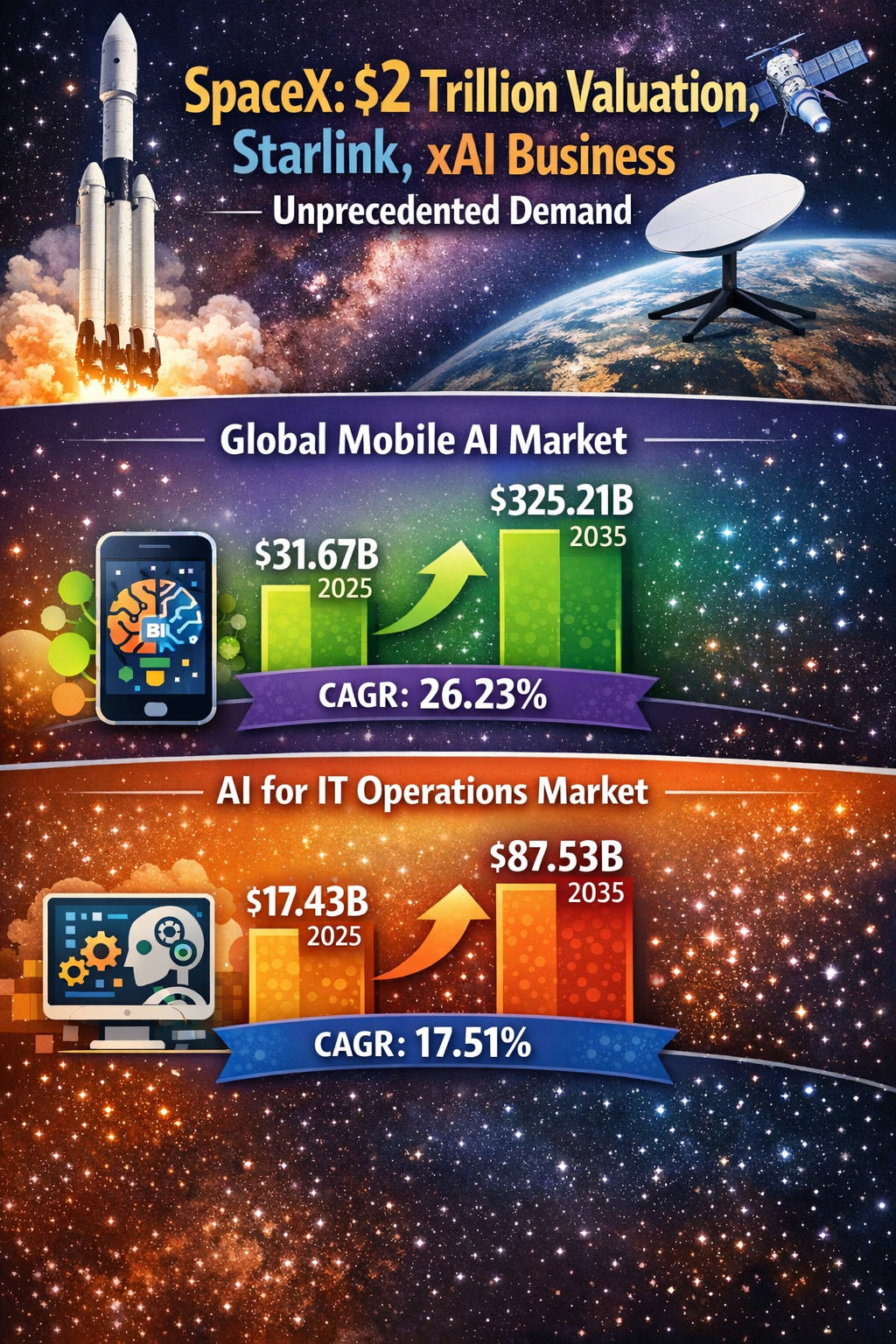
Key Takeaways:On June 12, 2026, SpaceX completed the largest IPO in financial history, debuting with a $2.1 trillion valuation. This offering crowned Elon Musk as the first trillionaire globally and signaled a landmark moment in converging aerospace, satellite internet, and artificial intelligence sectors. SpaceX’s IPO bundles traditional space launch operations, the profitable Starlink satellite broadband division, and the newly consolidated AI arm, xAI, which absorbed social media platform X. Despite its impressive market capitalization, SpaceX’s AI segment operates with significant losses, subsidized by Starlink’s cash flows. The IPO attracted extraordinary investor enthusiasm, with shares being oversubscribed by a factor of four, although concerns exist regarding valuation, governance concentration (Musk holds 85% voting shares), and lack of profitability in the AI business. The inclusion of AI startups and multiple large-scale AI companies preparing IPOs this year is positioning the US stock market increasingly toward AI-driven valuations. The company’s capital raise aims to fund expansion in space colonization technologies and frontier AI compute infrastructure. Broader societal implications include wealth concentration at unprecedented scales, prompting discourse on the balance between innovation and democratic equity.
Key Takeaways:The digital marketing landscape in June 2026 is characterized by the dominance of AI-driven search behaviors, evolving ad formats, and platform feature expansions focused on personalization and creator support. Key developments include the rise of zero-click searches reaching 68%, necessitating innovative strategies to drive organic traffic beyond traditional link clicks. Consumer avoidance of ads is significant, with 37% ignoring ads entirely, prompting marketers to refine targeting and content quality. AI visibility does not assure consumer trust, emphasizing the importance of brand credibility alongside AI-mediated reach. Legal challenges arise as courts, e.g., in Germany, hold Google liable for inaccuracies in AI-generated content summaries. Integration of Google Business Profile with Google Analytics offers enriched tracking capabilities. The May 2026 Google Core Update rewards content aligned with user intent, regardless of domain authority. LinkedIn introduces a B2B Creator Marketplace to stimulate brand-creator collaborations, and Meta launches a Creator Assistant AI chatbot enhancing content production at scale. Instagram users gain post grid rearrangement capabilities, and TikTok campaigns demonstrate higher sales lift in non-seasonal periods. The adoption of AI-powered bidding, expanded lead management, and diversified ad platforms, including Reddit and TikTok’s affiliate marketing tools, indicate an increasingly complex and integrated marketing ecosystem. Privacy and data control remain salient, exemplified by TikTok’s ISO certification and evolving ad transparency on social media platforms.
Key Takeaways:Humanoid robots in 2026 represent a transformative intersection of AI and robotics, poised to reshape labor markets worldwide, particularly in manufacturing, logistics, agriculture, retail, and food service. Advances in dexterity, AI-powered adaptability, and extended operational shifts position humanoid robots as versatile workforce replacements capable of functioning seamlessly in human-centric environments. Deployment is spearheaded by firms such as Tesla (Optimus), Figure AI, Agility Robotics, and others, with unit costs dropping significantly as manufacturing scales. Job displacement is most acute among roles involving repetitive, physical, and structured tasks, including assembly line work and warehousing. Conversely, demand grows for robotics maintenance technicians, AI training specialists, and engineers, alongside roles emphasizing creativity, social intelligence, and strategic problem-solving. Economists differ in projections, with some highlighting net gains in jobs over time, while others caution on rapid displacement and wage pressure effects. Regional variations exist, with the U.S. and China leading deployment, Japan emphasizing elder care, and the European Union balancing cautious regulation with innovation. Policy responses such as Universal Basic Income, robot taxes, workforce retraining, and portable benefits are actively debated to mitigate transitional challenges. Workers are advised to upskill in AI collaboration competencies and robotics maintenance to remain competitive in evolving job landscapes.
Key Takeaways:SpaceX’s June 2026 IPO, merging aerospace, satellite internet provider Starlink, and the artificial intelligence (AI) company xAI, presents an unprecedented financial event with a $2+ trillion valuation. While Starlink generates robust revenue and profit, xAI remains deeply unprofitable, reflecting a structural dependence on Starlink’s cash flow for cross-subsidization. xAI’s explosive capital expenditures ($12.7 billion in 2025) and operating losses exceeding revenues by over 200% highlight severe economic inefficiencies primarily due to the massive compute and infrastructure cost of operating cutting-edge AI at scale. The business model pivots towards offering wholesale compute infrastructure to competitors Anthropic and Google through high-value, cancellable multi-billion-dollar contracts as a survival mechanism. Enterprise AI adoption is pursued aggressively with premium API products and recent costly acquisitions, notably Cursor ($60 billion), to secure developer market access. Long-term margin expansion relies on vertical integration via silicon manufacturing and orbital compute data centers. However, brand safety controversies and political scrutiny threaten government contract viability. The IPO represents a high-stakes bet on future hardware-enabled cost advantages catalyzing AI profitability, with significant strategic and market risks.
Key Takeaways:Decision intelligence software has emerged as a vital category for organizations striving to convert data insights into actionable, repeatable business decisions. By synthesizing data science, AI-driven predictive and prescriptive modeling, and process automation, these platforms extend beyond traditional business intelligence by recommending or automating responses to complex scenarios. Leading vendors include IBM (Watson), SAS (Viya), Pega (Customer Decision Hub), Quantexa, FICO, Aera Technology, Diwo, Ataccama, Palantir, DataRobot, Board International, and ThoughtSpot. Each vendor specializes in distinct verticals such as financial services, supply chain logistics, fraud detection, customer engagement, or regulated environments, with varying balances between automation, human oversight, and governance. Selecting an optimal platform requires clarity around use case (predictive, prescriptive, autonomous), organizational data maturity, integration needs, and compliance demands. Emerging trends include AI-native platforms, enhanced governance and explainability features, and deeper integration with existing enterprise systems. Organizations are advised to undertake a structured selection process, considering data quality, domain specificity, and decision context to maximize adoption and ROI.
Key Takeaways:Deloitte’s June 2026 report on AI in the Middle East reveals significant progress from pilot projects toward broader, large-scale enterprise AI deployments. AI adoption in the region has expanded rapidly, with employee access to AI-enabled tools increasing 50% to nearly 60%. Despite productivity gains, only a minority of organizations are leveraging AI to fundamentally transform business models, with many trapped in iterative pilot cycles impeded by integration, governance, and infrastructure hurdles. Workforce readiness is a pronounced obstacle as 84% of firms have not redesigned jobs or workflows for AI augmentation, relying instead on education without process transformation. Agentic AI—autonomous AI systems capable of multi-step decision-making—remains emergent, with only 23% of organizations moderately adopting them but expected rapid growth in coming years. Governance and oversight around AI autonomy remain immature, highlighting risks in accountability and operational control. The report emphasizes that sustainable AI advantage will derive from responsible scaling, organizational redesign, robust infrastructure, and strong governance frameworks merging human judgment with AI capabilities.
Key Takeaways:Issued in June 2026, NSPM-11 outlines the U.S. government’s strategy to accelerate and responsibly integrate artificial intelligence (AI) across the national security enterprise. It establishes directives spanning AI adoption, adaptation, assurance, and accountability, emphasizing accelerated deployment while safeguarding constitutional rights and civil liberties. The memorandum prioritizes rapid partnerships with industry to deploy frontier AI models for operational effectiveness, streamlined acquisition pathways, and diversified supplier ecosystems to mitigate vendor dependency. Assurance measures demand robust, steerable, controllable AI systems functioning under applicable laws with rigorous security validation, safeguarding supply chains and operational integrity. Accountability is emphasized at all command levels, ensuring AI use prohibits ideological bias, censorship, or unauthorized surveillance. The directive mandates updates to defense autonomy policies, governance frameworks for AI use, and talent pipelines, including curriculum development and strategic recruitment to maintain America’s AI technical edge. It further outlines collaboration with private-sector partners to enhance AI security, threat intelligence sharing, and establishes mechanisms for oversight, evaluation, and continuous adaptation of AI governance within the national security context.
Key Takeaways:June 2026 marks a critical inflection point for investors navigating record-high equity markets alongside ongoing geopolitical and monetary uncertainties. Major highlights include the anticipation of the landmark SpaceX IPO valued at over $2 trillion, signaling unprecedented investor appetite highlighted by the recent Medline IPO’s 10x oversubscription and 31% debut surge. Key policy signals emerged from the first public interaction between Treasury Secretary Scott Bessent and Federal Reserve Chair Kevin Warsh, categorically ruling out near-term rate cuts due to persistent inflation and energy price volatility. This sets a higher-for-longer interest rate environment, requiring proactive reassessment of retirement planning, taxation, and fixed-income strategy. Emerging geopolitical volatility, exemplified by regional tensions impacting Brent crude’s price volatility, underscores the importance of diversified portfolio risk management. Investors are advised to submit SpaceX IPO interest promptly, adjust portfolio concentration to manage risk, integrate international diversification, and build deployment strategies for the June US Jobs Report and ECB rate decisions. Mid-year tax planning and financial reviews with advisors are imperative to adapt to changing market dynamics.
Key Takeaways: