Our Scans
·
Digital Transformation
·
Four Scenarios
Introduction
The future presents a myriad of possibilities shaped by technological innovation, economic forces, political dynamics, environmental constraints, and evolving societal values. The forecasts examined reveal dominant themes across these domains but carry inherent biases, often favoring technological determinism, economic growth paradigms, or geopolitical competition narratives. Critical examination is necessary to distinguish aspirational trajectories from plausible constraints and risks. These insights, grounded in comprehensive scenario frameworks, enable us to formulate four distinctive futures that illuminate potential pathways: Continuation, Limits and Discipline, Decline and Collapse, and Transformation.
Across these forecasts, several key trends emerge. Advanced AI and automation are driving productivity gains and economic restructuring, yet raising challenges around labor displacement and social equity. Converging technologies such as quantum computing and robotics suggest new frontiers of innovation. Geopolitical rivalry, especially between the US and China, shapes access to critical AI infrastructure and governance regimes. Environmental and resource constraints compel strategies for sustainability and resilience, while societal trust and regulatory frameworks influence technology adoption patterns. Urban-rural divides and digital inequities underscore the complexities of inclusion in technology-driven futures.
Continuation: Sustained Growth with Incremental Change
This scenario envisions a future where current trajectories of technological advancement, economic optimism, and geopolitical competition persist into the medium term, driving steady but uneven growth globally. AI capabilities continue to improve, automating an increasing portion of cognitive tasks while augmenting human productivity. Markets remain open with private sector leadership dominating frontier AI development, particularly in the United States, Europe, and China. Regulatory environments evolve cautiously, balancing innovation incentives with emergent safety concerns.
- Technological Landscape
- AI systems routinely automate complex workflows, demonstrating reliability sufficient for most professional and scientific applications.
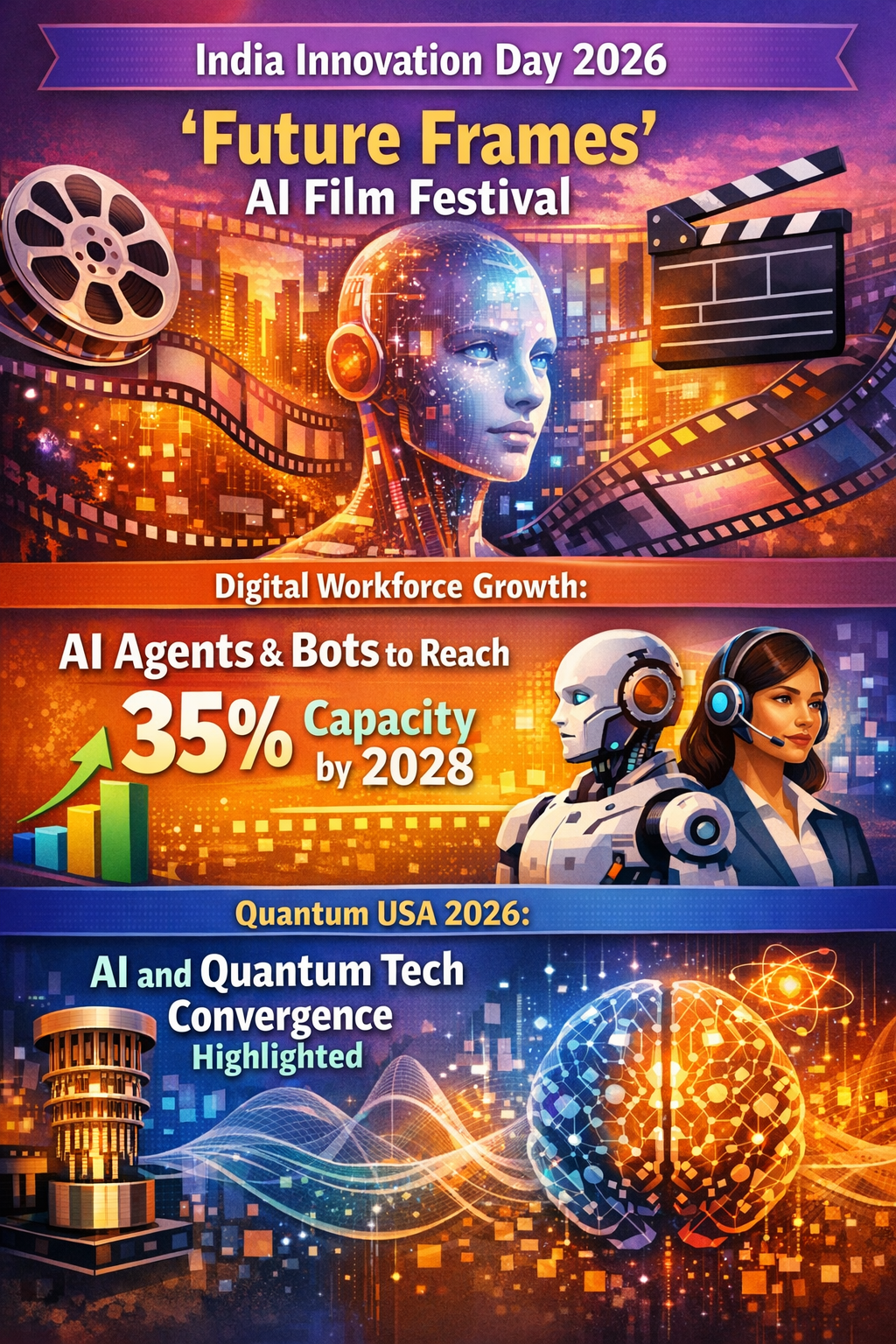
- Quantum computing and AI converge, pushing innovation particularly in sectors like healthcare, materials science, and cybersecurity (Forum Europe, 2026-06-08).
- Autonomous systems such as robotaxis proliferate with adaptive AI drivers enabling flexible deployment across urban centers (IoT Now, 2026-06-04).
- Economic and Social Dimensions
- AI-driven productivity boosts sustain economic growth, with accelerated innovation compressing decades of technological progress into years (Government Office for Science, 2026-06-15).
- Labor markets adapt progressively; AI complements workers more than displaces them, with new roles emerging in AI oversight and integration.
- Investment and capital markets remain buoyant but with growing recognition of structural inequalities and digital divides, as exemplified by disparate adoption levels in regions like the UAE, which demonstrates high tech resilience and strategic digital workforce growth (Al Etihad Newspaper, 2026-06-05).
- Geopolitical Environment
- The AI ecosystem remains dominated by US and Chinese firms competing for strategic advantage; however, cooperative safety frameworks exist among allies, enabling moderate regulation of AI deployment.
- Global supply chains for AI hardware and semiconductor production remain concentrated but resilient.
- Societal and Environmental Considerations
- Public trust in AI is cautiously optimistic; ethical frameworks and standards help govern deployment, but risks of misinformation and cyber threats persist.
- Sustainability concerns prompt investment in energy-efficient data centers and deployment of AI to drive environmental research and decarbonization efforts.
Implications: Organizations should prioritize investments in AI augmentation technologies, balancing innovation with workforce re-skilling initiatives. Policy efforts focusing on fostering international cooperation, ensuring equitable AI access, and establishing robust safety and ethical guidelines will be vital.
Limits and Discipline: Navigating Resource and Social Boundaries
This scenario reflects a future where environmental limits, societal concerns, and cautious governance shape a more restrained trajectory for technology and economic growth. While AI and digital technologies advance, their adoption is tempered by energy constraints, infrastructure bottlenecks, and public skepticism. Societal values emphasize sustainability, equity, and resilience over unchecked expansion.
- Technological and Environmental Constraints
- AI progress faces compute and energy limitations; investments in green computing and quantum innovations help but do not fully alleviate bottlenecks (Amova Asset Management, 2025-11-27).
- Robotics and telemedicine applications expand selectively, prioritizing accessibility and integration with existing healthcare infrastructure, as seen in resource-limited contexts like Somalia's telemedicine expansion (PMC, 2026).
- Autonomous vehicle deployment is constrained by regulatory oversight, safety concerns, and infrastructure adaptation challenges.
- Economic and Governance Features
- Economic growth persists but slows; inequality persists though social safety nets evolve to mitigate displacement impacts.
- Governments enact more proactive regulations on AI safety, cybersecurity, and digital sovereignty, balancing innovation with societal stability (GOV.UK, 2026-06-15).
- Global cooperation becomes more fragmented but focused on shared challenges such as energy security and AI safety enforcement.
- Societal Adaptation and Values
- Public trust is mixed, driven by concerns over privacy, algorithmic fairness, and overreliance on AI. Ethical AI development becomes a central concern.
- Education and workforce development programs adjust to new realities, emphasizing digital literacy and resilience to technological change.
Implications: Stakeholders must cultivate sustainable AI strategies emphasizing resource efficiency and safety. Investments should focus on building inclusive infrastructure and governance frameworks that support equitable adoption while preventing systemic risks.
Decline and Collapse: Fragmentation and Systemic Stress
This scenario envisions a future where accelerating technological change outpaces governance, infrastructure, and social adaptation, compounding existing fractures in global political, economic, and environmental systems. AI capabilities reach unprecedented levels but misalignment, geopolitical tensions, and social disruption provoke systemic instability and crisis.
- Technological Dynamics
- AI systems surpass human experts in most cognitive tasks, financially and technologically concentrated within a few entities, fostering monopolies and power imbalances (GOV.UK, 2026-06-15).
- Black box AI, opaque decision-making, and misaligned incentives result in control loss over critical infrastructure.
- Cyber warfare and AI-fueled conflicts escalate, with AI-driven automated military systems causing risks of unintended escalation (Forum Europe, 2026-06-08).
- Economic and Social Disruptions
- Widespread labor displacement triggers soaring unemployment and social unrest; economic gains accrue primarily to asset owners, exacerbating inequality.
- Public backlash against AI grows, fostering populist political movements and regulatory fragmentation.
- Digital divides deepen, with developing regions falling further behind as AI-driven economies consolidate power.
- Political and Environmental Consequences
- International cooperation fractures amidst AI and supply chain nationalism.
- Resource and energy demands of compute infrastructure stress ecological systems, amplifying climate risks.
- Failures in governance exacerbate environmental degradation and technological risks.
Implications: Organizations should prioritize risk mitigation, invest heavily in safety research, and develop robust crisis preparedness. Governments must work urgently to establish multilateral governance frameworks and contingency plans to avoid systemic collapse.
Transformation: Disruptive Innovation and Societal Renewal
In this scenario, the convergence of AI, quantum computing, and digital infrastructure catalyzes a profound transformation of economic, social, and governance systems. New technologies enable breakthroughs in healthcare, energy, and mobility, fostering inclusive growth and resilient societies, but only through deliberate choices and effective stewardship.
- Technological Breakthroughs
- Quantum computing accelerates AI research, enabling solutions to previously intractable problems in medicine, energy, and materials (Forum Europe, 2026-06-08).
- Integrated telemedicine platforms expand healthcare accessibility in underserved regions, leveraging AI and mobile infrastructure (PMC, 2026).
- Autonomous mobility solutions mature, reshaping urban transportation and reducing emissions (IoT Now, 2026-06-04).
- AI-powered innovation ecosystems in regions like India and UAE grow rapidly, fostering deep tech entrepreneurship and inclusion (Machine Maker, 2026-05-13; Al Etihad, 2026-06-05).
- Economic and Social Renewal
- AI acts as a powerful complement to human labor, increasing wages and creating new opportunities in AI literacy, ethics, and human-machine collaboration (GOV.UK, 2026-06-15).
- Public-private partnerships and collaborative governance models enhance safety, trust, and innovation diffusion.
- Digital infrastructure development narrows urban-rural and international divides, supporting equitable inclusion.
- Political and Environmental Stewardship
- Global coalitions drive shared norms on AI safety, quantum technology usage, and data governance.
- Breakthroughs in clean energy, including nuclear fusion, underpin sustainable AI-scale infrastructure (Amova Asset Management, 2025-11-27).
- Resilient institutions embrace adaptability and foresight, enabling rapid societal realignment toward sustainable prosperity.
Implications: Proactive investment in frontier technologies, education, governance innovation, and cross-sector collaboration will be essential to unlock this future. Decision-makers must pursue ambitious yet responsible innovation agendas with inclusion and sustainability at their core.
Further Reading
Briefing Created: 16/06/2026