Our Scans
·
District Heating
·
Intelligence Briefing
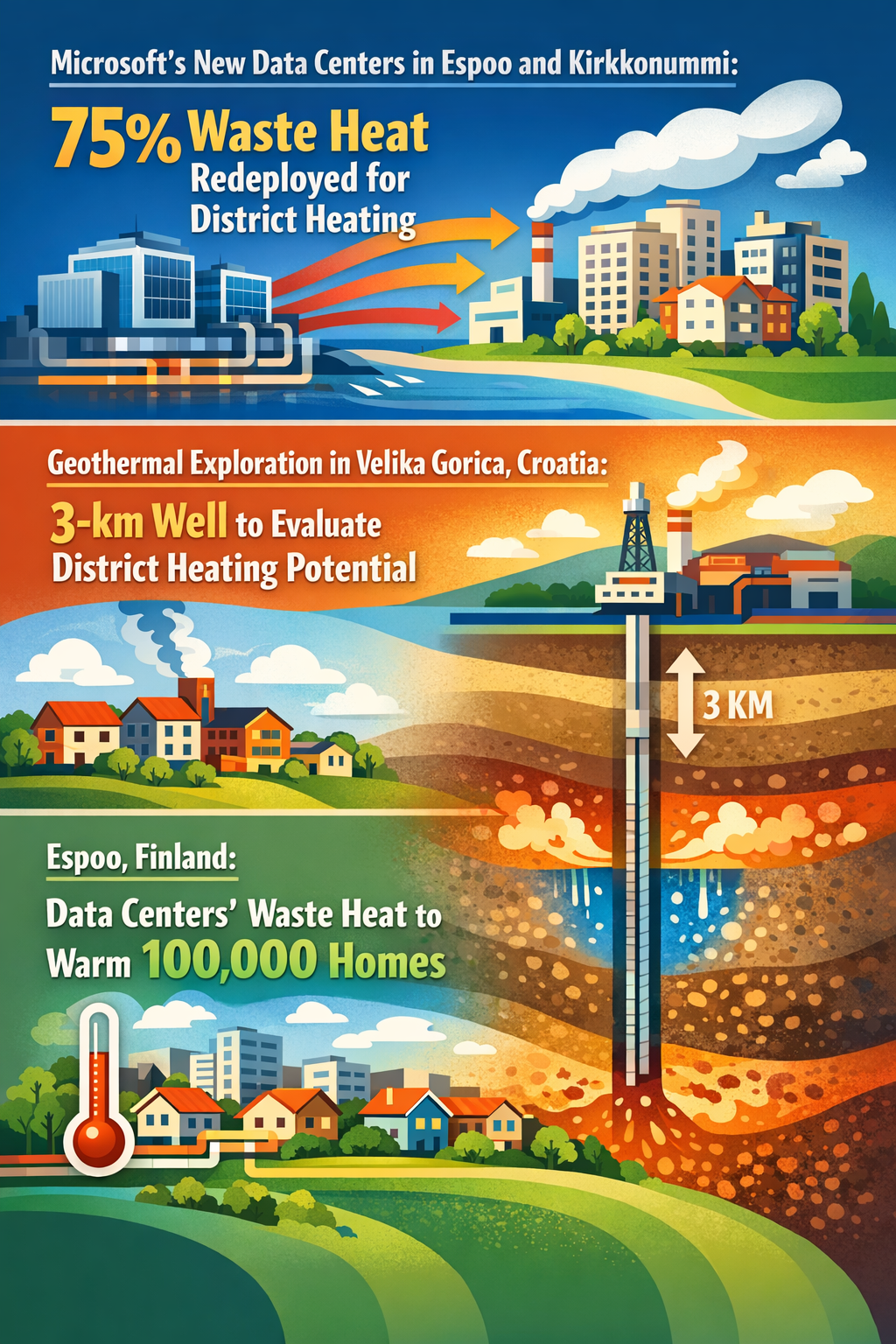
Intelligence Briefing about District Heating
Emerging Trends
- Integration challenges in expanding district heating networks, notably illustrated by Canada’s mutually dependent utilities and nuclear plants scenario (CBC News).
- Technological optimization as a pathway to cost-efficiency and affordability in district heating systems, particularly seen in Poland’s potential to select better generating technologies (Wärtsilä).
- The exploration and development of geothermal energy sources for district heating, exemplified by drilling initiatives in Croatia (ThinkGeoEnergy).
Key Challenges, Opportunities, and Risks
- Challenges: Infrastructure investment deadlocks; dependence on fuel source availability; and technology selection complexity.
- Opportunities: Leveraging optimal generating technologies to reduce costs; tapping into renewable sources like geothermal to diversify energy supply; and fostering partnerships between utilities and heat producers.
- Risks: Market hesitancy delaying network expansions; regulatory or policy misalignment; and potential sunk costs if technology choices prove suboptimal.
Scenario Development
- Best-Case: Rapid deployment of geothermal and other renewables combined with regulatory support enables cost-effective and extensive district heating networks, driving sustainable growth.
- Moderate Growth: Incremental technological improvements and partial resolution of utility-heat source deadlock lead to steady network expansion and moderate cost reductions.
- Stagnation: Persistent coordination failures and slow technology adoption result in limited network growth and continued high costs, constraining market development.
- Worst-Case: Regulatory uncertainties and poor investment decisions exacerbate deadlocks, causing project cancellations, stranded assets, and market contraction risks.
Strategic Questions
- How can Atradius facilitate or incentivize collaboration between utilities and heat producers to break investment deadlocks?
- What role could risk assessment and credit enhancement play in accelerating technology adoption within district heating markets?
- In which ways might emerging renewable heat sources like geothermal reshape risk profiles and financing structures?
- How could Atradius integrate scenario-based planning to anticipate regulatory and market shifts impacting district heating?
Actionable Insights
- Atradius could explore credit products tailored to mitigate investment risks in infrastructure projects facing development deadlocks.
- Evaluating technology-specific risk parameters could help in offering more precise underwriting and pricing strategies aligned with regional conditions.
- Building expertise on renewable energy integration, especially geothermal, might strengthen Atradius’ advisory and risk evaluation capabilities.
- Developing scenario planning tools could support internal strategic alignment and external client advisory around district heating market uncertainties.
Briefing Created: 04/06/2026