
Rethinking Urban Cooling: The Underestimated Structural Shift in Sustainable Climate Adaptation
Emerging dynamics in urban cooling technologies and climate risk management herald a potential structural transformation for environmental policy, capital deployment, and industrial ecosystems. This insight paper explores a weak but consequential signal with the power to reshape regulatory frameworks, infrastructure investments, and industrial priorities over the coming two decades. It highlights an under-recognized inflection around equitable sustainable cooling as a systemic pivot in climate adaptation beyond traditional decarbonization narratives.
The Global Cooling Pledge, launched at COP28 in 2023, underscores a coordinated international intent to reduce cooling-sector emissions by over two-thirds by 2050 while ensuring equitable access to sustainable cooling. Simultaneously, intensifying heat extremes driven by unprecedented sea surface temperature rises heighten demand for cooling solutions that operate within a net-zero constraint. This paper identifies an inflection poised to disrupt conventional environmental planning, capital allocation, and industrial structure in climate-risk prone regions, particularly urban centers in the Asia Pacific and the Middle East.
Signal Identification
This development qualifies as an emerging inflection indicator rather than a mere trend or weak signal, due to its integrative nature across climate policy, urban infrastructure, and emerging technology ecosystems aiming to reconcile equity with sustainability. The coordinated Global Cooling Pledge effort, alongside predicted extreme heat events linked to record-setting sea surface temperatures, mark it as likely to scale structurally over the next 10–20 years with a medium-high plausibility. Key sectors exposed include construction and infrastructure, energy and utilities, water management, agricultural supply chains, and environmental regulation.
What Is Changing
The critical systemic shift lies in recognizing cooling – historically a peripheral facet of climate mitigation – as a central environmental hinge point embedded within urbanization and climate adaptation strategies. The Global Cooling Pledge’s collective aim to cut cooling-related emissions by 68% by 2050 reveals an unprecedented multilateral consensus on managing temperature extremes equitably (IIFIR 14/08/2023).
Meanwhile, the Asia Pacific region is experiencing rapid urbanization coupled with acute water scarcity and large government-backed smart city initiatives that explicitly integrate digital water solutions for sustainability and resilience (Persistence Market Research 19/03/2026). This confluence positions urban cooling infrastructure—both thermal management and water-resource dynamics—as a critical point of intervention.
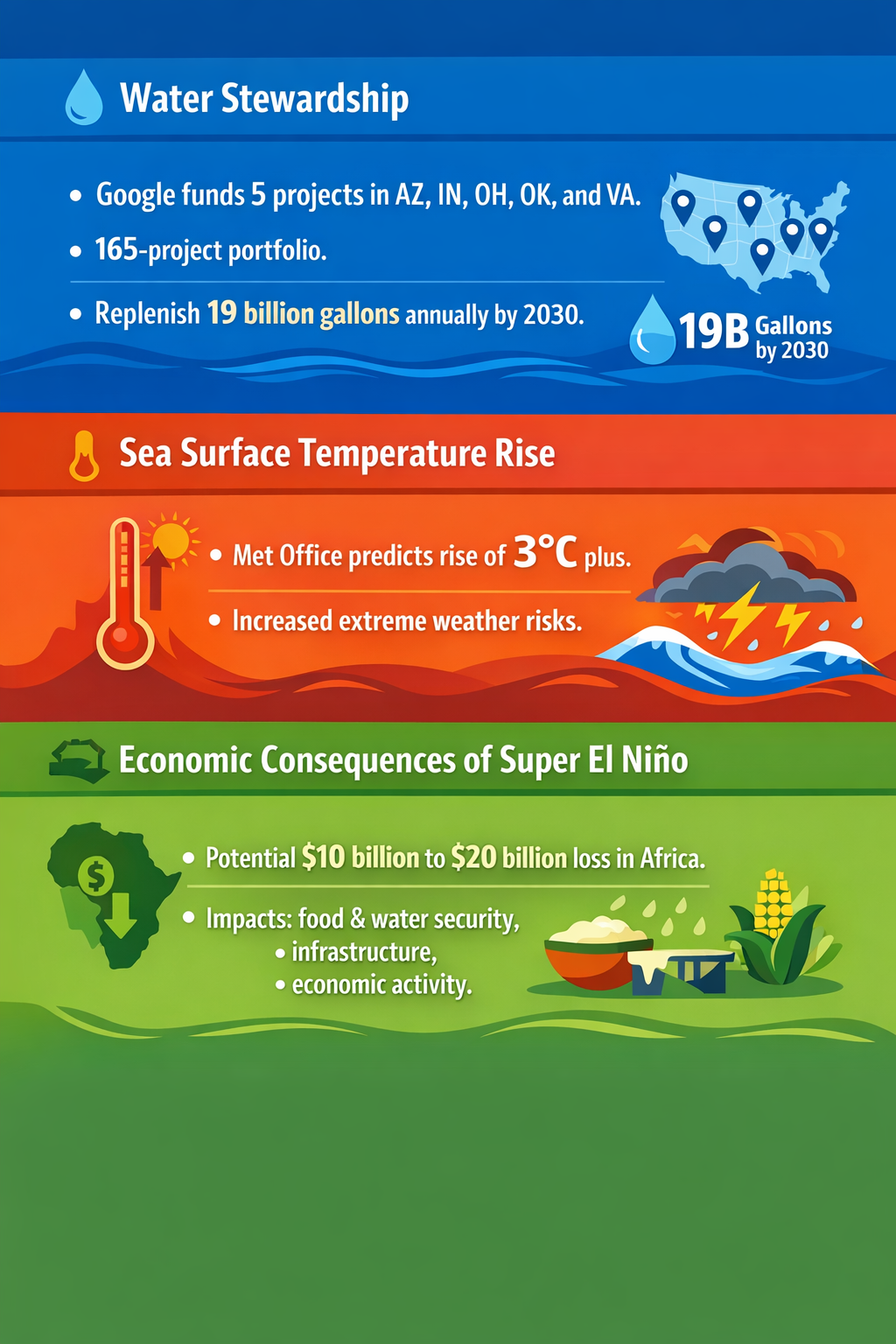
Compounding this is the escalating risk of extreme heat linked to sea surface temperature rises exceeding 3°C, predicted to intensify in the next decade, with knock-on effects on extreme weather patterns and ecosystem stress (Al Jazeera 21/08/2026). This environmental volatility further elevates the pressure on cooling infrastructure while also increasing regulatory scrutiny and sustainability mandates, as exemplified by Dubai’s adherence to FIDIC contract frameworks aligned with UAE’s Net Zero 2050 strategy (Institute Project Management 10/12/2025).
Moreover, linked sectors like agriculture foresee significant impact from carbon pricing affecting raw materials linked to climate solutions, emphasizing cross-sectoral reverberations (Food Navigator 27/08/2026). Altogether, these elements highlight a systemic theme: sustainable cooling access underpins resilience and decarbonization, integrating urban water management, energy policy, and climate risk governance.
Disruption Pathway
The pathway starts with accelerating heat extremes and urban density growth driving urgent demand for efficient, low-carbon cooling solutions. Rising sea temperatures and unpredictable weather events force regulators to tighten sustainability requirements for new infrastructure projects aligned with national net-zero goals (e.g., UAE’s 2050 strategy). Concurrently, the Global Cooling Pledge garners expanding commitments, setting international benchmarks that will likely cascade into binding national regulations and public procurement standards.
This regulatory tightening introduces stresses on conventional cooling technologies reliant on high emissions and resource-intensive water use, disrupting incumbent energy utilities and construction contractors. Capital allocation is pressured to shift towards innovative cooling technologies, such as passive cooling, smart water systems, and low-GWP (global warming potential) refrigerants integrated into urban planning and smart city frameworks.
In response, industrial structures must adapt, with cross-sector collaboration intensifying among energy providers, water utilities, and technology manufacturers. The hydrological stresses central to many fast-growing Asian cities further amplify the salience of digital water management solutions, linking water availability with cooling efficacy. As financial valuations internalize climate risk factors – considering scenarios like the African Development Bank’s estimated $10–20 billion impact of a Super El Niño on infrastructure and economies – the cost-benefit calculus for sustainable cooling investments will shift markedly (African Mining Market 26/08/2026).
A feedback loop emerges as improved sustainable cooling augments urban livability and economic productivity, galvanizing further investment and innovation in adaptable digital and natural cooling solutions. However, uneven access and delayed regulatory convergence risk creating geopolitical and social liabilities, particularly in emerging economies vulnerable to heat stress and limited capital. This evolution may pivot dominant governance models from sectorally siloed frameworks to more integrated, climate-adaptive urban system regulations and financing structures.
Why This Matters
Senior decision-makers focusing on long-term capital deployment should recognize that sustainable cooling infrastructure represents a substantial emerging area of climate-related risk and opportunity, likely to influence where and how urban and industrial development is financed. Regulatory frameworks will increasingly mandate sustainable design and lifecycle emissions accountability in cooling and related water infrastructure, pressing industries to recalibrate strategic positioning.
In supply chains, the demand for low-GWP refrigerants, efficient cooling components, and integrated digital water management may reallocate capital towards new tech manufacturers and service providers, while penalizing fossil fuel-dependent utilities. Liability for insufficient climate adaptation may accelerate, shifting risk profiles for urban developers and infrastructure investors. Governance frameworks may evolve beyond traditional environmental compliance towards holistic heat resilience and equity mandates, affecting policy pathways globally.
Implications
The integration of sustainable cooling as a pillar of climate adaptation and urban infrastructure suggests systemic change rather than transient noise. Capital strategies may need to shift significantly towards blended infrastructure investments encompassing cooling innovation, smart water technology, and resilient urban planning, particularly in heat-vulnerable megacities.
This development might elevate cooling to a regulatory and investment priority commensurate with power generation or water security, recalibrating existing industrial ecosystems around decarbonized, equitable access. However, the signal is not simply an intensification of electrification or green energy trends; it encompasses cross-sector resilience blending water, urban planning, and technology.
Competing interpretations might view cooling strategies as incremental or too regionally limited, but the coordinated multilateral pledge and climatic stressor projections argue for potential widespread structural influence. The signal should not be conflated with short-term climate resilience investments but seen as a strategic pivot point embedding cooling sustainably into industrial and regulatory architectures.
Early Indicators to Monitor
- Policy drafts and regulations mandating sustainable cooling standards and integrated water-energy designs in emerging economies
- Venture funding and patent filings clustered around low-GWP refrigerants and passive cooling technologies
- Procurement shifts in municipal infrastructure favoring digital water and smart cooling solutions across Asia Pacific cities
- Capital market reallocation from conventional HVAC and fossil-fuel-heavy utilities to integrated sustainable cooling providers
- Expansion in multilateral commitments or financing instruments explicitly targeting equitable cooling access
Disconfirming Signals
- Failure of Global Cooling Pledge signatories to implement binding national standards or to escalate commitments
- Sustained technological breakthroughs in fossil-fuel reliant cooling significantly lowering cost or emissions without regulation
- Major urban centers reversing sustainability retrofitting in favor of short-term cost minimization amidst economic downturns
- Lack of integration between water scarcity management and cooling strategies in emerging smart city programs
- Geopolitical conflicts or supply chain disruptions impeding low-GWP refrigerant availability or digital water solution deployment
Strategic Questions
- How should capital allocation shift to de-risk exposure to legacy cooling infrastructure in light of rising regulatory and climate pressures?
- What governance frameworks are required to ensure equitable and scalable sustainable cooling access within rapid urbanization contexts?
Keywords
Sustainable cooling; Global Cooling Pledge; Urban heat resilience; Digital water solutions; Net Zero transition; Low-GWP refrigerants; Climate adaptation governance
Bibliography
- Launched at the 2023 UN Climate Change Conference, the Global Cooling Pledge unites about 75 countries and 70 non-state actors in the objective to cut down cooling-related emissions by 68% by 2050, while ensuring equitable access to sustainable cooling solutions to address extreme heat. IIFIR. Published 14/08/2023.
- Fastest Growing Region: Asia Pacific is the fastest growing region, projected at a 13.7% CAGR fueled by rapid urbanization, water scarcity, and large-scale government-backed smart city programs. Persistence Market Research. Published 19/03/2026.
- Met Office predicts unprecedented sea surface temperature rise of 3 C plus will heighten extreme weather risks. Al Jazeera. Published 21/08/2026.
- Projects must comply with local authority approvals, FIDIC contract frameworks, and an increasingly demanding sustainability agenda tied to the UAE's Net Zero 2050 strategy. Institute Project Management. Published 10/12/2025.
- The potential economic consequences are significant: the African Development Bank estimates that a Super El Nino could result in a US$10 billion to US$20 billion hit across African countries, with impacts extending to food and water security, infrastructure and economic activity. African Mining Market. Published 26/08/2026.
- Carbon pricing could affect agricultural raw materials, with the estimated impact ranging from ¥0.9 bn-¥4.1bn under the Sustainable Scenario to ¥2.2 bn-¥8.1bn under the High Degradation & Climate Change Progression Scenario. Food Navigator. Published 27/08/2026.