
Robotics and smart machines refer to advanced automated systems equipped with sensors, actuators, and artificial intelligence (AI) capabilities. These technologies perform tasks ranging from simple repetitive actions to complex decision-making. Key innovations include collaborative robots ("cobots") that safely work alongside humans, autonomous agents capable of independently executing optimized actions, and integrated sensor networks enabling real-time data collection and processing.
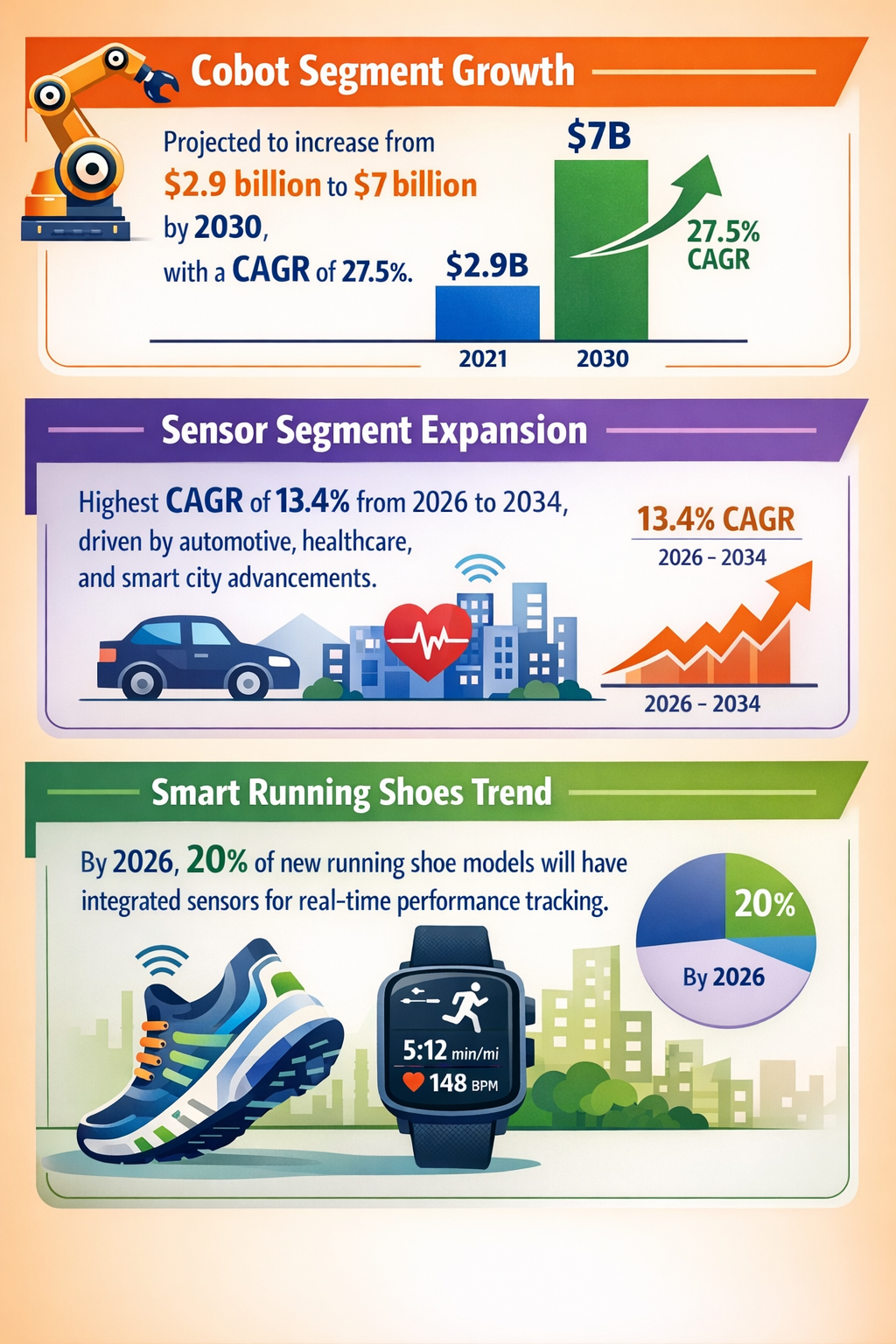
The technology readiness for robotics and smart machines is rapidly advancing, with many systems reaching high maturity within industrial applications (TRL 7-9). The cobot market, for example, is expanding swiftly, expected to grow from $2.9 billion to $7 billion by 2030 (Greenfield Consulting). Leading developers include multinational corporations such as Microsoft, which envisions AI systems that reason, collaborate, and act autonomously by 2026 (Microsoft Research), and countries like Germany, Japan, and the USA, who are at the forefront of industrial automation and AI development.
Robotics and smart machines will profoundly impact multiple sectors:
Benefits include increased economic productivity, enhanced societal wellbeing through better healthcare and safer workplaces, and environmental gains via optimized resource use and reduced waste.
With growing autonomy in smart systems, risks include safety hazards stemming from malfunction or misuse, privacy concerns due to pervasive data collection, and economic disruption from workforce displacement. Ethical challenges relate to ensuring transparency, accountability, and fairness in AI decision-making. Cybersecurity risks increase as intelligent systems connect into global networks, necessitating robust protection mechanisms (Forbes).
Early and coordinated policy action will enable the UK to harness the transformative potential of robotics and smart machines while addressing associated risks effectively.