
Bioinformatics and omics encompass advanced technologies focused on the analysis and interpretation of biological data, particularly genomic, transcriptomic, proteomic, and metabolomic information. These technologies enable personalized medicine by identifying genetic variations and biomarkers critical for disease diagnosis and treatment. Key innovations include high-throughput sequencing, artificial intelligence (AI) integration for data analysis, and biomarker-driven clinical trial designs.
The technology readiness level (TRL) of bioinformatics and omics is generally high, with multiple mature platforms supporting clinical and research applications. However, integration with AI and expansion into diverse population genomics are ongoing areas of development. Leading countries in this field include the UK, the US, Australia, and emerging markets in Asia-Pacific, which are rapidly growing due to regional investments and demand for personalized medicine (Yahoo Finance, Vocal Media).
The most significant impacts are expected in healthcare, particularly in precision medicine, early disease detection, and drug development. Expanding genome-wide association studies (GWAS) to diverse ancestries enhances diagnostic accuracy and broadens therapeutic applicability worldwide. Beyond healthcare, bioinformatics could indirectly benefit sectors like agriculture and environmental management through better understanding of genetic and metabolic pathways.
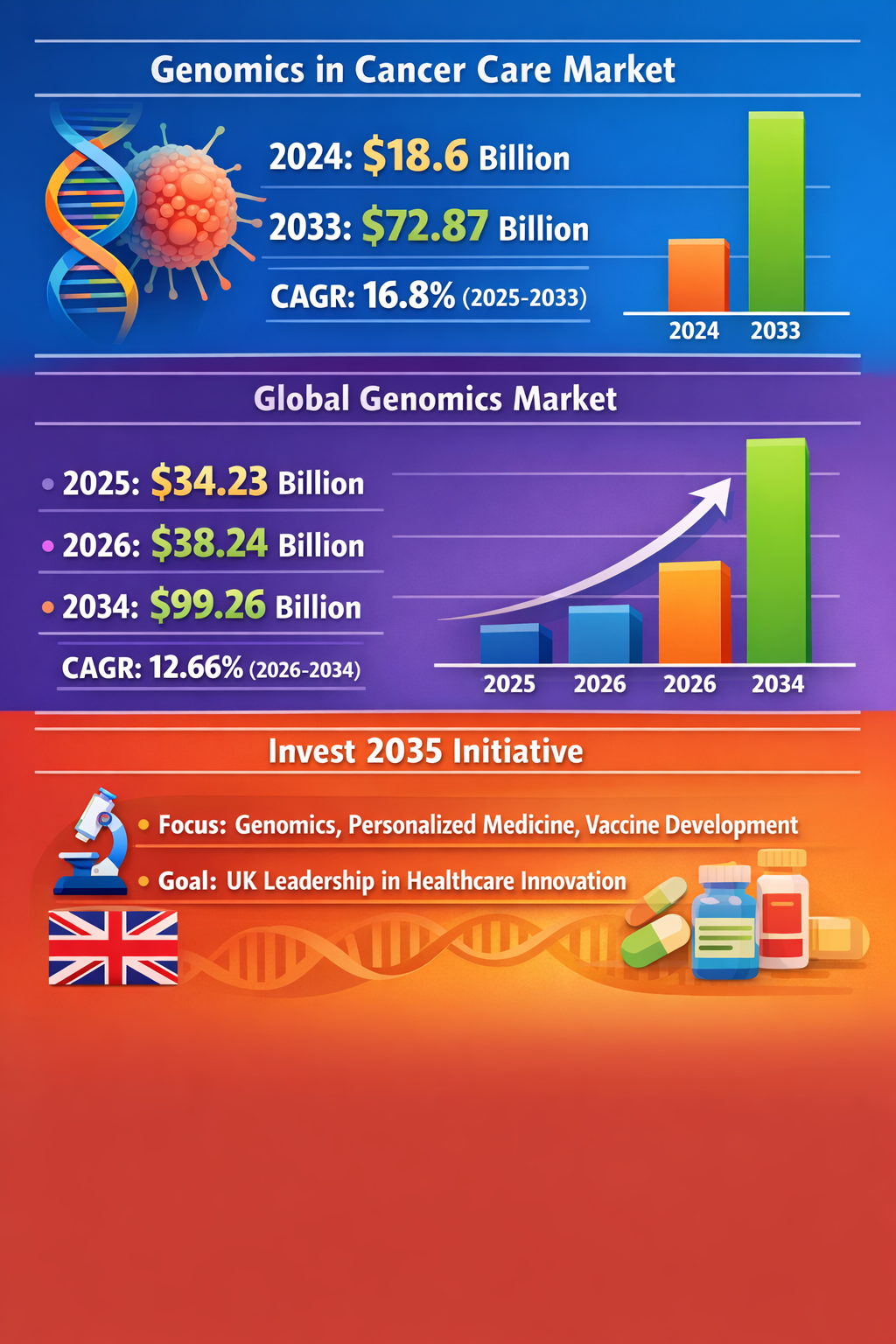
Economically, the global genomics market is forecasted to grow from $38 billion in 2026 to over $99 billion by 2034, driving job creation and innovation. Societally, personalized medicine promises improved health outcomes and reduced treatment costs. Environmentally, optimized biological insights may contribute to sustainable solutions (PMC, Yahoo Finance).
Challenges include data privacy risks, potential biases arising from underrepresentation of some populations in genomic data, and the ethical use of genetic information. Regulatory frameworks must address informed consent, data security, and equitable access to ensure responsible deployment. Additionally, safety concerns emerge regarding AI interpretation errors and integration reliability.
Policymakers should prioritize supporting diverse genomic data collection to improve equity and precision in healthcare outcomes. Investments in AI-driven bioinformatics platforms and public-private partnerships can accelerate innovation. Establishing robust ethical standards and data governance frameworks will safeguard privacy and build public trust. Furthermore, international collaboration, particularly in sharing data and harmonizing regulations, will enhance capabilities and market competitiveness.
Strategic funding directed at expanding omics research across varied populations, integrating AI tools, and translating findings into clinical practice will position the UK as a leader in this rapidly growing sector. Early adoption and regulation can maximize economic growth while managing societal risks effectively.