Our Scans
·
Country Risks
·
Intelligence Briefing
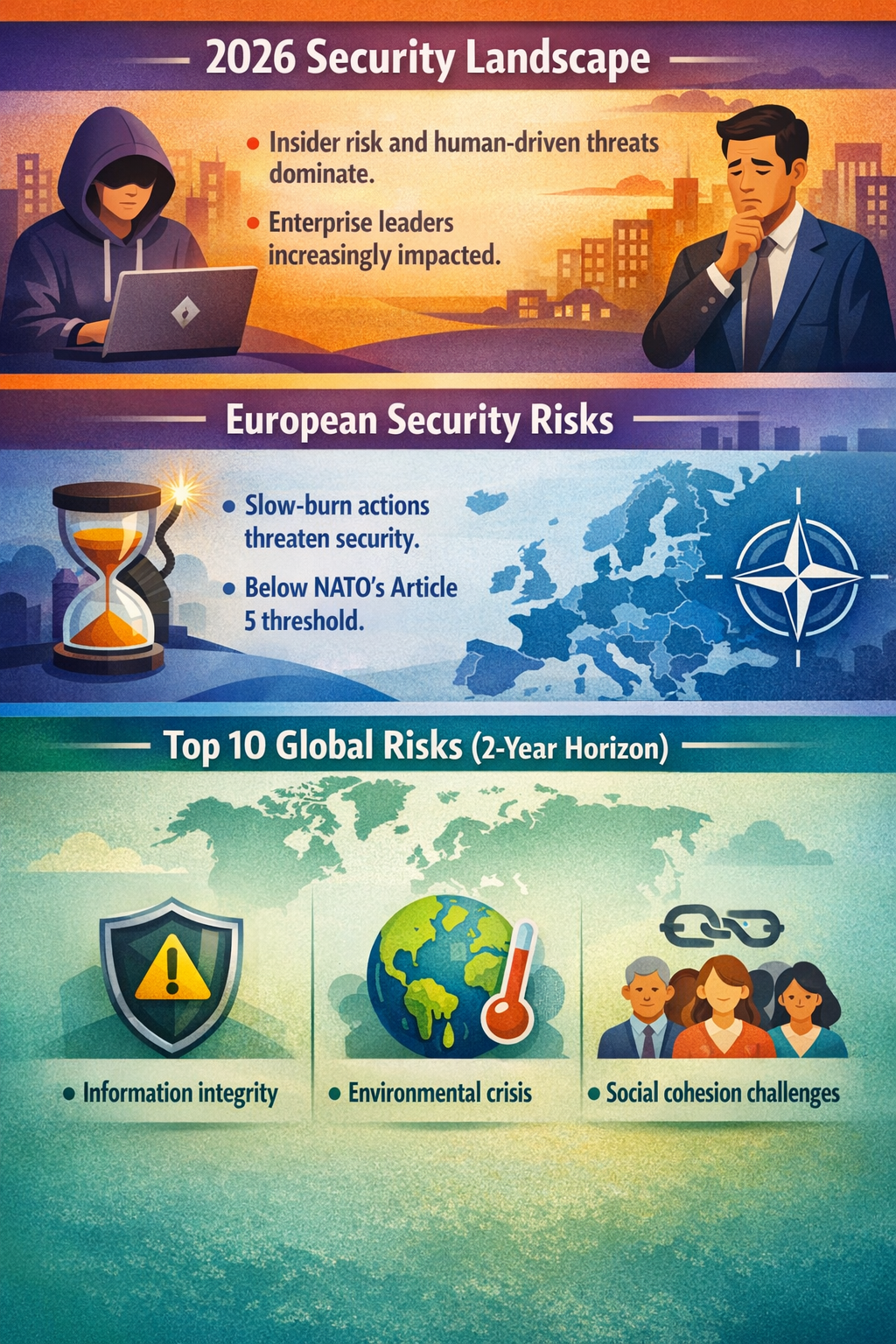
Intelligence Briefing about Country Risks
Critical Trends Impacting Atradius
- Geopolitical Shifts in the Indo-Pacific: The conclusion of ASEAN's Digital Economy Framework Agreement opens new avenues for regional economic growth, amid escalating maritime competition involving China, the Philippines, the US, and European actors, increasing geopolitical volatility.
- Insider and Human-Driven Security Threats: The persistence of insider risks continues to complicate enterprise security landscapes, demanding heightened vigilance from organizations globally.
- Hybrid Threats and European Security Dynamics: Europe faces challenges in blending military and civilian capabilities to build resilience and societal cohesion amid hybrid threats and slow-burn security degradations below conventional conflict thresholds.
- Converging Global Risks: Information integrity erosion, environmental crises, and weakening social cohesion represent leading risk factors globally, potentially disrupting markets and economic stability over the near term.
Key Challenges, Opportunities, and Risks
- Challenges: Managing exposure to geopolitical instability, especially in Indo-Pacific maritime domains; addressing complex insider threats that compromise operational security; and navigating hybrid conflicts that evade traditional defense measures.
- Opportunities: Leveraging ASEAN's digital framework to tap into emerging regional markets and supply chains; enhancing risk assessment models by integrating hybrid threat indicators; and developing resilience strategies aligned with civilian-military coordination in Europe.
- Potential Risks: Slow-onset security erosion in Europe undermining market confidence; digital economy disruptions from geopolitical tensions; and reputational risks stemming from information manipulation and social fragmentation.
Scenario Development
- Best-Case: ASEAN's digital agreement drives robust regional economic integration with stable maritime security, insider risks are mitigated through advanced organizational protocols, and Europe successfully enhances hybrid threat resilience through civilian-military collaboration.
- Moderate Case: Economic gains from ASEAN’s digital framework are partially offset by intermittent Indo-Pacific maritime tensions; insider threats remain manageable but unpredictable; Europe struggles to synchronize hybrid defense efforts, causing localized security disruptions.
- Challenging Case: Rising Indo-Pacific geopolitical tensions escalate into trade disruptions; insider risks lead to significant data breaches; Europe experiences ongoing slow-burn security degradation below Article 5 thresholds, affecting investor confidence and market stability.
- Worst-Case: Major Indo-Pacific conflict flares, severely disrupting global supply chains; insider threats cause systemic enterprise failures; concurrent environmental and social crises worsen Europe's security environment, triggering widespread market volatility and risk aversion.
Strategic Questions
- How can Atradius integrate geopolitical and hybrid threat intelligence into its country risk assessment frameworks to anticipate emerging risks better?
- In what ways could leveraging digital economic developments within ASEAN enhance Atradius’s risk diversification and growth strategy?
- What approaches could strengthen Atradius’s resilience against slow-burn security degradations, particularly in European markets?
- How might Atradius proactively manage the growing complexity of insider and human-driven threats affecting client risk profiles?
- What contingency measures could Atradius explore to mitigate the financial impact of potential disruptions arising from information integrity failures and social cohesion breakdowns?
Actionable Insights and Considerations
- Atradius could expand analytical capabilities to incorporate hybrid and insider threat indicators into country risk evaluations, enhancing predictive accuracy.
- Strategic partnerships with regional actors in ASEAN could be pursued to capitalize on digital economy growth while monitoring geopolitical flashpoints.
- Investing in scenario planning that includes slow-burn security risks could improve preparedness for market instability in Europe.
- Enhancing client advisory services around cybersecurity and insider threat management could reduce exposure to human-driven risks.
- Developing flexible risk mitigation tools that adapt to rapid shifts in social cohesion and information environments could strengthen overall portfolio resilience.
Briefing Created: 24/06/2026