Our Scans
·
European Central Bank
·
Organization Briefing
1. Key Trends
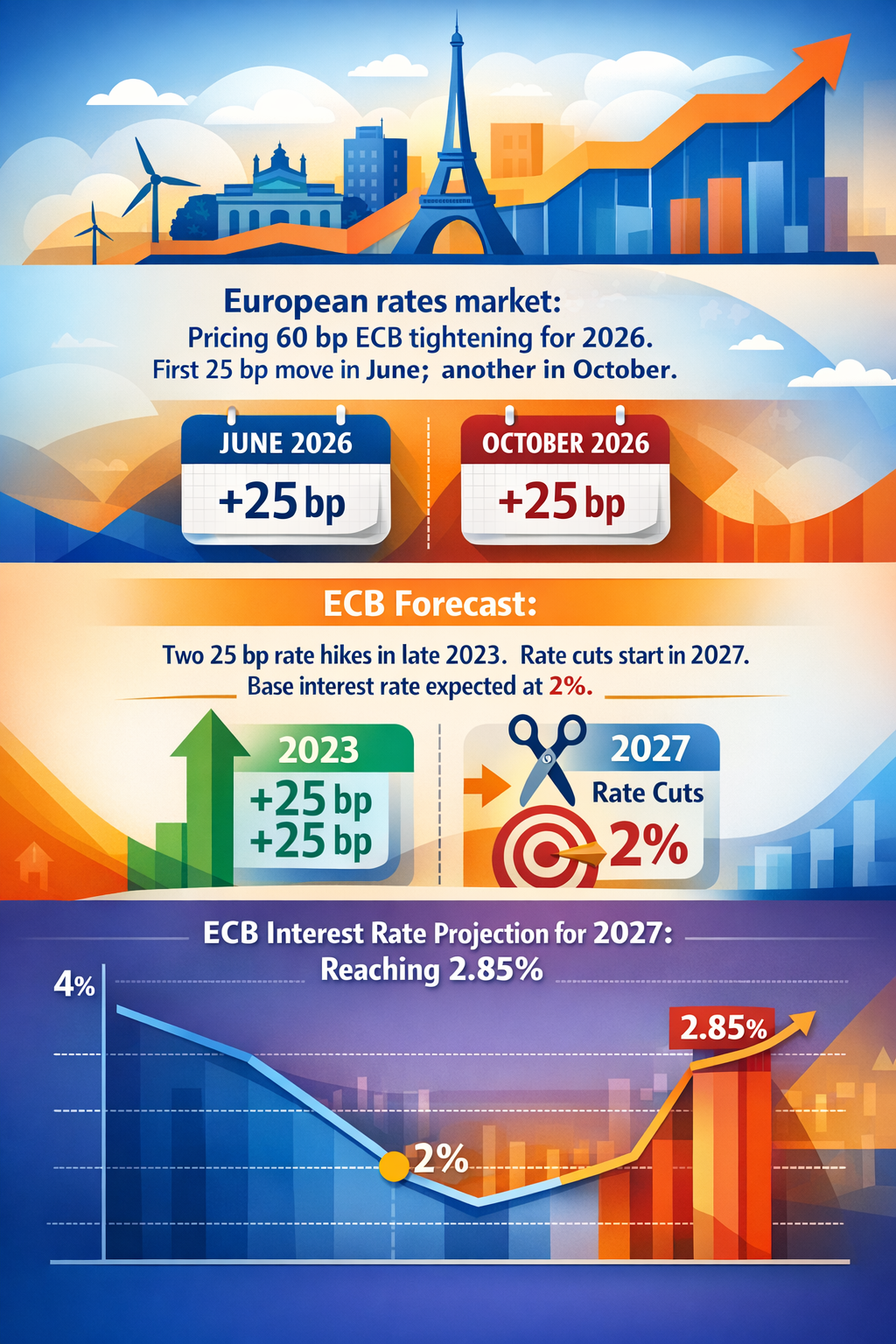
- Continued monetary tightening with incremental interest rate hikes, currently at 2.25%, expected to rise further to approximately 2.85% by 2027 (Indexbox, Canaccord Wealth).
- Persistent inflation pressures remain a central concern despite some easing of energy risk factors; inflation is forecasted to remain above target through 2026 and 2027, with expectations to return to target by 2028 (IC Markets, Investing.com, Investing.com).
- ECB strategy emphasizes navigating a world of heightened uncertainty and multiple risk scenarios, incorporating geopolitical shocks such as the Iran war impact into monetary policy considerations (Unlimited Hangout).
- Moderate growth expectations for the eurozone: average GDP growth projected at 0.8% in 2026, improving to 1.5% by 2028 (CNBC).
2. Assess Competitive Moves
- Incremental interest rate hikes of 25 basis points anticipated in second half of 2026, with a potential pause or cut beginning in 2027 as inflation and wage growth slow (Morgan Stanley).
- Monetary policy communication is more cautious and data-dependent, signaling flexibility in tightening or easing based on evolving inflation and growth data.
- Heightened emphasis on risk readiness and scenario planning as part of ECB’s strategic positioning, reflecting greater agility and adaptive policy framework rather than fixed policy paths.
3. Evaluate Market Impact
- Interest rate increases will continue to tighten financial conditions, likely slowing lending growth and increasing borrowing costs for corporates and consumers, impacting market liquidity and credit risks.
- Prolonged inflation above target can sustain uncertainty for business planning, with increased volatility in financial markets and potential pressure on credit insurance and risk assessment sectors.
- ECB’s cautious but proactive stance reinforces regulatory scrutiny and compliance expectations, especially around inflation targeting and risk management practices for financial institutions operating within the Eurozone.
- Slow eurozone growth projections may dampen demand in certain sectors but open opportunities for risk management services to help clients adapt to a complex macroeconomic environment.
4. Highlight Risks & Opportunities
- Risks: Continued rate hikes may increase default risks among corporate borrowers and SMEs, raising credit exposure for insurers like Atradius.
- Uncertainty due to geopolitical risks (e.g., Iran war) and inflation may cause volatility in market dynamics, challenging risk models and forecasting accuracy.
- Potential regulatory tightening aligned with ECB’s cautious approach might increase compliance burden and operational risks.
- Opportunities: Atradius can position itself as a partner in navigating inflation-driven credit risks by providing tailored credit insurance and risk mitigation services.
- Leveraging scenario-based stress testing aligned with ECB’s risk frameworks may differentiate Atradius in customer advisory services.
- Developing data analytics capabilities to track early signals of inflation, interest rate changes, and macroeconomic indicators can enhance Atradius’ market responsiveness and decision-making.
5. Recommend Monitoring Strategies
- Data Sources: Regular monitoring of ECB official communications, key economic forecasts from CNBC, Morgan Stanley, and Canaccord Wealth; financial market updates from Indexbox and IC Markets; geopolitical risk assessments from specialized intelligence outlets.
- Frequency of Updates: Weekly review of ECB policy announcements and forecasts; monthly in-depth economic projection analysis; quarterly risk environment assessments incorporating geopolitical events.
- Methodologies: Employ quantitative models to track interest rate trends, inflation forecasts, and GDP growth projections; incorporate qualitative analysis of policy statements for tone and risk signaling.
- Engage expert opinion feeds and financial market commentary to capture shifts in market sentiment and regulatory outlook.
- Utilize scenario planning aligned with ECB’s risk strategy to anticipate potential policy pivots and their impacts on credit risk exposure.
Briefing Created: 25/06/2026