Our Scans
·
Dubai Customs
·
Intelligence Briefing
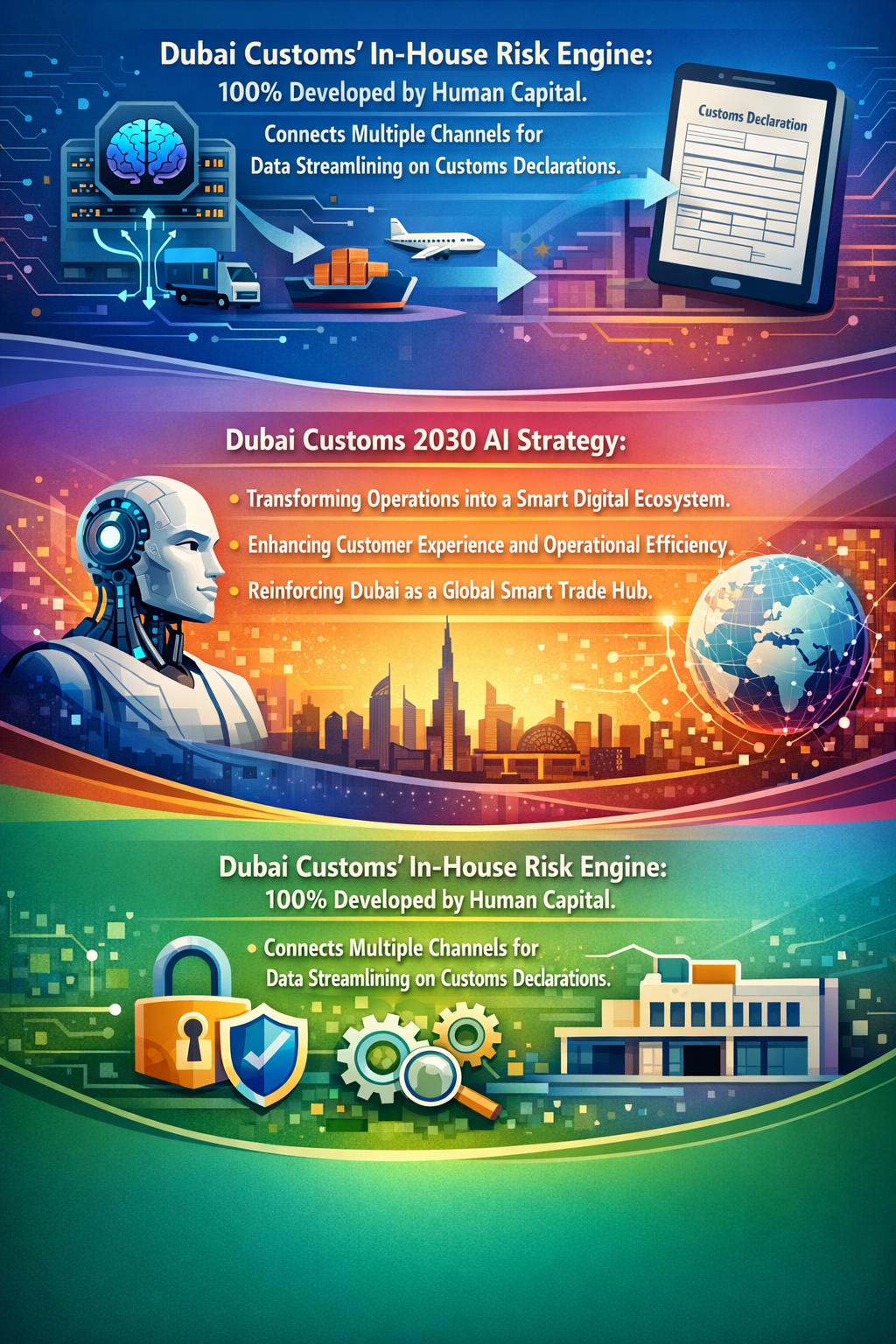
Intelligence Briefing about Dubai Customs
Critical Trends Impacting Dubai Customs
- Implementation of Dubai Customs’ 2030 AI Strategy to transform customs operations into a fully integrated smart digital ecosystem.
- Use of AI technologies to enhance risk detection and expedite customs clearance processes.
- Focus on creating a seamless customer experience through digital innovation.
- Positioning Dubai as a global hub for smart trade and the digital economy.
Key Challenges, Opportunities, and Risks
- Challenges: Integrating advanced AI within existing customs infrastructure; managing data privacy and cybersecurity risks.
- Opportunities: Enhanced operational efficiency; improved risk management; potential to attract greater trade volume through smoother customs processes.
- Risks: Dependence on sophisticated technology may expose vulnerabilities to cyber threats; potential resistance to change among stakeholders; regulatory compliance across borders.
Scenario Development
- Best-Case Scenario: Full AI integration leads to a seamless, highly efficient customs ecosystem, reinforcing Dubai’s status as a global trade and digital economy leader.
- Optimistic Scenario: AI adoption improves risk detection and customer experience, but integration challenges slow full implementation; steady growth in trade efficiency.
- Challenging Scenario: Technical and regulatory hurdles delay AI benefits, creating operational inefficiencies and customer dissatisfaction; cyber risks increase.
- Worst-Case Scenario: Failed AI integration causes major disruptions in customs processes, increased security vulnerabilities, and loss of trade competitiveness.
Strategic Questions
- How can Dubai Customs balance rapid AI adoption with robust cybersecurity and data privacy safeguards?
- What measures could be implemented to ensure stakeholder buy-in and smooth digital transformation?
- In what ways could AI-driven customs processes create new trade opportunities or market disruptions?
- How might evolving global regulatory landscapes impact the deployment of AI in customs operations?
Actionable Insights and Considerations
- Dubai Customs could prioritize phased AI implementation to manage integration risks and gather iterative feedback for continuous improvement.
- Investments in cybersecurity and data governance frameworks could mitigate potential vulnerabilities associated with increased digitalization.
- Developing partnerships with technology experts and international customs agencies could accelerate knowledge sharing and innovation.
- Regular scenario planning could prepare the organization for rapid shifts in trade dynamics and regulatory changes.
Briefing Created: 11/06/2026