Our Scans
·
Tesla
·
Organization Briefing
Intelligence Briefing for Monitoring Tesla
1. Key Trends
- Autonomy and Robotaxis: Tesla is advancing Full Self-Driving (FSD) capabilities, targeting a major fleet ramp tied to the release of FSD v15 by late 2026 or early 2027. CEO Elon Musk envisions up to 4 million robotaxis (Cybercabs) sold annually in the future, signaling a shift toward autonomous ride-hailing services (CBT News, Tech Times).
- Integration of AI and Connectivity: Tesla plans to leverage SpaceX’s Starlink satellite network to provide low-latency, high-reliability connectivity essential for over-the-air updates and robotaxi operations, reinforcing a vertically integrated technology ecosystem (Tesery).
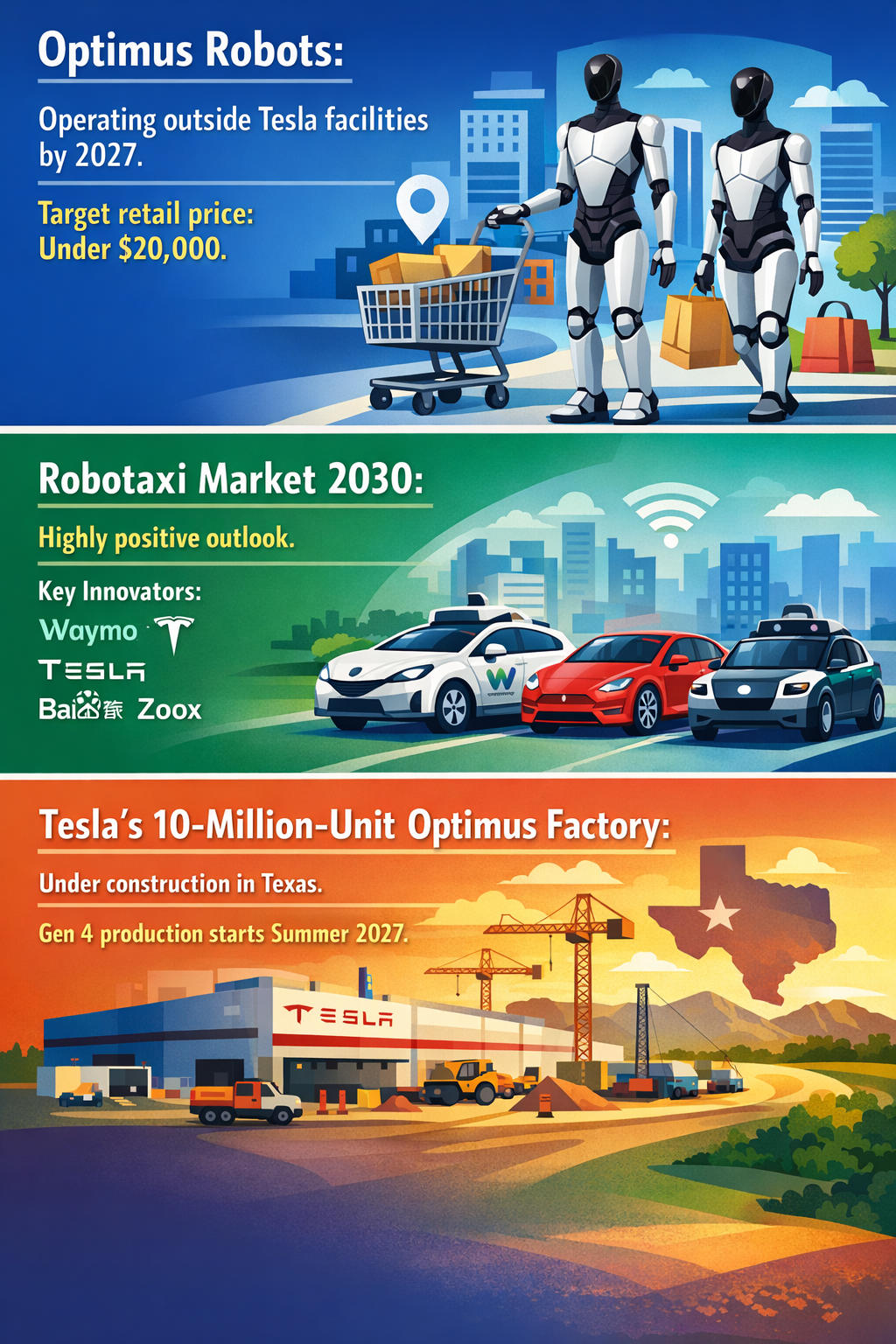
- Humanoid Robotics Expansion: Tesla is committing to humanoid robot production with the Optimus project, expecting to produce a high-volume Gen 4 variant starting summer 2027 at a target retail price below $20,000, supported by a dedicated 10-million-unit factory in Texas (Medium, ETC Journal).
- Commercial EV Fleet Development: Tesla is scheduled to begin deliveries for its Semi trucks in 2026, aiming for a full operational fleet by the end of 2027, indicating a push into the freight transport segment (Electric Cars Report).
2. Competitive Moves
- Robotaxi Deployment: Tesla is expanding robotaxi services across seven cities between 2026-2027 to catch up with competitors like Waymo, currently leading in city coverage and ride count (Braiviq).
- Innovative Monetization Models: Tesla may introduce flexible leasing models for robotaxis and software, including per-hour/month unit leasing, skill package sales, maintenance subscriptions, and cloud AI compute fees—diversifying revenue streams beyond vehicle sales (OptiMusk Blog).
- Advances in Autonomy Tech: Tesla may have solved significant parts of autonomy, evidenced by the usage rates of FSD, as well as insurance discounts linked to autonomous features, which enhance affordability and adoption (New Market Pitch).
3. Market Impact
- Industry Dynamics: Tesla’s robotaxi ambitions and autonomous tech leadership could disrupt traditional ride-hailing and automotive models, shifting competition towards AI-enabled mobility platforms.
- Customer Expectations: Enhanced autonomy and flexible leasing models may raise consumer demand for convenience, cost efficiency, and new mobility experiences.
- Regulatory Landscape: The scaling of robotaxis and autonomous fleets will likely attract regulatory scrutiny concerning safety, data privacy, and infrastructure, requiring proactive compliance monitoring.
- Broader Tech Synergies: Tesla’s integration with SpaceX and AI-based infrastructure may set new benchmarks in automotive connectivity and real-time data management.
4. Risks & Opportunities
- Risks:
- Dependency on timely FSD v15 release may pose a bottleneck for fleet expansion.
- Rising regulatory challenges in autonomous operations and data usage could impact rollout schedules.
- Competition from established players like Waymo who have broader geographic reach in robotaxi services.
- Opportunities:
- Atradius can differentiate by assessing Tesla’s AI and connectivity risks, offering tailored insurance products for autonomous fleet operators.
- Opportunity exists to support clients in supply chain and fleet financing as Tesla scales semi trucks and robotaxis.
- Tracking Tesla’s subscription and software monetization strategies may enable Atradius to advise clients on evolving business models.
5. Recommended Monitoring Strategies
- Data Sources:
- Regular updates from Tesla official announcements and quarterly earnings reports for quantitative fleet and production targets.
- Industry publications focusing on autonomous vehicles (e.g., New Market Pitch, Braiviq, Tech Times).
- Regulatory filings and government transportation agencies for compliance and approvals.
- Technology and infrastructure news on Starlink and AI integration.
- Frequency: Monthly reviews for product developments and regulatory updates; weekly scans of news and market sentiment during peak launch periods (Q2 2026 onwards).
- Methodologies:
- Quantitative tracking of production volumes (robotaxis, Optimus robots, Semis) versus announced benchmarks.
- Competitive mapping comparing Tesla’s geographic robotaxi expansion to peers like Waymo.
- Sentiment and risk analysis incorporating expert opinions on AI readiness and regulatory shifts.
- Scenario planning based on potential delays or accelerations in FSD adoption and new product rollouts.
Briefing Created: 25/06/2026