
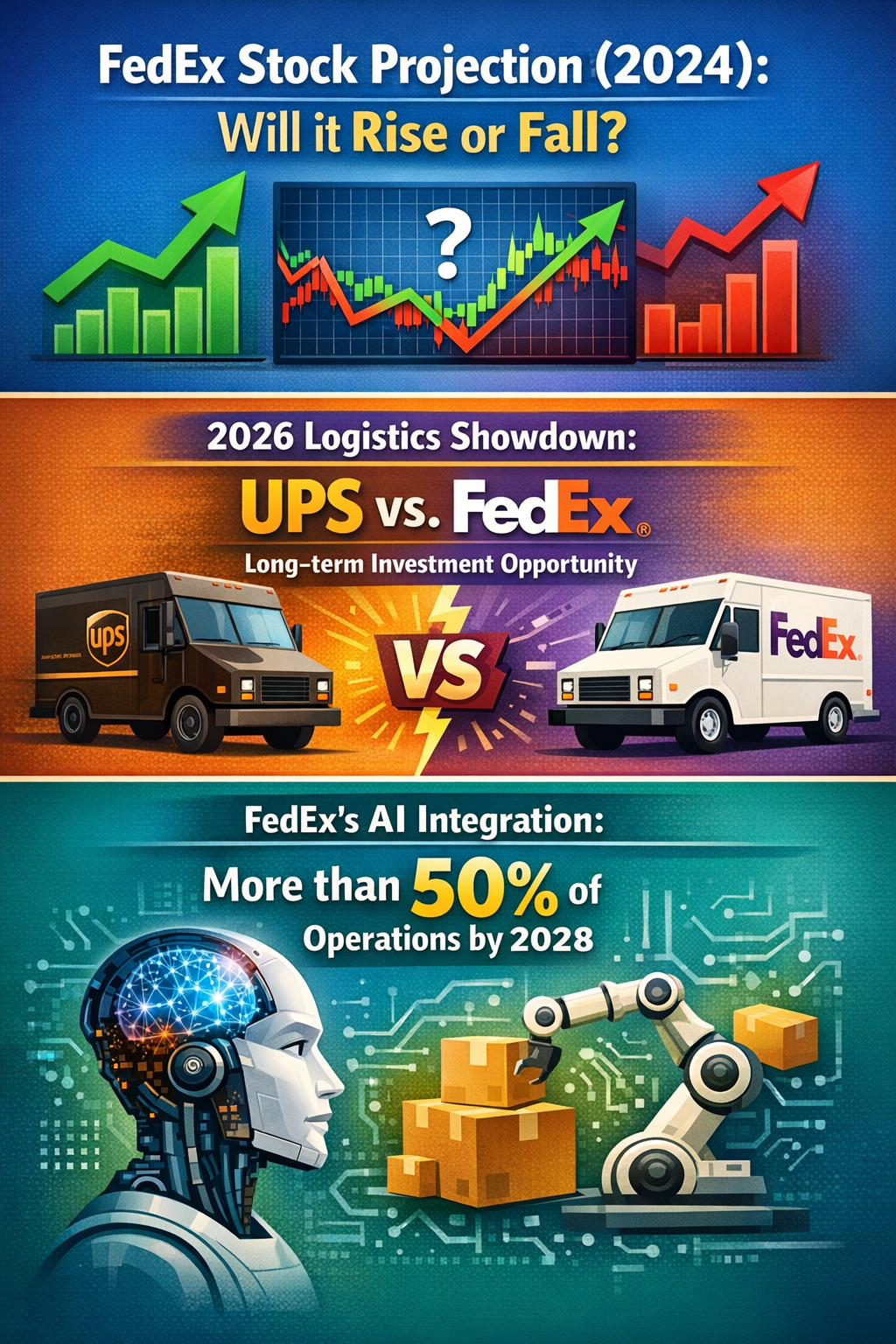
This analysis provides a quantitative and qualitative review of FedEx stock (FDX) emphasizing its current market position and near-term forecast. FedEx holds a neutral Smart Score of 7, marking it as a stock to watch closely. Key bullish elements include the restructuring plan involving a spin-off of the Freight unit designed to clarify valuation and improve management focus, alongside strategic pricing discipline and investments in AI and CRM technologies aimed at operational efficiencies and margin improvement. However, risks emanate from elevated leverage limiting financial flexibility, earnings volatility due to healthcare sector headwinds and interest expense, and execution risks tied to the operational spin-out and adoption of new technology. The current market sentiment is predominantly positive, reflected in bullish news and investor sentiment. Analyst consensus remains bullish, with an average 12-month price target of $423.15, suggesting moderate price appreciation potential. Investment approaches range from outright share purchase for long-term holdings to CFD trading for speculative opportunities, with an emphasis on understanding leverage risks.
Key Takeaways:On June 1, 2026, FedEx finalized the spin-off of its FedEx Freight segment, establishing it as an independent publicly traded company under the ticker FDXF on the New York Stock Exchange. The transaction involved FedEx distributing 80.1% of FedEx Freight shares to its stockholders on a pro rata basis while retaining a 19.9% stake to be divested over the next 24 months through structured transactions aimed at debt repayment and shareholder distributions. This strategic separation is designed to empower both FedEx Freight and FedEx Corporation to focus on their respective core markets—less-than-truckload freight and integrated global logistics—with enhanced operational clarity and management focus. The spin-off, advised by Goldman Sachs and J.P. Morgan, is positioned as a pivotal milestone with forward-looking potential to deliver long-term value to stockholders. However, the company acknowledged risks associated with transition disruptions, business uncertainty post-separation, and broader macroeconomic and regulatory risks that may affect future performance.
Key Takeaways:This comparative analysis examines UPS and FedEx as investment opportunities in 2026, highlighting their distinct business models, growth strategies, and market positioning. UPS is noted for its extensive domestic ground delivery network, diverse revenue streams including healthcare logistics, cost-cutting successes, and stable valuation metrics making it favorable for conservative, value-oriented investors. FedEx’s enhanced focus on international express services, network optimization, and higher-margin operations appeals to growth-focused investors seeking exposure to global trade recovery. Both firms face macroeconomic challenges, such as rising labor and fuel costs, and competition from Amazon’s expanding logistics capabilities. While UPS offers scale and domestic stability with a lower price-to-earnings ratio and consistent dividend growth, FedEx provides greater international growth potential but at a higher valuation with associated risks. Analysts generally recommend holding both stocks but acknowledge UPS as the safer option and FedEx as the more dynamic choice based on risk tolerance and economic outlook.
Key Takeaways:In April 2026, significant strides in the deployment of medium- and heavy-duty electric vehicles (EVs) by major U.S. carriers were announced ahead of the ACT Expo 2026. Amazon expanded its zero-emission freight capabilities with the addition of 75 Class 8 Einride electric trucks for middle-mile transportation and increased its electric van fleet deployment. FedEx has transitioned nearly 20% of its fleet in Puerto Rico to zero-emission, introducing 26 Mercedes-Benz eSprinter electric delivery vans, reflecting its global commitment to achieving carbon-neutral operations by 2040. Additionally, Averitt announced plans to deploy battery-electric yard tractors supported by state grants. These electrification efforts aim to reduce greenhouse gas emissions, improve public health by cutting tailpipe pollutants, and reduce long-term operating costs amid fuel price volatility, marking a key phase in building a sustainable and resilient freight sector.
Key Takeaways: