Our Scans
·
Geopolitics of Transportation in the Melting Arctic
·
Intelligence Briefing
Intelligence Briefing about Geopolitics of Transportation in the Melting Arctic
Critical Trends Impacting Transport Canada
- Accelerated Arctic ice melt is opening new maritime routes that shorten shipping distances between East Asia, Europe, and North America, gradually reshaping global trade corridors (Global Maritime Hub).
- Geopolitical competition in the Arctic, notably among Arctic states and global powers, is intensifying, leading to increased risks of conflicts and market shocks (Ainvest News).
- US-Iran tensions and other global geopolitical risks may destabilize fragile supply rotations, exposing transportation networks to sudden disruptions (Ainvest News).
Key Challenges, Opportunities, and Risks
- Challenges: Navigational hazards in a changing Arctic environment, limited infrastructure, regulatory uncertainty, and geopolitical tensions increasing risks to Canadian sovereignty and supply chain resilience.
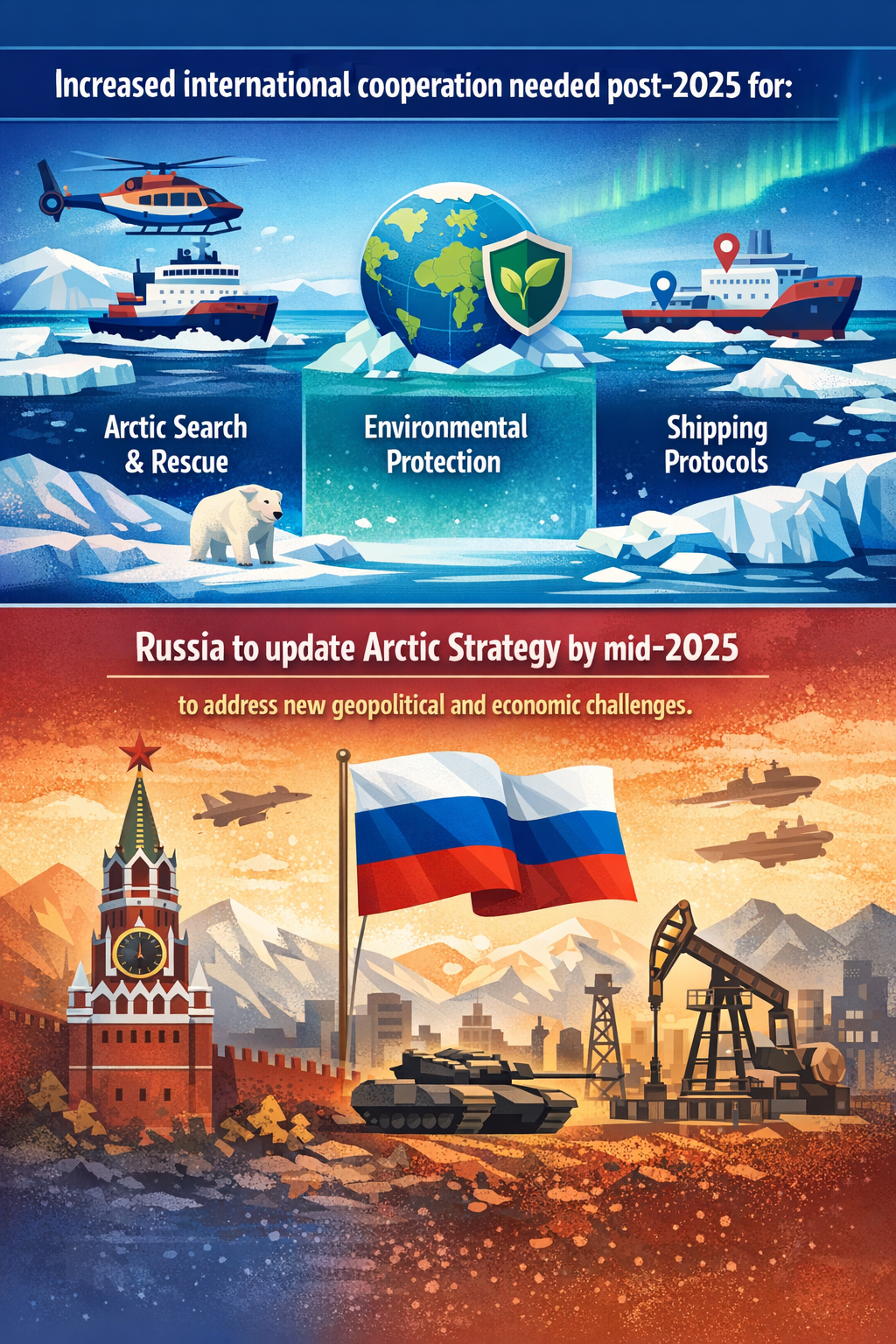
- Opportunities: Potential to capitalize on shorter Arctic shipping routes to enhance trade efficiency and establish leadership in Arctic maritime governance and safety standards.
- Risks: Escalation of geopolitical rivalry may lead to militarization of Arctic routes, potential disruption in critical supply chains, and economic volatility impacting Canadian transport sectors.
Scenario Development
- Best-Case: Cooperative Arctic governance leads to stable maritime route development, infrastructure investment, and safe, efficient shipping corridors enhancing Canada’s strategic role.
- Moderate Positive: Arctic routes develop unevenly with occasional geopolitical tensions; Canada advances infrastructure and regulatory frameworks but faces intermittent disruptions.
- Moderate Negative: Rising geopolitical conflicts and environmental hazards restrict Arctic route usage; Canada contends with supply chain shocks and increased operational costs.
- Worst-Case: Severe geopolitical conflicts escalate into military standoffs; Arctic shipping routes are closed or highly contested, crippling new trade opportunities and causing major transport disruptions.
Strategic Questions
- How can Transport Canada influence and shape sustainable and secure governance frameworks for Arctic maritime routes?
- What infrastructure and technological investments could best mitigate risks posed by emerging Arctic environmental and geopolitical challenges?
- In what ways might Transport Canada enhance coordination with international partners to manage supply chain vulnerabilities linked to Arctic and global geopolitical dynamics?
- How can Transport Canada balance opportunities for economic gains with the need to uphold Indigenous rights and environmental protection in the Arctic?
Potential Actionable Insights
- Transport Canada could prioritize developing adaptive regulatory frameworks that accommodate evolving Arctic shipping patterns and emerging geopolitical realities.
- Investing in Arctic-specific navigational technologies and infrastructure could enhance Canada’s operational resilience and sovereignty over northern transportation corridors.
- Strengthening partnerships with Arctic nations and international stakeholders could support collective risk management and promote stability in the region.
- Monitoring geopolitical developments closely could enable proactive mitigation strategies against sudden market shocks and supply disruptions.
Briefing Created: 04/06/2026