Our Scans
·
Smart City (Dubai)
·
Intelligence Briefing
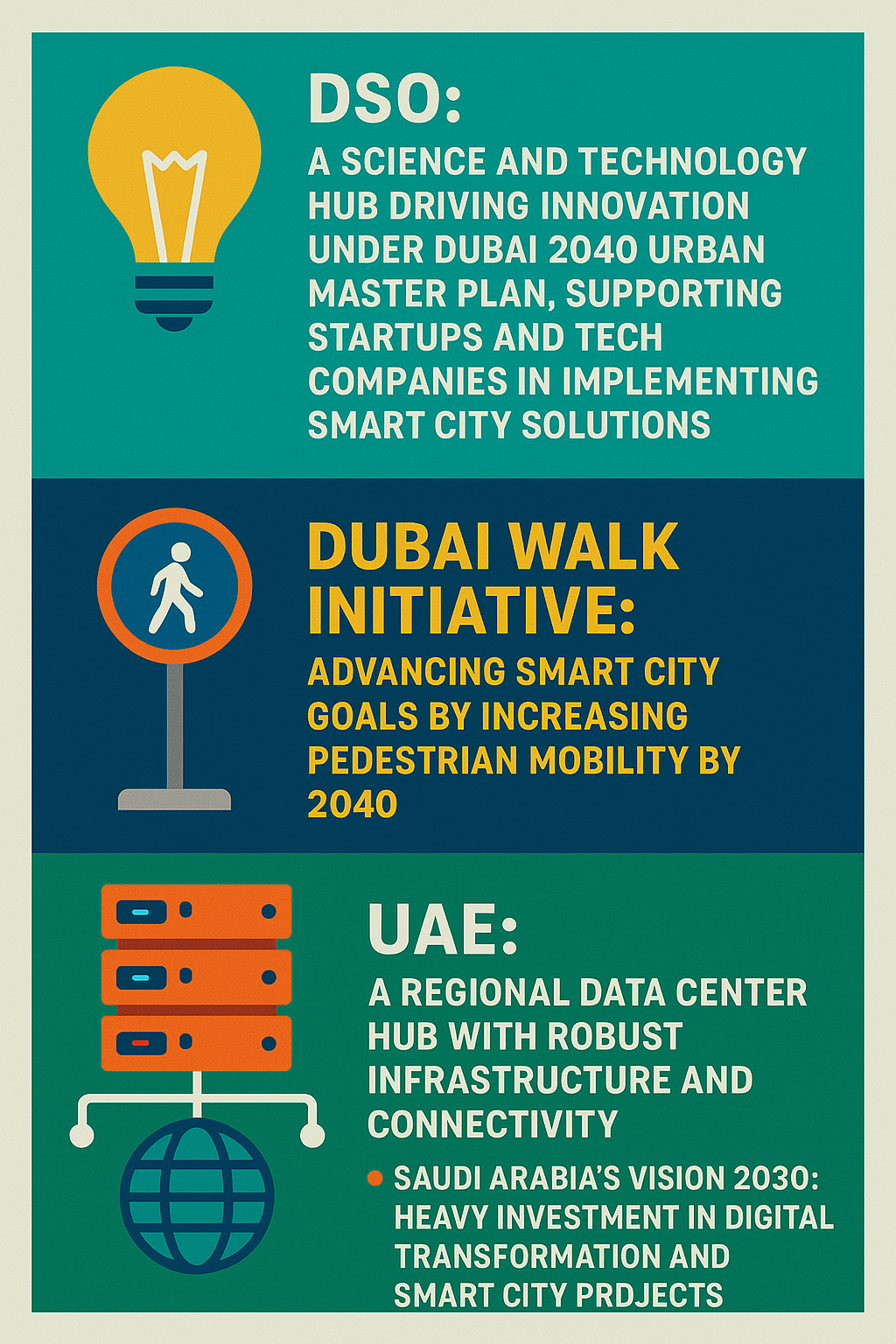
Intelligence Briefing about Smart City (Dubai)
Emerging Trends Impacting Dubai Smart City
- Integration of AI and IoT: AI-driven analytics and Internet of Things (IoT) devices are enabling smarter urban management, enhancing efficiency and personalization of public services.
- Sustainability Initiatives: Growing emphasis on renewable energy, smart grids, and sustainable infrastructure to meet climate goals and reduce urban carbon footprint.
- Digital Twin Technology: Virtual modeling of city elements helps in planning, monitoring, and optimizing urban functions in real time.
- Data Privacy and Cybersecurity: Increasing reliance on data systems raises concerns over privacy, data protection, and vulnerability to cyber attacks.
- Public-Private Partnerships: Collaboration between government and private sector advances innovation but requires alignment of interests and transparent governance.
Key Challenges, Opportunities & Risks
- Challenges: Balancing rapid technology adoption with infrastructure readiness and addressing inequalities in access to digital services.
- Opportunities: Leveraging smart technologies to improve quality of life, attract investment, and position Dubai as a global innovation hub.
- Risks: Potential for technology failures, privacy breaches, and social resistance to data-driven governance models.
Scenario Development
- Best Case: Seamless integration of AI, IoT, and sustainability efforts results in a highly efficient, resilient, and inclusive smart city that attracts global talent and investment.
- Optimistic Case: Smart city technologies grow steadily with some hiccups in data privacy and infrastructure, but public trust remains intact and sustainability targets are met.
- Challenging Case: Cybersecurity breaches and infrastructure delays slow down smart city initiatives, causing public skepticism and requiring costly remediation efforts.
- Worst Case: Mismanagement of data privacy, technology failures, and inadequate partnerships lead to fragmentation, social pushback, and loss of investor confidence.
Strategic Questions for Policy Advisors & Strategists
- How can governance frameworks evolve to balance innovation with transparency and data privacy in a smart city environment?
- What mechanisms could be implemented to ensure equitable access to smart city benefits across all demographic groups?
- In what ways could public-private partnerships be structured to align incentives and mitigate risks effectively?
- How might emerging cyber threats be anticipated and proactively addressed to safeguard smart city infrastructure?
- What indicators should be monitored to evaluate the progress and social impact of smart city initiatives over time?
Actionable Insights for Strategic Decision-Making
- Investing in adaptive governance models could help manage the complexity and rapid evolution of smart city technologies.
- Developing comprehensive data privacy guidelines could build public trust and enhance acceptance of data-driven services.
- Fostering inclusive digital literacy programs could reduce inequalities and enhance citizen engagement.
- Establishing robust cybersecurity frameworks could minimize risks and foster resilience against emerging threats.
- Leveraging pilot projects and digital twin simulations could inform scalable and iterative deployment of technologies.
Briefing Created: 16/12/2025