Our Scans
·
Privacy
·
Intelligence Briefing
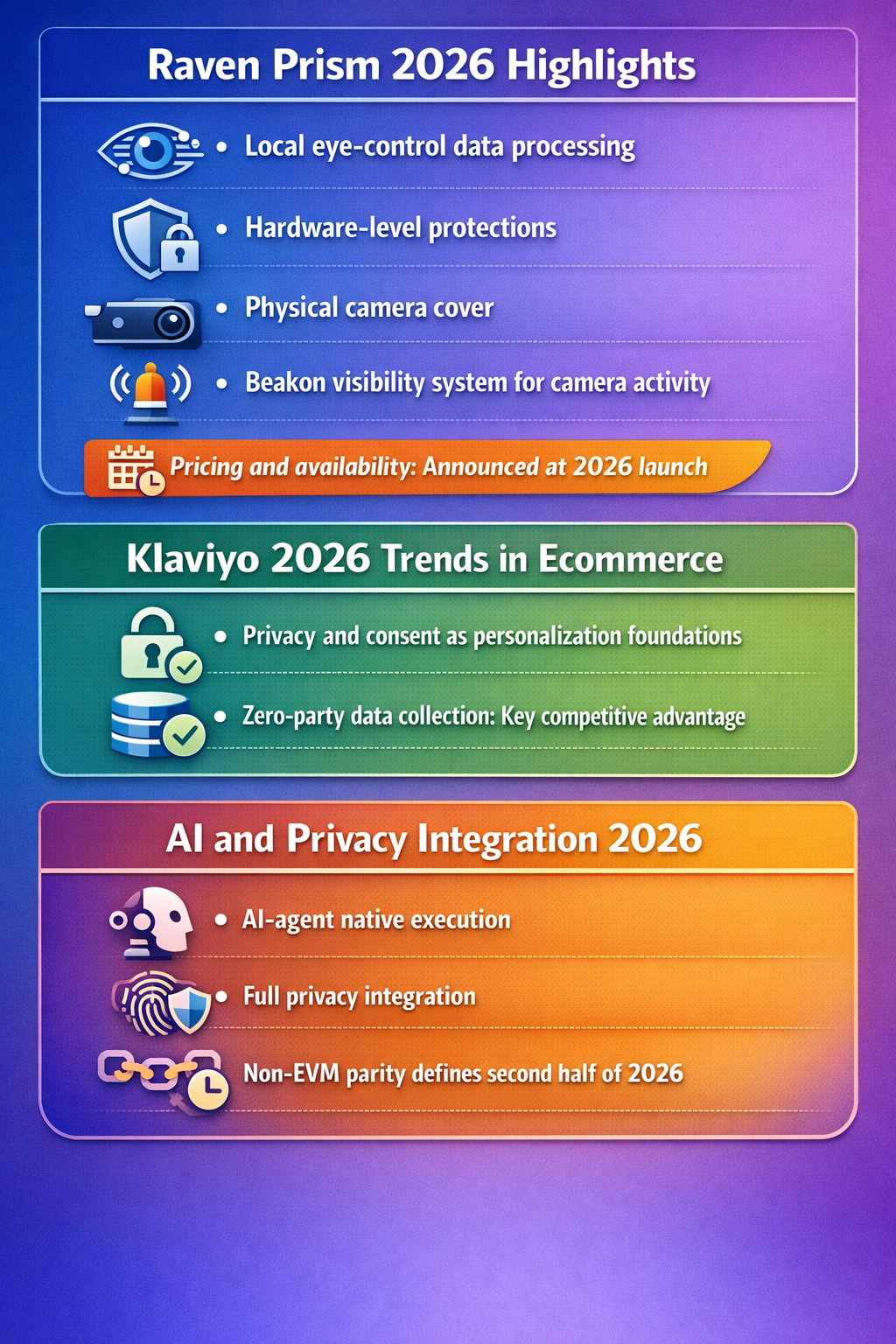
Intelligence Briefing about Privacy
Critical Trends Impacting the Australian Federal Police
- Increasing integration of autonomous AI agents in enterprise and policing software is raising complex issues of liability, data privacy, and operational oversight, which are becoming legislative priorities in 2026 (Financial Content).
- Data privacy is evolving into a multifaceted security concern, exemplified by recent hybrid threats targeting citizen data at an international scale (Renée Europe Group).
- By 2035, privacy in its traditional sense may be largely eroded due to pervasive digitalization and data-driven environments (Zendesk).
- Advancements in blockchain and AI convergence emphasize trust, scalability, and privacy as critical for widespread adoption by 2030, offering new possibilities for secure, transparent data management (Blockchain Council).
- Emerging privacy-first technologies, including hardware-level protections (e.g., physical camera covers) and local data processing for sensitive biometric inputs, are setting new standards for data security in digital evidence and citizen interactions (PR Newswire).
Key Challenges, Opportunities & Risks
- Challenges: Navigating a rapidly shifting regulatory environment on AI and data privacy; protecting sensitive digital evidence from breaches; and maintaining public trust amid growing digital surveillance concerns.
- Opportunities: Leveraging blockchain and AI to enhance data integrity and transparency; adopting privacy-preserving technologies to set best practices nationally and internationally; and utilizing zero-party data strategies to balance personalization with consent.
- Risks: Potential legal liabilities from autonomous AI decision-making errors; increased exposure to hybrid cyber threats targeting personal and police operational data; and erosion of privacy norms leading to public backlash or reduced cooperation.
Scenario Development
- Best-Case: Robust national privacy regulations harmonized with international standards; widespread adoption of AI with privacy-by-design frameworks; Australian Federal Police leverage blockchain to secure and streamline evidence management; strong public trust and compliance.
- Moderate Progress: Incremental updates to privacy laws lag behind technology evolution; partial integration of secure AI systems under cautious legislative oversight; isolated data breaches prompt reactive reforms; some public skepticism but overall operational effectiveness maintained.
- Challenging Environment: Regulatory fragmentation and unclear liability frameworks for AI; repeated hybrid cyberattacks compromising sensitive data; erosion of public trust due to perceived surveillance overreach; delayed adoption of privacy-preserving technologies undermines policing efficiency.
- Worst-Case: Privacy virtually non-existent by 2035, with uncontrolled AI agents operating without sufficient oversight; frequent data breaches including digital evidence manipulation; loss of public confidence leading to decreased cooperation; legal ambiguities causing operational paralysis or litigation risk.
Strategic Questions
- How can the AFP proactively shape AI and privacy regulations to balance innovation, accountability, and public trust?
- What frameworks could enable effective oversight and liability management for autonomous AI in law enforcement?
- In what ways can the AFP integrate emerging privacy-preserving technologies to future-proof digital evidence management?
- How might evolving hybrid cyber threats against personal and operational data be anticipated and mitigated?
- What strategies could the AFP employ to maintain public cooperation amid increasing digital surveillance and privacy concerns?
Actionable Insights and Considerations
- The AFP could explore partnerships with blockchain experts to pilot secure, auditable digital evidence systems enhancing transparency and trust.
- Investing in AI ethics and privacy training for operational and policy teams could support informed decision-making and compliance.
- Developing adaptive risk assessment models for AI-enabled tools could help to identify liability issues early and guide responsible deployment.
- Enhanced collaboration with cyber security agencies to strengthen defenses against hybrid threats targeting personal and law enforcement data could reduce exposure.
- Engaging community stakeholders proactively to communicate privacy safeguards and operational boundaries could sustain public trust despite technological shifts.
Briefing Created: 19/06/2026