Our Scans
·
Strategic Foresight & Strategy
·
Intelligence Briefing
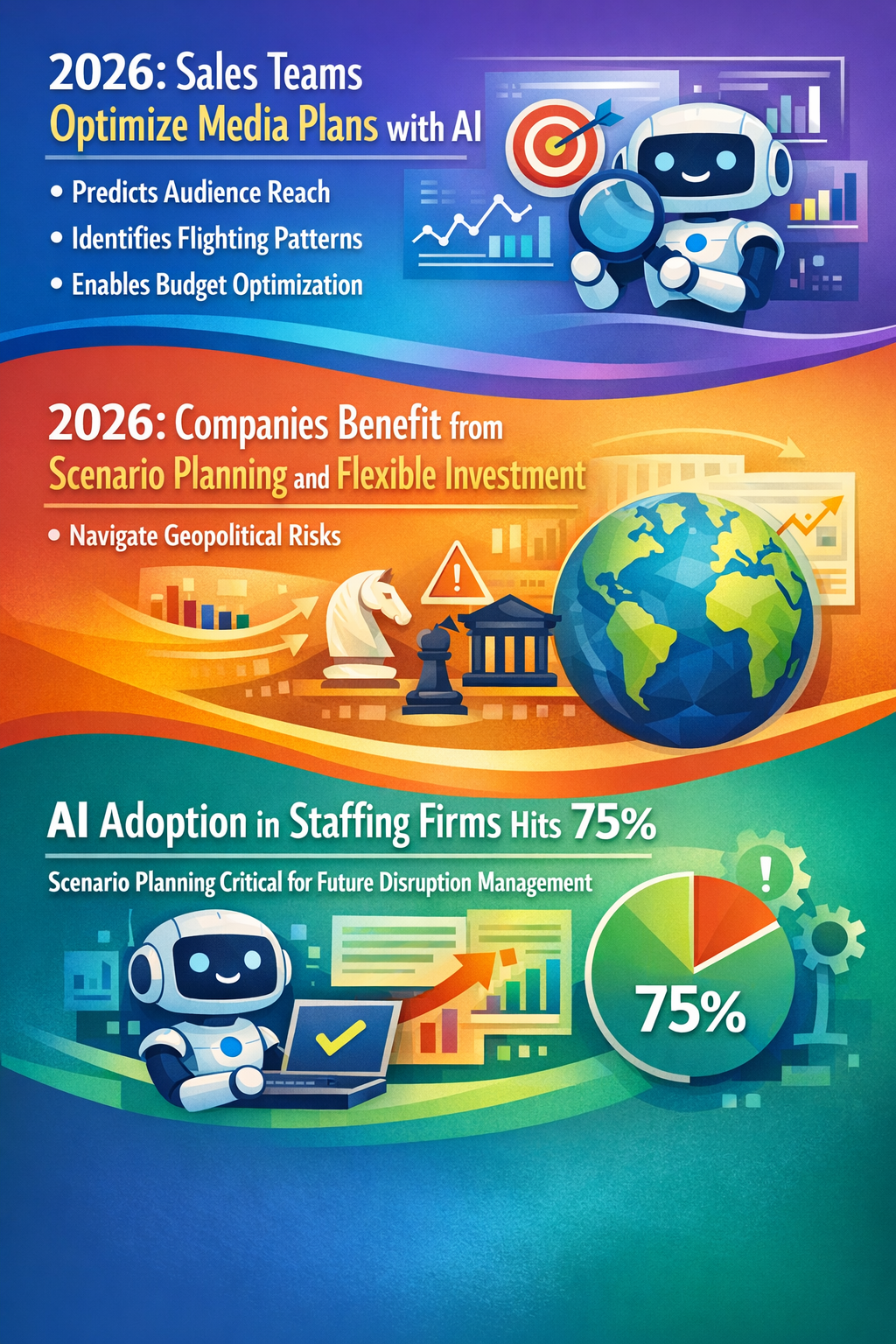
Intelligence Briefing about Strategic Foresight & Strategy
Critical Trends Impacting Defence Futures
- Integration of climate scenario planning into Business Continuity Management (BCM) frameworks is becoming indispensable by 2030 to address evolving environmental risks (Ascent Business).
- AI adoption is rapidly increasing, with predictive modeling enhancing decision-making and operational efficiency across sectors, and embedding scenario planning into core strategies improves resilience against disruptions (Mosaic).
- Geopolitical friction, fragmented global supply chains, and systemic instability are intensifying, demanding greater strategic foresight and operational agility from leadership (LinkedIn).
- Strategic foresight provides a competitive advantage by enabling early identification and entry into emerging markets, a capability increasingly valued over the next several years (Burrus).
- Some indications point to a declining demand for traditional strategic intelligence in specific contexts, such as the US and Israel, suggesting a shift in intelligence priorities and consumption (The Cipher Brief).
Key Challenges, Opportunities & Risks
- Challenges: Managing systemic instability amid geopolitical and supply chain disruptions; adapting BCM frameworks to integrate emerging risks like climate change; addressing the evolving role and demand for strategic intelligence.
- Opportunities: Leveraging AI-driven scenario planning to enhance strategic adaptability; utilizing foresight to capitalize on emerging markets; embedding predictive analytics for optimized resource allocation.
- Risks: Overreliance on AI predictions could lead to blind spots if data biases or adversarial manipulations occur; failure to integrate climate risks could render BCM ineffective; declining interest in traditional intelligence might reduce contextual understanding in complex environments.
Scenario Development
- Best-Case Scenario: Defence organizations fully integrate AI-enhanced strategic foresight and climate scenario planning, enabling proactive responses to emerging threats and capturing new strategic opportunities in evolving global environments.
- Moderate Scenario: AI and scenario planning adoption steadily improve resilience but gaps in climate risk integration and intelligence adaptation persist, leading to reactive rather than proactive responses in some domains.
- Challenging Scenario: Geopolitical instability and fragmented supply chains exacerbate operational disruptions; insufficient integration of foresight results in missed opportunities and heightened vulnerabilities.
- Worst-Case Scenario: Declining strategic intelligence demand and poor adaptation to systemic risks combine with AI vulnerabilities, causing strategic blind spots, operational failures, and erosion of defence readiness.
Strategic Questions
- How can Defence organizations effectively integrate climate scenario planning into existing BCM frameworks to address evolving environmental risks?
- In what ways might AI-driven scenario planning transform strategic decision-making, and how can its risks be mitigated?
- What approaches could ensure that strategic intelligence remains relevant and adaptive amid shifting geopolitical and technological landscapes?
- How could Defence leverage emerging market insights through strategic foresight to enhance operational advantage?
Actionable Insights & Considerations
- Defence entities could prioritize embedding climate risk models within BCM to improve long-term resilience.
- Investing in AI-enabled predictive tools could enhance scenario planning, enabling faster and more accurate strategy formulation.
- Continuous evaluation of the strategic intelligence value chain might be necessary to align capabilities with evolving demands and prevent capability gaps.
- Foresight-driven initiatives could facilitate early entry into emerging theatres and markets, providing strategic leverage.
Briefing Created: 12/05/2026