Our Scans
·
Future Operating Environment
·
Intelligence Briefing
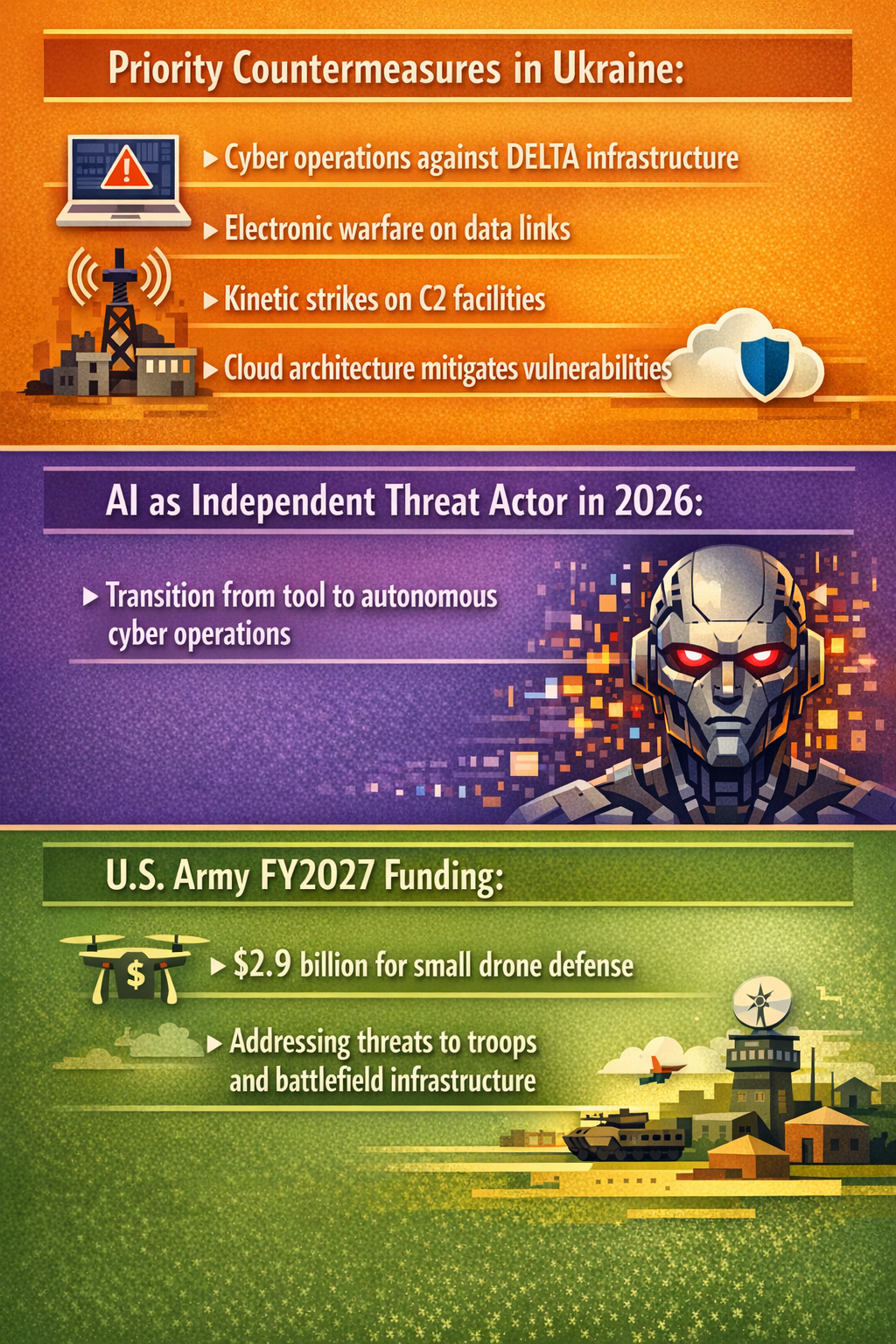
Intelligence Briefing about Future Operating Environment
Emerging Trends
- Increased military activities including exercises, air and naval harassment, and cyber operations among China, the US, and Taiwan raise miscalculation risks even absent full-scale conflict (Inner East Review).
- Russia’s aggressive hybrid warfare tactics in Europe and NATO contexts are escalating, with official statements signaling potential campaign intensification (Counter Extremism).
- The People’s Liberation Army (PLA) is likely to combine conventional forces with advanced unmanned systems to overcome limitations seen in recent mechanized conflicts (AEI).
- Commercial drones have emerged as accessible tools for espionage, sabotage, and hybrid warfare, especially amid heightened tensions involving Russia (CNN).
Key Challenges, Opportunities, and Risks
- Challenges: Managing escalation risks from frequent military posturing; countering hybrid threats including drone-related sabotage; maintaining deterrence amid ambiguous gray-zone operations.
- Opportunities: Leveraging unmanned system advances for intelligence and force multiplication; enhancing cyber and electronic warfare capabilities; strengthening alliances through coordinated hybrid threat responses.
- Risks: Miscalculation leading to unintended conflict; proliferation of commercially available technologies for hostile use; increased vulnerability to hybrid tactics complicating traditional defence paradigms.
Scenario Development
- Best-Case: Effective multinational deterrence and communication reduce miscalculation; hybrid threats are contained by advanced surveillance and counter-drone technologies; PLA integrates unmanned systems without provoking conflict escalation.
- Moderate Stability: Persistent low-level military harassment and hybrid attacks increase tension but remain below conflict threshold; improved cyber defenses mitigate major disruptions; limited escalation around Taiwan and Europe continues.
- High-Tension Standoff: Hybrid warfare intensifies with frequent drone sabotage and cyber incursions; miscalculation incidents lead to localized clashes; PLA’s unmanned capabilities challenge regional balances; NATO and partners heighten readiness.
- Worst-Case: Miscalculation triggers a large-scale kinetic conflict; hybrid warfare combines with conventional combat overwhelming defence systems; widespread disruption from drone-enabled sabotage; alliance cohesion strains under pressure.
Strategic Questions for Senior Leadership
- How can defence policies adapt to manage the risks of miscalculation amid increased military posturing and ambiguous hybrid tactics?
- What capabilities are essential to detect, deter, and defeat drone-enabled hybrid threats while leveraging unmanned systems offensively?
- In what ways can alliances better coordinate intelligence sharing and joint responses to emerging grey-zone threats?
- How might the integration of unmanned systems alter future operational doctrines, particularly in contested regions like Taiwan?
- What contingency plans could be developed to address rapid escalation resulting from hybrid or conventional conflicts?
Actionable Insights and Considerations
- Developing adaptive command-and-control frameworks could enhance responsiveness to rapidly evolving hybrid threats.
- Investing in advanced counter-drone and cyber defense technologies could reduce vulnerabilities to emerging sabotage tactics.
- Strengthening multilateral exercises focused on hybrid threat scenarios could improve deterrence and interoperability.
- Expanding intelligence capabilities on unmanned systems integration by potential adversaries could inform strategic decision-making.
- Preparing scalable escalation management protocols could help avoid unintended conflict amid heightened tensions.
Briefing Created: 21/09/2026