Our Scans
·
Critical National Infrastructure
·
Intelligence Briefing
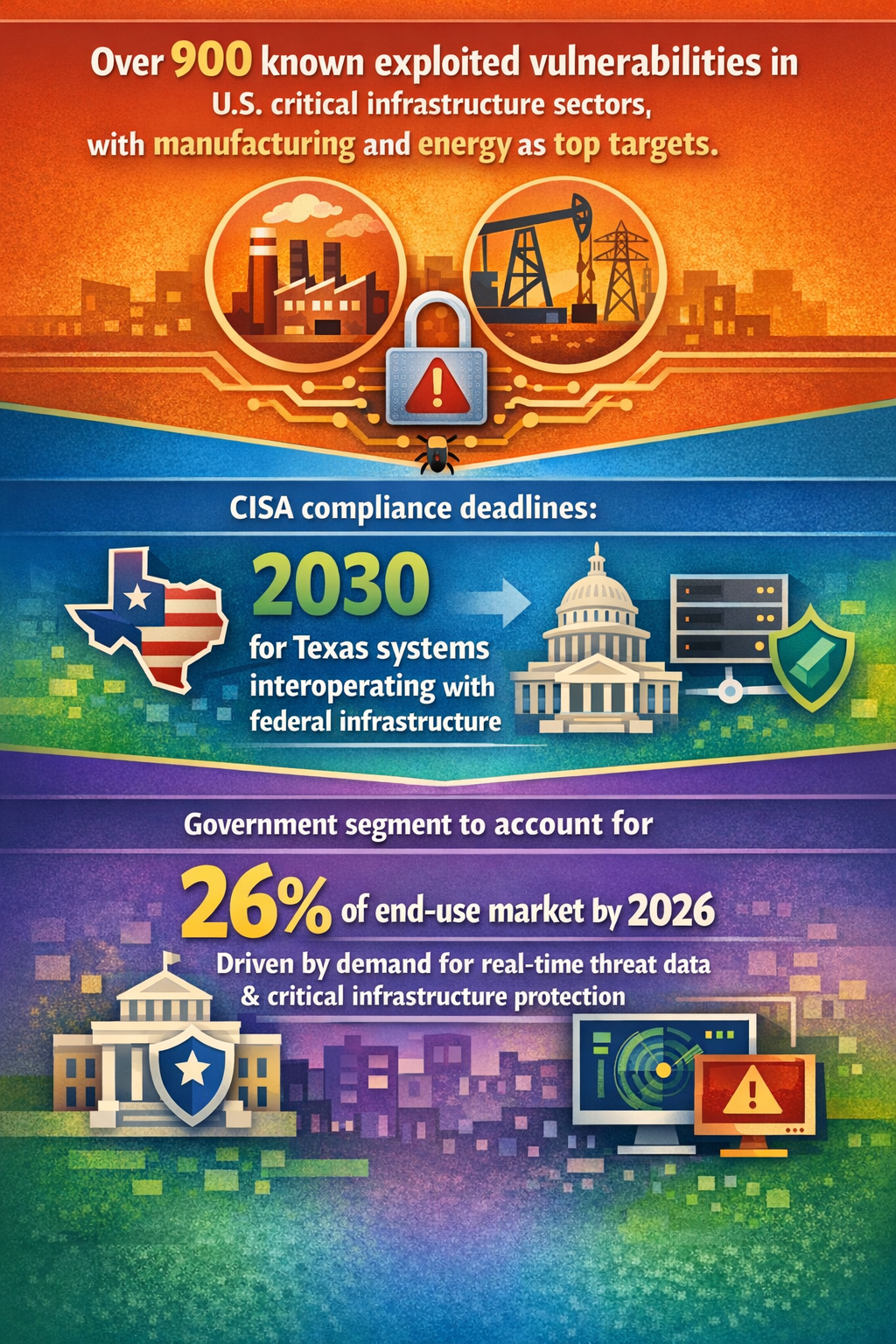
Intelligence Briefing about Critical National Infrastructure
Emerging Trends
- Increasing geopolitical instability, notably in key regions like the Gulf, heightens risks to vital infrastructure and international supply chains (Tactical Report).
- Cybersecurity mandates such as CISA compliance deadlines (2030 and 2035) drive accelerated adoption of interoperable security standards across federal and state systems (Texas Policy).
- The government remains the largest vertical demanding real-time threat intelligence and critical infrastructure protection solutions, reflecting growing public safety and security priorities (Dimension Market Research).
- Technological advancements including AI, cloud computing, and surveillance drones are transforming the operational landscape of infrastructure security and monitoring (InfoSec Conferences, Fact MR).
- Damage to subsea cables poses a serious threat to global communications and financial transactions, emphasizing the vulnerability of physical infrastructure to geopolitical risks (RBA Bulletin).
Key Challenges, Opportunities, and Risks
- Challenges: Managing geopolitical instability and supply chain vulnerabilities, meeting stringent cybersecurity mandates, and integrating advanced technologies while safeguarding privacy.
- Opportunities: Enhanced collaboration between government and private sectors, leveraging AI and drone technologies for proactive threat detection and response, and strengthening compliance frameworks.
- Risks: Potential disruption of global communication networks through physical or cyber attacks, regulatory non-compliance penalties, and emerging AI-related security threats that outpace current safeguards.
Scenario Development
- Best-Case: Seamless interoperability and stringent cybersecurity compliance support resilient infrastructure; AI and drones provide superior monitoring; geopolitical tensions ease, reducing disruption risks.
- Moderate-Optimistic: Technology adoption grows steadily; government and private sectors improve coordination; some regional conflicts persist but infrastructure remains largely secure with minor disruptions.
- Moderate-Pessimistic: Geopolitical instability intensifies in key regions causing intermittent disruptions; technology integration lags behind compliance demands; cyber threats escalate impacting critical services.
- Worst-Case: Prolonged regional conflicts lead to severe physical and cyber damage of infrastructure including subsea cables; widespread failure to meet cybersecurity mandates; AI-driven threats evade detection causing cascading failures.
Strategic Questions
- How can government and private sectors effectively coordinate to enhance resilience against both physical and cyber threats to critical infrastructure?
- What capabilities and policies could be prioritized to ensure timely compliance with evolving cybersecurity mandates such as CISA deadlines?
- In what ways might emerging technologies such as AI and surveillance drones be leveraged while mitigating associated risks to privacy and security?
- How should contingency plans adapt to address escalating geopolitical instability and potential disruptions in international infrastructure networks?
Actionable Insights for Strategic Decision-Making
- Investing in cross-sector interoperability frameworks could enhance real-time threat intelligence sharing and coordinated incident responses.
- Exploring public-private partnerships could accelerate adoption of advanced monitoring technologies, including AI-driven analytics and surveillance drones.
- Developing adaptive compliance strategies could reduce risks related to evolving cybersecurity regulations and ensure sustained operational readiness.
- Scenario planning exercises could be expanded to integrate geopolitical risk factors, helping prepare for long-term infrastructure security challenges.
Briefing Created: 12/06/2026