Our Scans
·
AI & deterrence
·
Intelligence Briefing
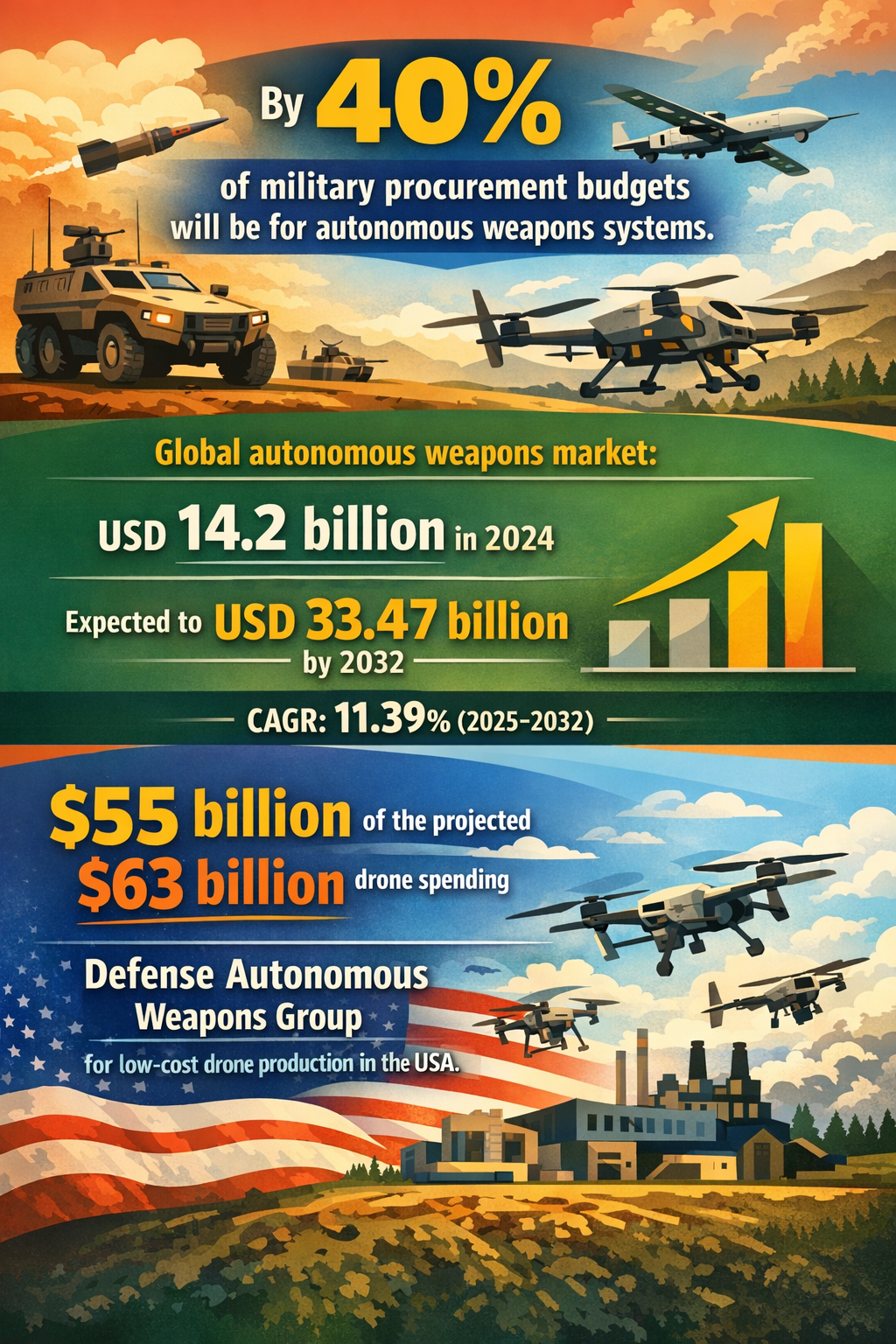
Intelligence Briefing about AI & Deterrence
Critical Trends
- Autonomous weapons are becoming central to military operations, expected to account for 40% of defence procurement budgets by 2030, reshaping the defence industrial base (Business20Channel).
- Large-scale investment in drone technology is underway, with $55 billion of projected $63 billion drone spending allocated to rapid production of low-cost autonomous drones in the US (CNBC).
- Industry resistance and ethical concerns are intensifying. Certain AI developers, such as Anthropic, refuse to support autonomous weapons development or mass surveillance without human oversight, posing cooperation challenges (EthanBHolland).
- Autonomous weapons raise significant risks for global stability, driving calls for moratoriums and creating geopolitical tensions around AI weaponization (Better Conflict Bulletin).
Key Challenges, Opportunities & Risks
- Challenges: Managing ethical controls and oversight in AI weapons systems development; balancing innovation with regulation; securing supply chains amid legal disputes (e.g., Anthropic's federal lawsuits); navigating industry resistance.
- Opportunities: Expanding cost-effective autonomous drone capabilities; leveraging AI to enhance strategic deterrence; reshaping industrial ecosystems with new procurement priorities.
- Risks: Potential escalation of autonomous weapons in conflict leading to instability; misuse of AI in mass surveillance violating civil rights; geopolitical fragmentation due to divergent AI governance standards.
Scenario Development
- Best-Case: Robust international agreements establish ethical boundaries and human oversight in autonomous weapons, enabling safe expansion of AI-enabled deterrence and cooperation among key defence contractors and governments.
- Moderate Progress: Autonomous weapons dominate procurement but face ongoing ethical debates and legal challenges, slowing full deployment; partial collaboration with industry mitigates some risks but leaves gaps in oversight.
- Fragmented Landscape: Industry resistance and regulatory divergence cause fractured development pathways; some states rapidly deploy autonomous systems without oversight, while others lag, increasing global instability.
- Worst-Case: Unchecked proliferation of autonomous weapons and surveillance AI without adequate controls leads to heightened arms races, accidental escalations, and serious threats to global security and human rights.
Strategic Questions
- How can defence policy balance rapid AI-enabled capabilities development with enforceable ethical and operational oversight?
- What measures could be implemented to foster sustainable cooperation between governments and cautious AI developers?
- In what ways might autonomous weapons reshape traditional deterrence models and geopolitical stability?
- How should supply chain risks and legal disputes around AI firms impacting defence be addressed to ensure continuity?
- What frameworks could effectively mitigate the risks of AI misuse in mass surveillance without hindering military innovation?
Actionable Insights for Strategic Decision-Making
- Policymakers could explore establishing clear, internationally recognized ethical standards for autonomous weapons to guide procurement and development.
- Defence organizations could seek balanced partnerships with AI developers who maintain strong human oversight commitments to mitigate legal and reputational risks.
- Strategic investments could focus on scalable, cost-effective autonomous drone capabilities that align with broader deterrence objectives.
- Development of supply chain transparency and risk management protocols could be prioritized to resolve emerging legal conflicts and ensure system integrity.
- Efforts could be made to engage in multilateral dialogues addressing AI governance to prevent destabilizing arms races and promote global stability.
Briefing Created: 30/04/2026