Our Scans
·
Health & Wellbeing
·
Intelligence Briefing
Intelligence Briefing about Health & Wellbeing
Emerging Trends Impacting the Australian Federal Police
- Rising Demand for Mental Health Support: Mental health appointment requests are projected to increase by 32% over the next decade, indicating growing pressures on support services (Prospect).
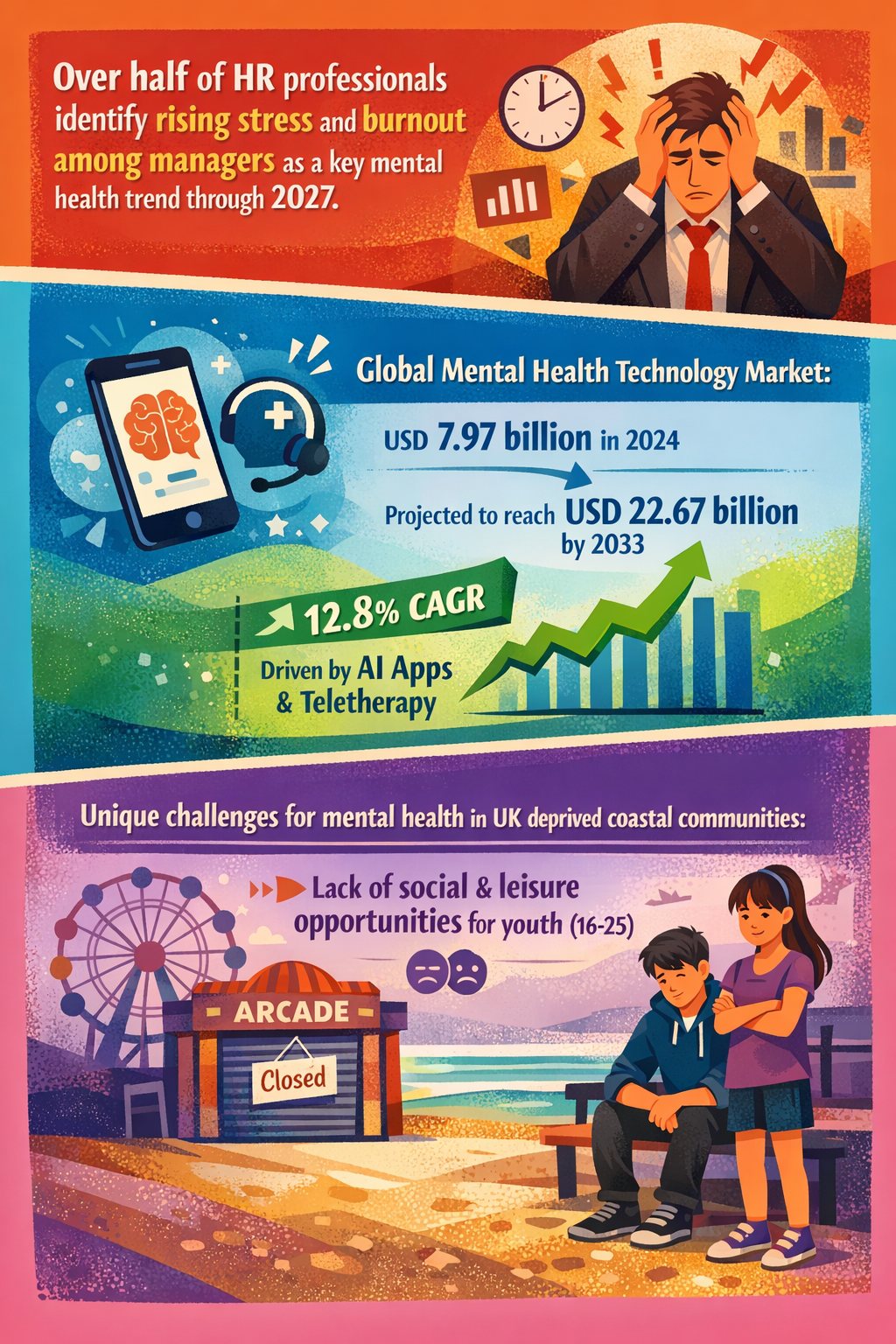
- Increased Stress and Burnout Among Managers: Managers are experiencing elevated burnout, becoming a primary concern linked to mental health-related leave (Halston Media).
- Impact of Bereavement Related to Substance Use: Drug poisoning-related losses are associated with prolonged grief, substance use, and poor mental health outcomes, highlighting the need for targeted bereavement support (Drugfree.org).
- Innovative Mental Health Support Models Emerging in Europe: Collaborative agency networks are reshaping employee mental health access, offering potential frameworks for scalable support systems (The HR Director).
- Socioeconomic and Community Factors Affecting Youth Wellbeing: Unique challenges in deprived communities, such as limited social outlets, exacerbate poor mental health in younger populations (Springer).
Key Challenges, Opportunities, and Risks
- Challenge: Managing increased mental health-related leave and burnout without compromising operational effectiveness.
- Opportunity: Leveraging international best practices and cross-agency collaborations to enhance mental health support frameworks.
- Risk: Failure to address bereavement and trauma related to drug poisoning may lead to sustained declines in mental wellbeing and performance.
- Opportunity: Proactive engagement with youth and community outreach to mitigate social isolation-related mental health issues.
- Risk: Rising service demands may overwhelm current support infrastructures, potentially increasing attrition and reducing workforce resilience.
Scenario Development
- Best-case Scenario: Implementation of integrated, networked mental health support leads to reduced burnout and enhanced wellbeing; early intervention programs in communities decrease prevalence of mental health crises.
- Moderate Positive Scenario: Demand for support grows but is managed through digital mental health solutions; some managerial burnout persists but is mitigated by targeted training and resources.
- Moderate Negative Scenario: Rising mental health-related absences strain operational capacity; limited adoption of innovative support structures creates uneven wellbeing outcomes across divisions.
- Worst-case Scenario: Escalating unmanaged stress, bereavement, and community-related mental health issues lead to high attrition, decreased performance, and compromised national policing objectives.
Strategic Questions for Senior Advisors and Strategists
- How can the AFP best integrate emerging international mental health support models to proactively address workforce wellbeing?
- What scalable strategies could be employed to manage rising mental health service demands without impairing operational readiness?
- In what ways might targeted interventions within high-risk communities reduce downstream impacts on personnel and public safety?
- How could leadership training be enhanced to identify and mitigate manager burnout effectively across the AFP?
- What metrics could the AFP develop to accurately assess the impact of bereavement and trauma on workforce health and performance?
Actionable Insights for Strategic Decision-Making
- The AFP could explore partnerships with external mental health networks and agencies to expand and diversify support offerings.
- Investment in digital mental health tools and telehealth services could help meet rising demand efficiently and inclusively.
- Developing targeted support and outreach initiatives for personnel affected by bereavement related to substance misuse could mitigate long-term mental health consequences.
- Enhancing leadership development focused on recognizing and managing mental health challenges may reduce burnout and improve staff retention.
- Integrating community engagement efforts addressing youth social isolation may reduce future mental health risks that impact policing demands.
Briefing Created: 16/06/2026