Our Scans
·
Research & Development
·
Intelligence Briefing
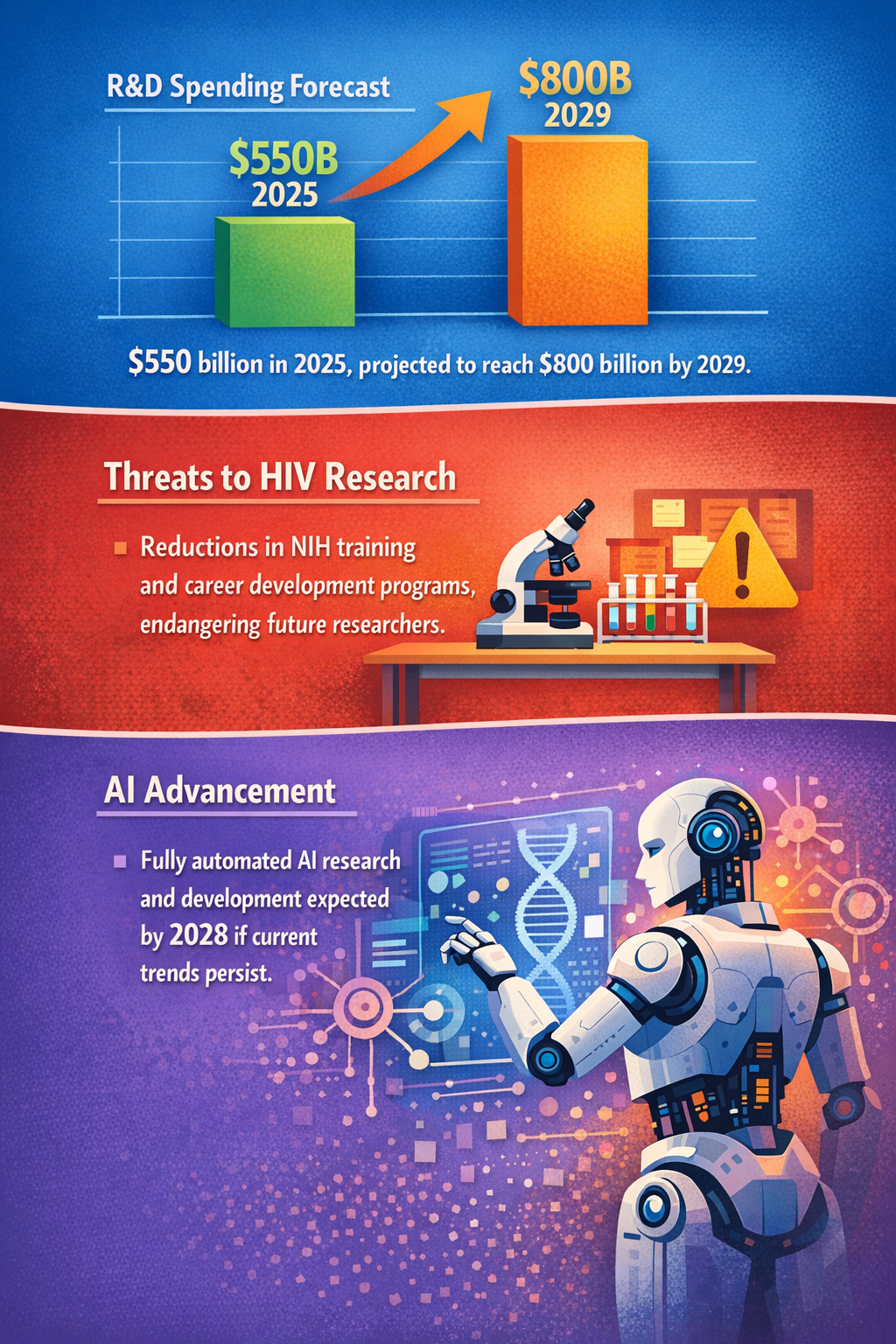
Intelligence Briefing about Research & Development
Critical Trends Impacting the Australian Federal Police
- Increased focus on protecting national security-related science and technology, with particular emphasis on foreign investment scrutiny, specifically concerning China (Lawfare Media).
- Rapid advancement in agentic Artificial Intelligence (AI) capabilities, transforming workflows, productivity, and security operations (Elite Corp).
- Potential emergence of fully automated AI-driven research and development by 2028, accelerating innovation cycles (80000 Hours).
- Growing geopolitical efforts to bolster domestic R&D, including regionalization pressures which increase complexity and costs in supply chains (Small Island Research Notes).
- Significant global increases in R&D investments, with spending approaching $800 billion in major economies by 2029 (AEI).
Key Challenges, Opportunities, and Risks
- Challenges: Countering espionage and securing critical technologies amidst increasing foreign investment scrutiny; managing the ethical and operational risks of autonomous AI tools; adapting to complex regional regulatory environments impacting technology and supply chains.
- Opportunities: Leveraging AI advancements to enhance investigative capabilities and operational efficiency; expanding domestic R&D collaborations to strengthen national technological resilience; using increased funding flows to foster innovation in law enforcement technologies.
- Risks: Escalating geopolitical tensions impacting partnerships and information sharing; potential misuse or adversarial deployment of advanced AI technologies; resource constraints in rapidly adapting to technology-driven operational changes.
Scenario Development
- Best-case: Australia establishes robust AI-enhanced policing and R&D frameworks, successfully counters foreign espionage threats, and capitalizes on global R&D investments to advance domestic technological capabilities.
- Moderate optimism: Incremental AI adoption improves operational efficiency, but regional geopolitical tensions compel cautious foreign collaboration and increased compliance costs.
- Moderate risk: Accelerated autonomous AI deployment occurs unevenly, causing operational disruptions and ethical dilemmas, while foreign threats exploit gaps in technology protection policies.
- Worst-case: Failure to secure critical R&D leads to significant technology leakage; adversarial AI use undermines law enforcement effectiveness; escalating geopolitical conflicts disrupt supply chains and intelligence cooperation.
Strategic Questions
- How can the AFP proactively integrate agentic AI technologies to enhance intelligence and operational effectiveness while managing associated ethical and security risks?
- What frameworks can the AFP develop to better detect and mitigate foreign interference in critical science and technology domains relevant to national security?
- In the context of increasing regionalization and geopolitical tensions, how might the AFP adapt its collaboration and intelligence-sharing protocols with international partners?
- What investment priorities in R&D can maximize the AFP’s resilience against evolving technological threats and enhance law enforcement innovation?
- How could the AFP ensure workforce readiness and capability development amidst rapid advances in AI and automation technologies?
Potential Actionable Insights and Considerations
- AFP could accelerate pilot projects that leverage AI agentic systems to streamline complex investigative workflows.
- AFP could strengthen interagency coordination and data-sharing mechanisms to better detect and counter foreign influence in national critical research sectors.
- AFP could explore partnerships with domestic R&D institutions to develop tailored security solutions aligned with evolving technological threats.
- AFP could enhance workforce training programs focusing on AI literacy, ethical frameworks, and cybersecurity to prepare for future operational paradigms.
- AFP could evaluate supply chain vulnerabilities linked to technology procurement and develop strategies to mitigate regionalization-induced risks.
Briefing Created: 31/08/2026