Our Scans
·
Trade
·
Intelligence Briefing
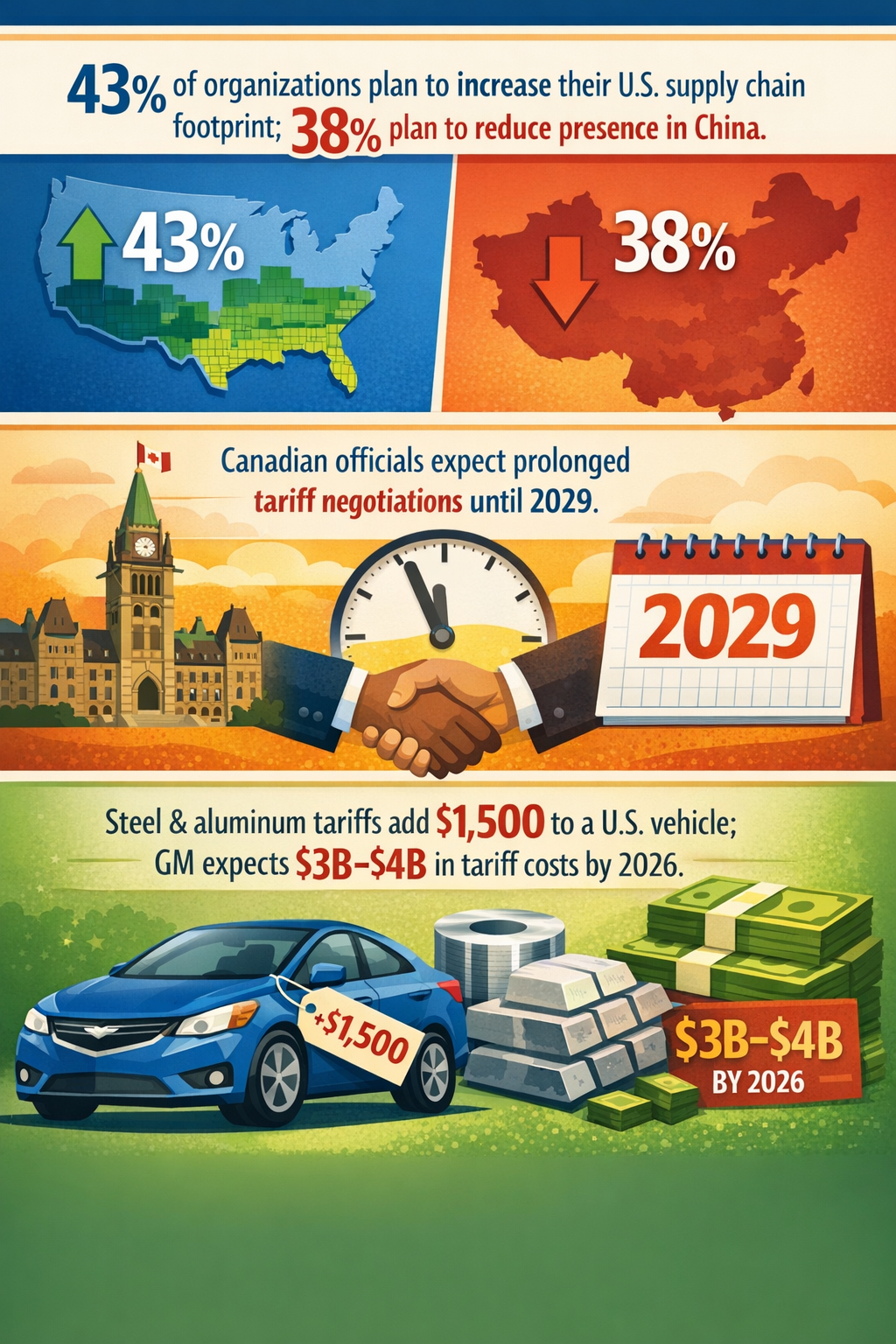
Intelligence Briefing about Trade
Critical Emerging Trends
- Geopolitical Uncertainty and Trade Policy: U.S. tariff policies aiming at reshoring, alongside potential EU tariff barriers, drive supply chain fragmentation, raising costs and operational complexity (ERSA Electronics, ABC News).
- Supply Chain Reconfiguration: Multinational manufacturers’ relocation to Mexico and Southeast Asia aims to reduce vulnerabilities yet does not guarantee strategic advantage without further investment in AI and industrial infrastructure (IMARC Group, Lowy Institute).
- Commodity Price Volatility & Energy Infrastructure Risk: Conflicts and disruptions in the Middle East plus regional infrastructure damage drive sustained commodity price pressures, impacting global supply chains (PwC, BBVA Research).
- Rising Operational Costs: Tariff impacts like steel and aluminum levies impose significant cost increases on manufacturing, potentially reducing competitiveness and affecting trade volumes (Refdesk).
- Supply Chain Disruptions & Cybersecurity Threats: Elevated risks from geopolitical instability, cyberattacks, and cargo fraud maintain a high threat environment for trade security (WWEX).
Key Challenges, Opportunities, and Risks
- Challenges: Navigating tariff disputes, unpredictable geopolitical conflicts, and managing supply chain resilience amid complex global trade agreements and regulatory environments.
- Opportunities: Leveraging AI and semiconductor investments for supply chain transparency and efficiency; strengthening regional cooperation to mitigate risks from energy and commodity volatility.
- Risks: Prolonged tariff negotiations could destabilize markets; supply-side shocks may persist longer than anticipated, affecting Australia’s trade security and economic stability.
Scenario Development
- Best-Case: Global trade agreements stabilize with reduced tariffs, enabling smooth supply chain diversification into Southeast Asia and Mexico, augmented by AI-driven logistics enhancing AFP’s intelligence capacity.
- Moderate Stability: Tariff tensions persist but are manageable; supply chain disruptions continue intermittently; AFP adapts through targeted intelligence operations focused on emerging cyber and fraud risks.
- High Risk: Protracted tariff wars and geopolitical conflicts cause sustained supply chain fragmentation and commodity price shocks; increased smuggling and illicit trade requiring AFP to enhance cross-border enforcement and cooperation.
- Worst-Case: Escalation of geopolitical conflicts and trade wars triggers widespread supply chain collapse, severe commodity shortages, and enhanced criminal exploitation, overwhelming AFP’s capacity to secure trade routes and enforce law.
Strategic Questions
- How can AFP integrate emerging AI and data analytics capabilities to improve predictive intelligence on supply chain vulnerabilities and illicit trade activities?
- What strategic partnerships or international cooperation frameworks could AFP pursue to mitigate risks arising from prolonged trade policy uncertainty?
- How might AFP best prioritize resource allocation to counteract evolving challenges from tariff-driven operational cost increases and supply chain shifts?
- What contingency measures could AFP develop to respond effectively to disruption scenarios involving critical commodity supply shocks?
Actionable Insights and Considerations
- AFP could enhance intelligence sharing with regional partners in Southeast Asia and North America to better monitor shifts in manufacturing relocation and supply chain flows.
- Investment in AI infrastructure for real-time trade monitoring could provide AFP with early warning of emerging threats related to cargo fraud and cyberattacks.
- Developing scenario planning capabilities focused on trade disruption impacts could aid in rapid strategic response and resource allocation.
- AFP could explore expanding its expertise in energy and commodity trade monitoring to anticipate impacts from geopolitical instability on national security.
Briefing Created: 24/06/2026