Our Scans
·
Privacy
·
Intelligence Briefing
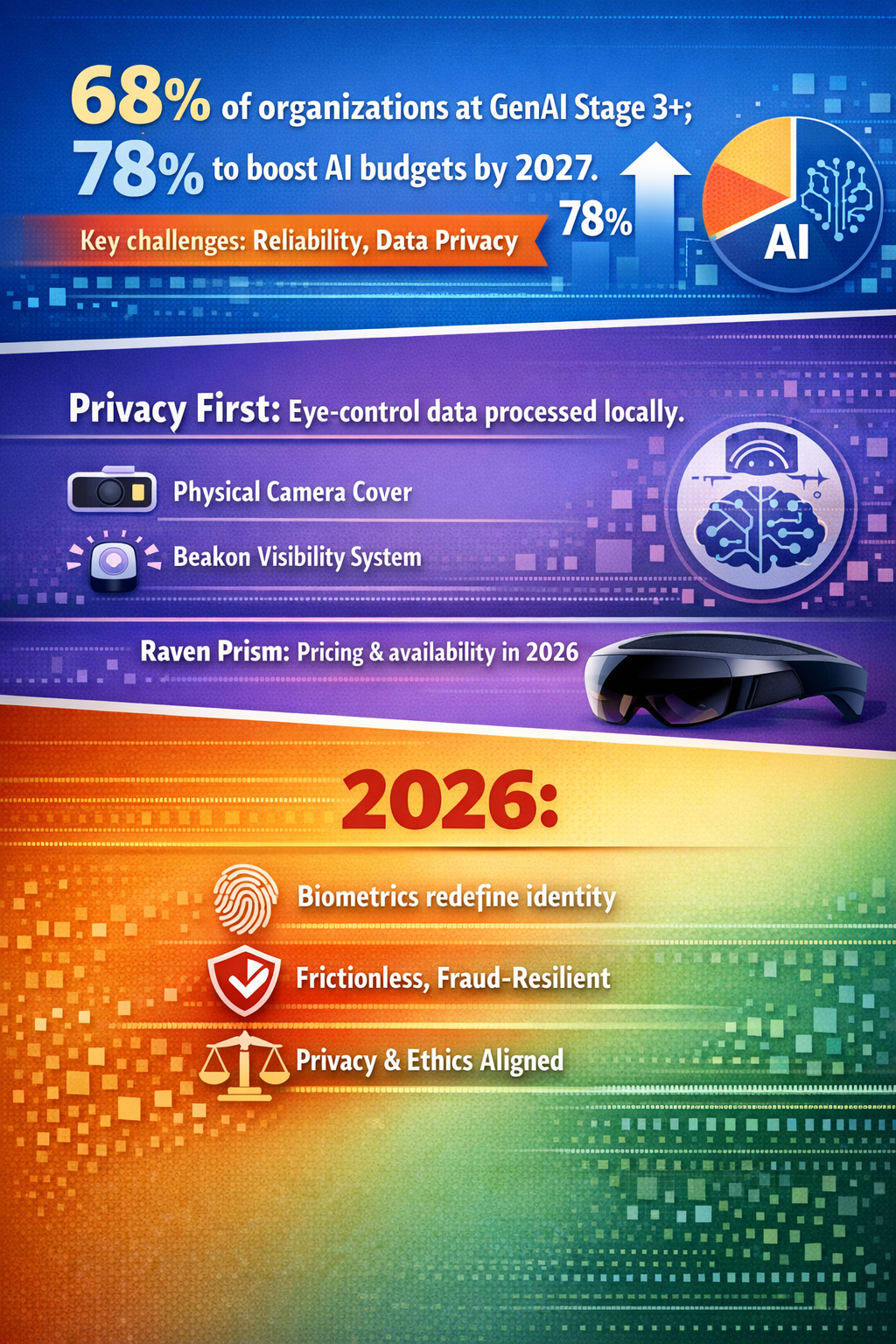
Intelligence Briefing about Privacy
Critical Trends Impacting the Australian Federal Police
- Increasing integration of biometrics as a core identity verification method, enabling frictionless and fraud-resilient user experiences but introducing complex ethical and privacy considerations (Frontier Enterprise).
- Heightened privacy regulations worldwide, including stringent penalties for non-compliance (up to 5% global revenue), influencing data handling practices and requiring robust governance frameworks (GamTech).
- The evolution of privacy protection technologies blending hardware-level safeguards—such as physical camera covers and data processed locally—to enhance trust in surveillance and digital interactions (PR Newswire).
- Growing use of generative AI in organizations with increasing investment, yet ongoing challenges with reliability and safeguarding data privacy persist (Futurum Group).
- Digital interactions on popular platforms (e.g., Instagram) continue to lack robust privacy measures, restricting their use in sensitive communications (Gulf News).
- Emerging global privacy governance models potentially evolving towards collective consent assemblies and data protection enforcement by specialized authorities (ACM Digital Library).
- Forecasts of progressively diminishing privacy by 2035, projecting a predominantly digital society where privacy as a concept could erode significantly (Zendesk Blog).
- International industrial policies, such as Europe’s digital and green initiatives, may create compliance complexities but also partnerships and technology acquisition opportunities (Risk Intelligence Service).
Key Challenges, Opportunities, and Risks
- Challenges: Navigating complex privacy regulatory environments with cross-jurisdictional implications; balancing AI integration with trust and data security; mitigating privacy risks in digital surveillance and identity management.
- Opportunities: Leveraging biometric innovations to enhance identity verification and law enforcement capabilities; adopting privacy-enhancing hardware and software technologies; engaging in international collaborations aligning with emerging industrial policies.
- Risks: Potential reputational and financial damages from data breaches or regulatory non-compliance; erosion of public trust due to perceived privacy intrusions; dependency on third-party platforms with inadequate privacy safeguards.
Scenario Development
- Best-Case Scenario: Adoption of advanced biometric and privacy-enhancing technologies aligned with strict regulatory compliance creates a secure, transparent, and trusted law enforcement data ecosystem; AI applications reliably support investigative efficiency.
- Moderate Scenario: Privacy regulations tighten gradually with increased penalties, leading to cautious AI deployment; biometric tech adoption grows unevenly, with some public resistance; international partnerships bring mixed compliance challenges.
- Challenging Scenario: Rapid AI adoption outpaces privacy governance reforms, causing significant data privacy incidents; biometric technologies raise ethical concerns, triggering public backlash; non-compliance fines escalate, impeding operational flexibility.
- Worst-Case Scenario: Privacy virtually disappears by 2035, undermining public trust and civil liberties; AI systems operate without adequate oversight, leading to misuse; global divergence in privacy frameworks creates operational uncertainty and legal exposure.
Strategic Questions for Senior Policy Advisors
- How can the AFP proactively integrate emerging biometric and privacy technologies to enhance operational effectiveness while maintaining public trust?
- What governance frameworks and international collaborations could the AFP adopt to navigate evolving global privacy regulations effectively?
- In what ways can AI deployment be balanced to optimize law enforcement outcomes while mitigating risks related to data privacy and ethical standards?
- How might the AFP prepare for and adapt to scenarios with progressively diminished privacy and potential public backlash?
Actionable Insights and Considerations
- The AFP could pilot and evaluate biometric solutions that incorporate hardware-level privacy protections to enhance security and public confidence.
- Ongoing monitoring of international privacy regulatory developments could help the AFP anticipate compliance challenges and shape engagement strategies.
- Investing in explainable and privacy-respecting AI technologies could help mitigate trust and ethical concerns while optimizing law enforcement capabilities.
- Developing robust public communication frameworks around privacy and data usage could support transparency and societal acceptance as privacy norms evolve.
Briefing Created: 19/06/2026