Our Scans
·
Robotics
·
Intelligence Briefing
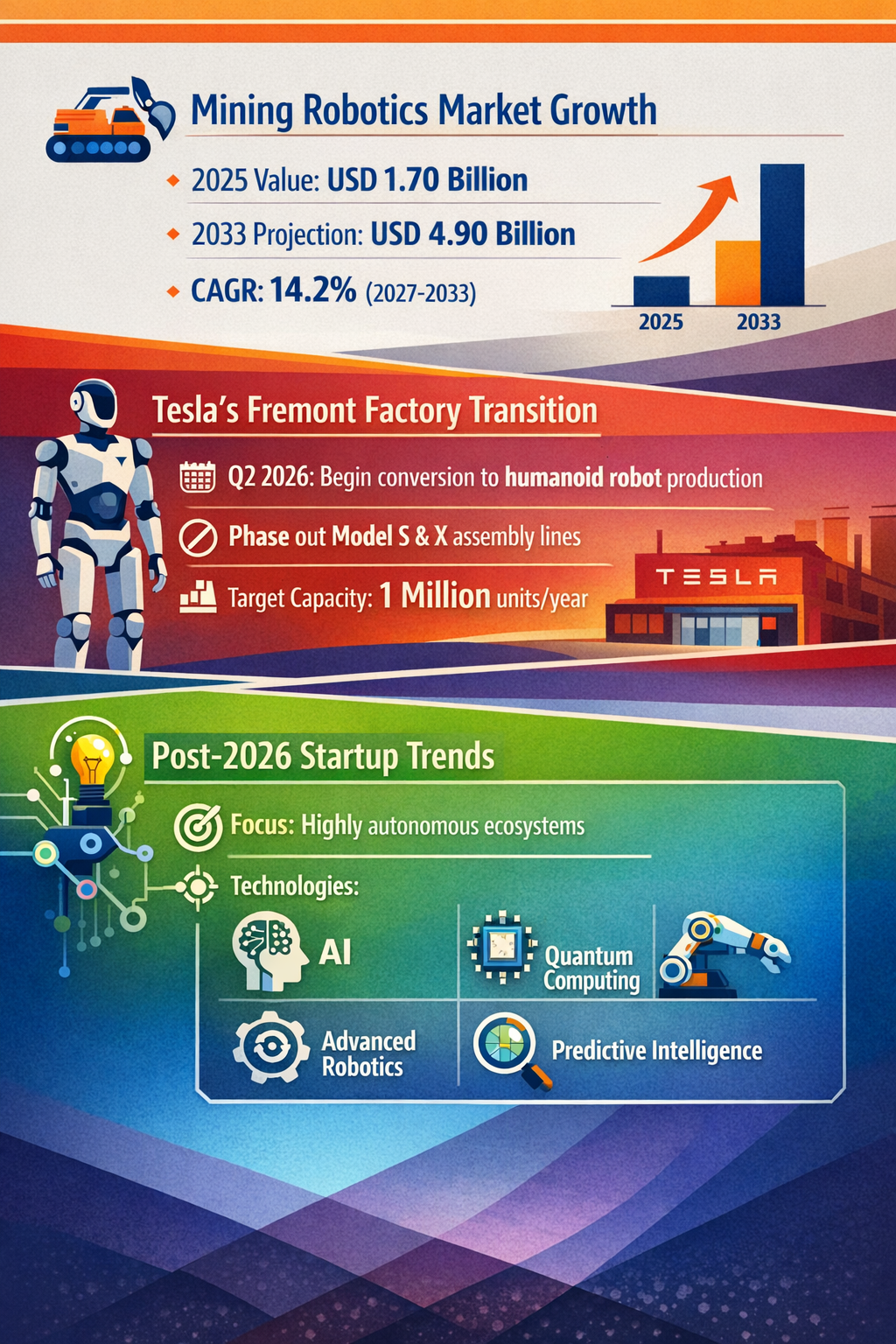
Intelligence Briefing about Robotics
Critical Trends Impacting Infosys
- Expansion of Embodied AI: Advances in embodied AI are creating new robotics opportunities in logistics, edge computing, and physical-world reasoning (mean.ceo).
- Hyperscale Data Centers Driving Automation: Growth of data centers globally accelerates adoption of robotics for infrastructure management and automation (Precedence Research).
- Robotics in Strategic Defense & Infrastructure: India’s coastline demands robotics in anti-submarine warfare and port security, indicating increasing defense and infrastructure roles for robotics (Precedence Research).
- Manufacturing Automation Shift: China’s robotics-driven manufacturing surge is projected to grow its global share significantly, intensifying competitive dynamics (etcjournal.com).
- Workforce Skill Transformation: Robotics and AI industries require candidates trained in critical thinking, innovation, and communication to bridge skill gaps (SACA).
- Next-Generation IoT Ecosystems: AI, quantum computing, and advanced robotics integration drive highly autonomous smart ecosystems (Differ Blog).
- Rapid Humanoid Robotics Industrialization: Tesla’s conversion of a major factory to produce humanoid robots at scale signals industrial robotics’ mainstream acceleration (Medium).
Key Challenges, Opportunities & Risks
- Challenges: Addressing talent shortages and skill gaps; managing supply chain complexity in advanced robotics manufacturing; competing with low-cost, robotics-heavy manufacturers like China.
- Opportunities: Leveraging embodied AI to offer new robotics-driven services; capitalizing on growing demand in hyperscale facility automation; expanding in defense robotics to support national security initiatives.
- Risks: Intensifying global competition may erode margins; rapid technological shifts could outpace workforce reskilling; reliance on emerging quantum and AI tech may introduce security and operational vulnerabilities.
Scenario Development
- Best-Case: Infosys leads AI-driven robotics services, capitalizing on hyperscale data center automation and embodied AI, supported by a highly skilled workforce and strategic partnerships, achieving significant market expansion globally.
- Moderate Growth: Infosys successfully integrates robotics into select sectors such as infrastructure and defense while struggling to fully bridge skill gaps; growth is steady but limited by rising competition from low-cost manufacturers.
- Disruptive Competition: China’s robotics dominance and rapid humanoid robot industrialization disrupt global markets; Infosys faces margin pressure and talent shortages, limiting its ability to innovate and retain market share.
- Worst-Case: Infosys fails to adapt to embodied AI and quantum-enabled robotics, faces severe workforce deficits, and loses critical clients to aggressive competitors; security gaps emerge due to rushed technology adoption, impacting reputation and operations.
Strategic Questions
- How can Infosys best leverage embodied AI and robotics advancements to differentiate services and create new revenue streams?
- What strategies could mitigate risks related to workforce skill shortages and accelerate talent development in robotics and AI?
- In the face of intensifying competition from China and emerging players, how should Infosys prioritize investments in manufacturing and automation capabilities?
- How might Infosys proactively address security and operational risks posed by rapid adoption of advanced robotics and quantum computing?
- What partnerships or ecosystem collaborations could Infosys pursue to scale humanoid and infrastructure robotics solutions effectively?
Potential Actionable Insights
- Infosys could accelerate upskilling programs focused on critical thinking and innovation to close robotics-related skill gaps.
- Investing in research and development around embodied AI and predictive intelligence could unlock new service offerings aligned with emerging IoT ecosystems.
- Exploring collaborative ventures with leading hardware manufacturers and defense organizations could reinforce Infosys’ positioning in strategic robotics domains.
- Implementing advanced cybersecurity frameworks for robotics and quantum technologies could reduce vulnerability risks as adoption widens.
- Building flexible, scalable platforms for robotics deployment might enable Infosys to quickly respond to evolving market demands and competitor moves.
Briefing Created: 10/06/2026