Our Scans
·
Micromobility
·
Intelligence Briefing
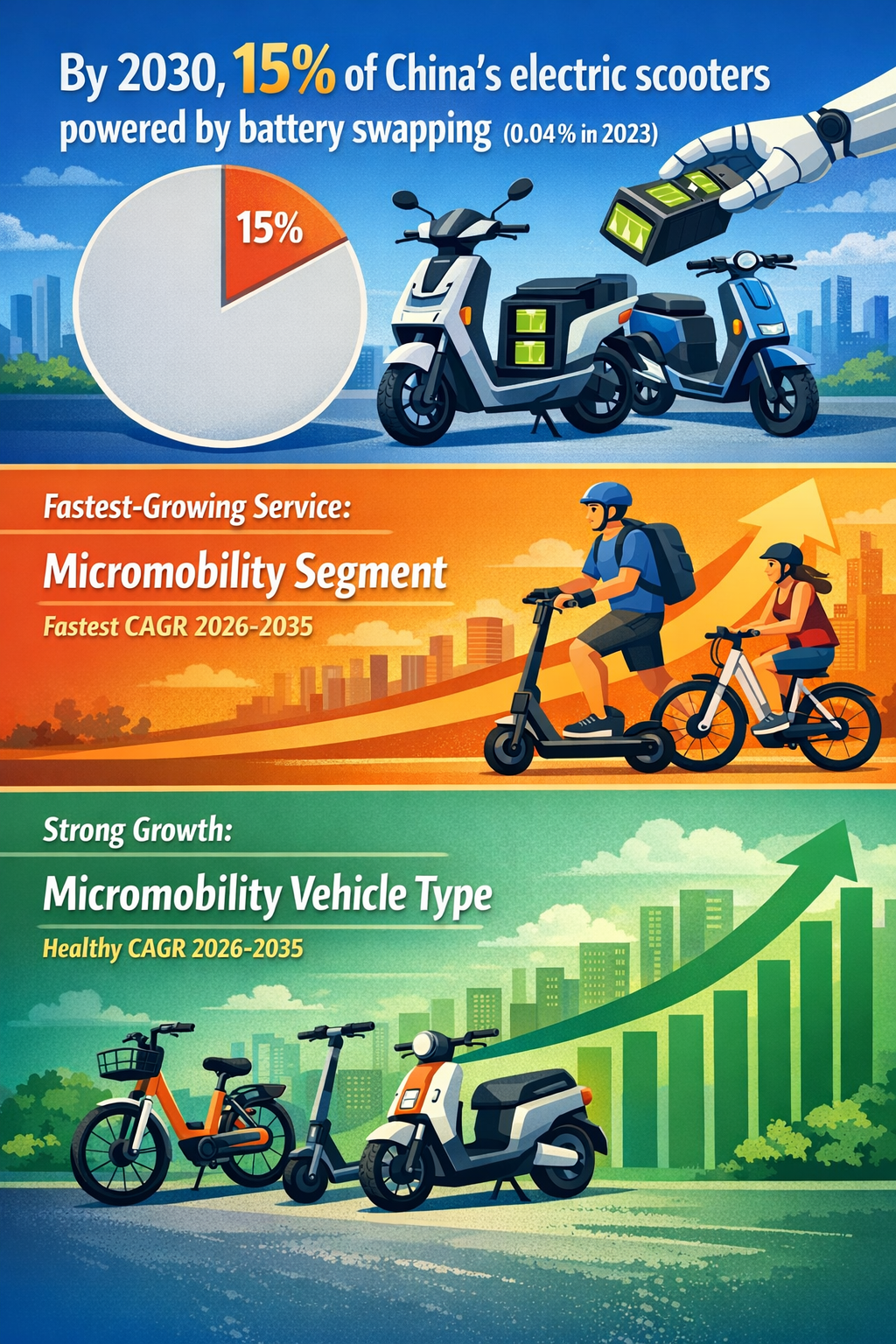
Intelligence Briefing about Micromobility
Summary of Critical Trends
- The micromobility segment is projected to experience strong growth with a healthy compound annual growth rate (CAGR) from 2026 through 2035, driven by increased urban adoption and evolving consumer preferences (Precedence Research).
- Electric scooters will feature more powerful motors, improved battery technology, and advanced safety systems by 2026, enhancing user experience and operational reliability (Engwe Bikes EU).
Key Challenges, Opportunities, and Risks
- Challenges: Regulatory uncertainty around safety and urban infrastructure integration; potential liability related to accidents and malfunctioning advanced components.
- Opportunities: Expansion of insurance products tailored to electric micromobility vehicles; partnerships in tech innovation and urban mobility services.
- Risks: Rapid technological changes outpacing regulatory frameworks; increased exposure to cyber and operational risks given the technology reliance of new vehicles.
Scenario Development
- Best-Case: Robust regulatory frameworks and widespread infrastructure investments support rapid adoption of advanced micromobility vehicles, reducing accidents and enabling scalable insurance solutions.
- Moderate Growth: Steady technology improvements and gradual regulatory clarity drive moderate adoption; challenges in integrating insurance and safety standards persist but remain manageable.
- Stagnation: Regulatory roadblocks and inconsistent infrastructure development slow market growth; increased claims frequency from safety incidents strain underwriting capacity.
- Worst-Case: Significant safety failures and regulatory backlash lead to sharp decline in consumer trust and micromobility usage; insurance liabilities increase sharply, impacting market stability.
Strategic Questions
- How can Atradius proactively adapt its risk assessment frameworks to accommodate evolving micromobility technologies and safety profiles?
- What role could Atradius play in shaping or responding to regulatory changes affecting micromobility insurance and liability?
- How can partnerships with technology providers and urban planners enhance Atradius’s value proposition in the micromobility ecosystem?
- What contingency plans could be developed to manage potential spikes in claims due to technological failures or regulatory shifts?
Actionable Insights for Strategic Decision-Making
- Atradius could explore collaboration with micromobility manufacturers to gain early insight into product innovations and associated risk profiles.
- The organization could develop flexible insurance products that accommodate varying levels of technology maturity and safety features.
- Investment in data analytics and real-time monitoring tools could help anticipate and mitigate emerging operational and cyber risks.
- Atradius could consider advocacy or involvement in industry forums to influence regulatory frameworks favorable to sustainable micromobility growth.
Briefing Created: 19/06/2026