Our Scans
·
Advancing Modern Healthcare
·
Intelligence Briefing
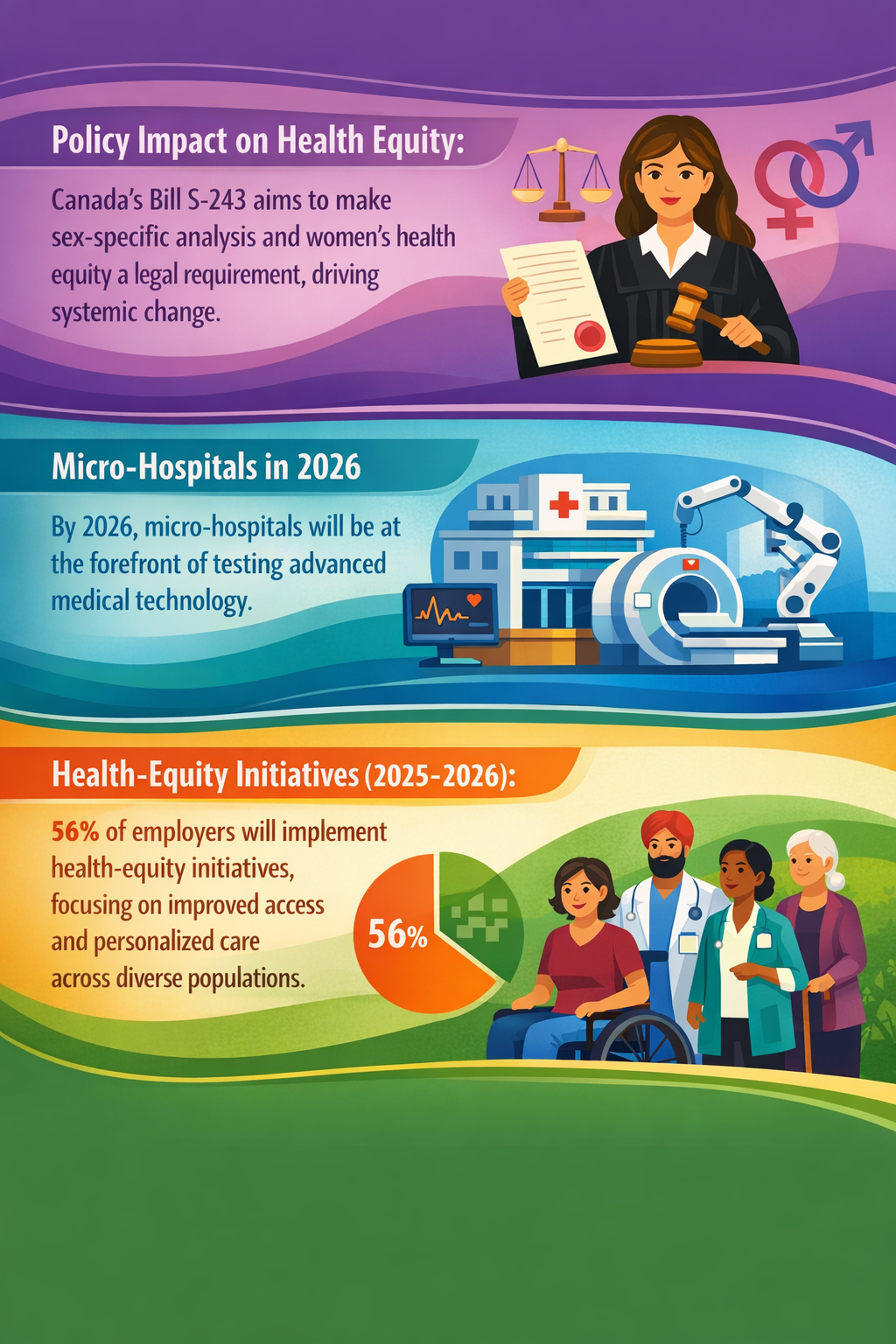
Intelligence Briefing about Advancing Modern Healthcare
Emerging Trends Impacting Ministry of Health NSW
- Health-Equity Initiatives: Over half of employers intend to implement programs aimed at improving access and health outcomes for diverse populations by 2025-2026, indicating a systemic shift toward more inclusive and personalized care delivery (BrightPlan).
- Micro-Hospitals as Innovation Hubs: By 2026, micro-hospitals are expected to serve as testing grounds for cutting-edge medical technologies, potentially reducing emergency department overcrowding and transforming care delivery models (Promed Equipment Oakville).
- Policy-Driven Health Equity for Women: Emerging legal frameworks, similar to Canada’s Bill S-243, may mandate sex-specific analysis and foster systematic improvements in women's health equity, driving policy alignment and organizational accountability (FemTech).
Key Challenges, Opportunities, and Risks
- Challenges: Integrating personalized and inclusive healthcare approaches within existing systems may require overcoming data silos, addressing workforce training gaps, and managing resource reallocations.
- Opportunities: Leveraging micro-hospitals offers a scalable platform for rapid deployment of innovative technologies and could reduce wait times and improve emergency care outcomes.
- Risks: Potential legal mandates around health equity could increase compliance complexity and resource demands; technological disparities may widen if innovation is not equitably distributed.
Scenario Development
- Best-Case: Strong policy alignment and investment enable widespread adoption of health equity initiatives and micro-hospital innovations, leading to equitable, efficient, and patient-centered care.
- Optimistic: Partial policy support and moderate technology adoption improve access and outcomes, though some rural or underserved populations lag behind.
- Challenging: Limited policy enforcement and fragmented technology integration result in uneven progress, with significant disparities persisting in care delivery.
- Worst-Case: Inadequate funding and resistance to change stall equity initiatives and technology adoption, exacerbating healthcare inequities and system inefficiencies.
Strategic Questions
- How can NSW best leverage emerging technologies in micro-hospitals to improve emergency care and reduce system bottlenecks?
- What frameworks could be developed to ensure health equity initiatives are embedded into all levels of care delivery effectively?
- How might upcoming legal requirements on sex-specific health analysis impact existing health policies and data governance?
- What strategies could mitigate risks associated with uneven technology access and resource distribution across NSW?
Actionable Insights for Strategic Decision-Making
- Investing in pilot programs at micro-hospitals could accelerate technology validation and adoption across the health system.
- Developing partnerships with community organizations could facilitate culturally appropriate and inclusive health-equity interventions.
- Establishing robust data collection and analysis protocols may prepare the organization for compliance with future legislative mandates.
- Exploring flexible funding models could address disparities in resource allocation, supporting equitable rollout of innovations.
Briefing Created: 08/04/2026